
How Atomic Ratios Differ From Mass Ratios in Compounds

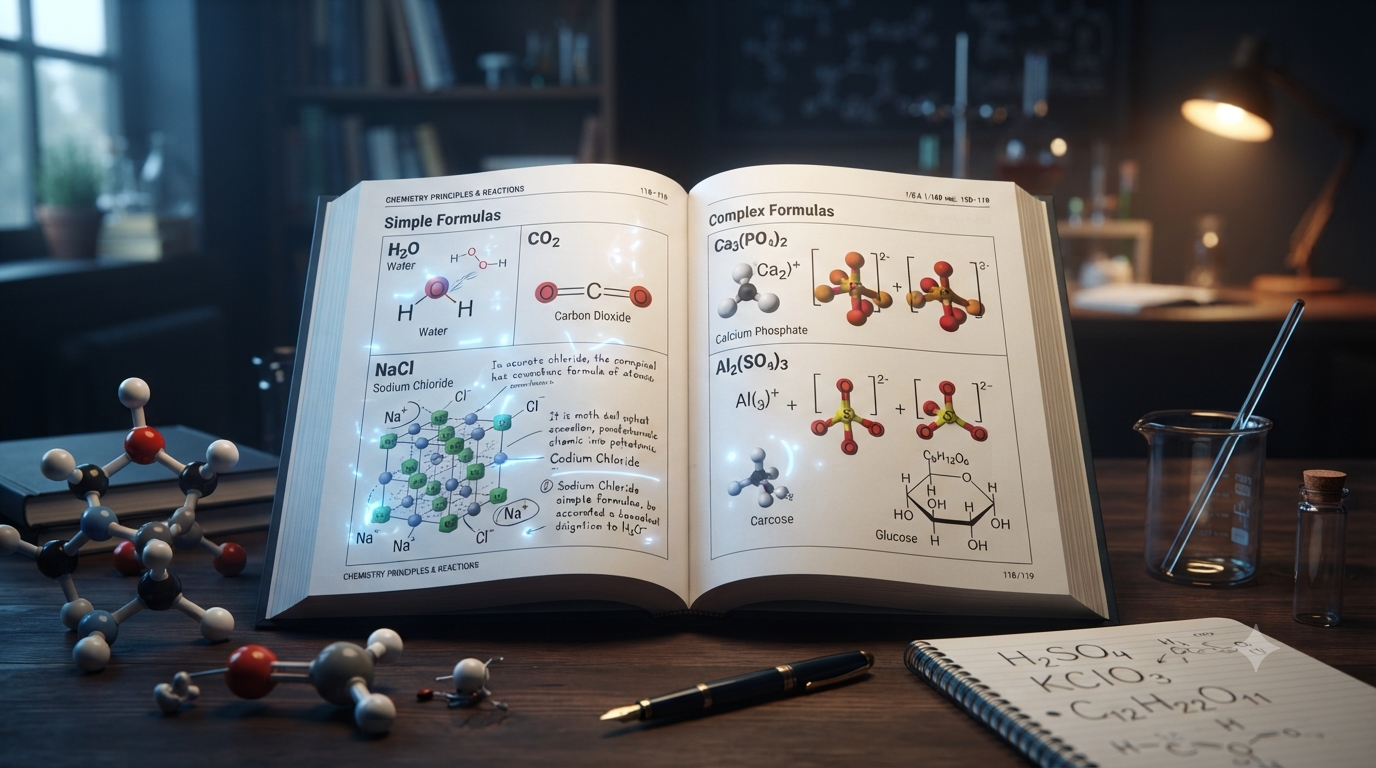
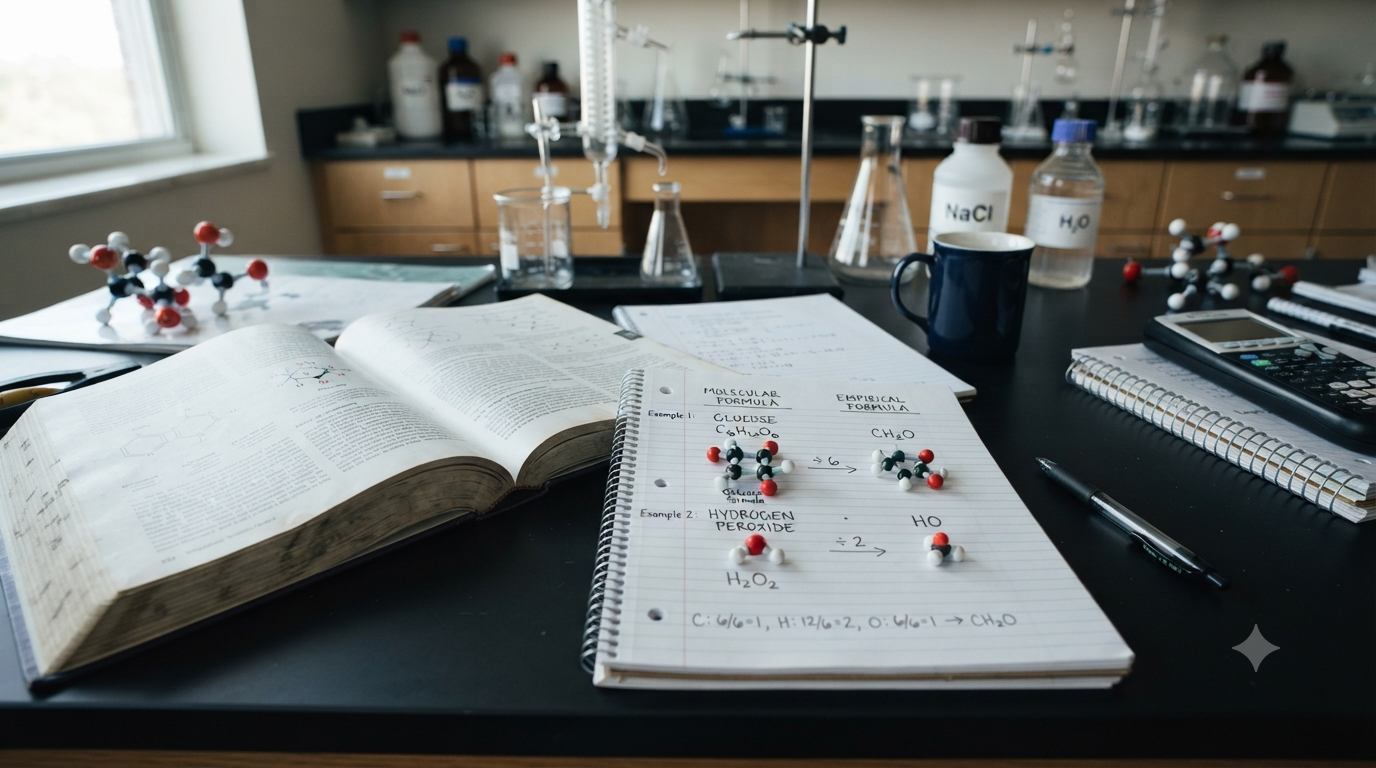
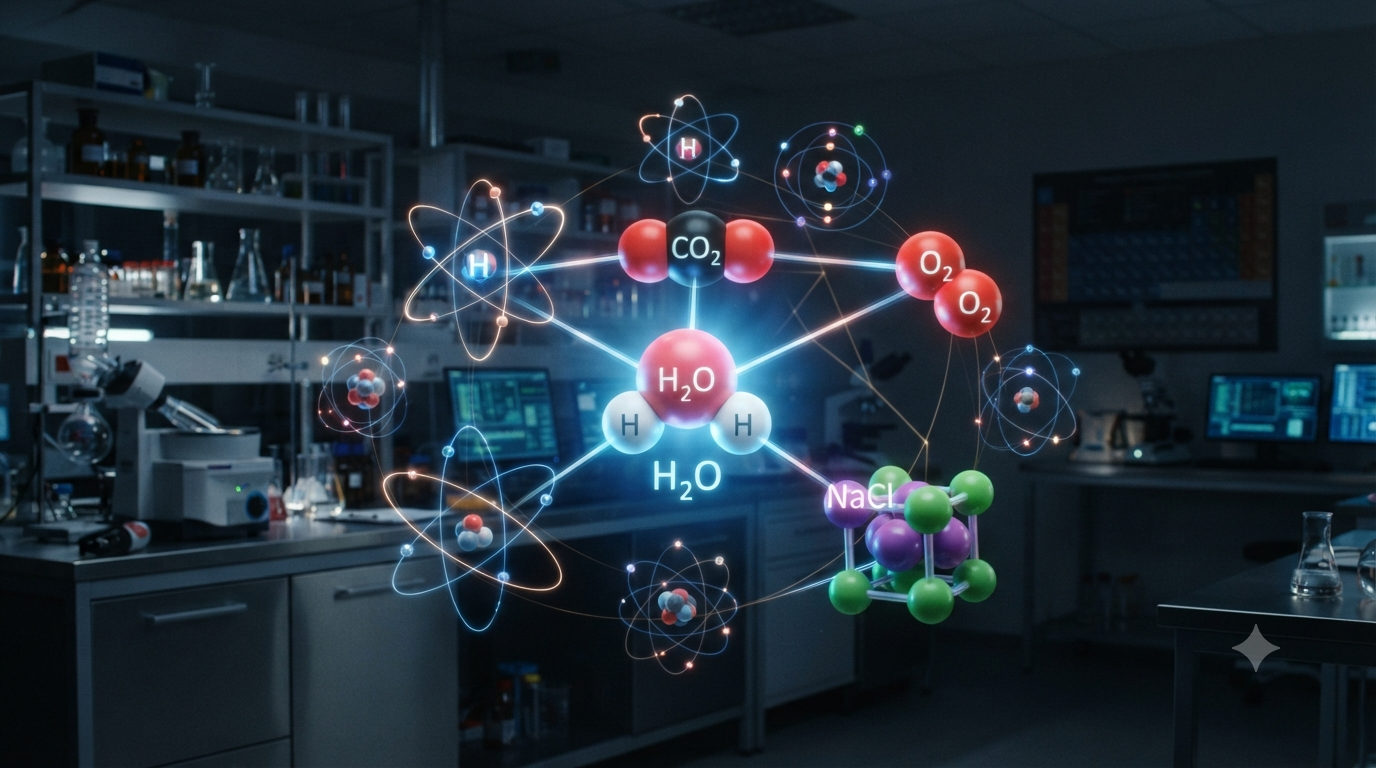
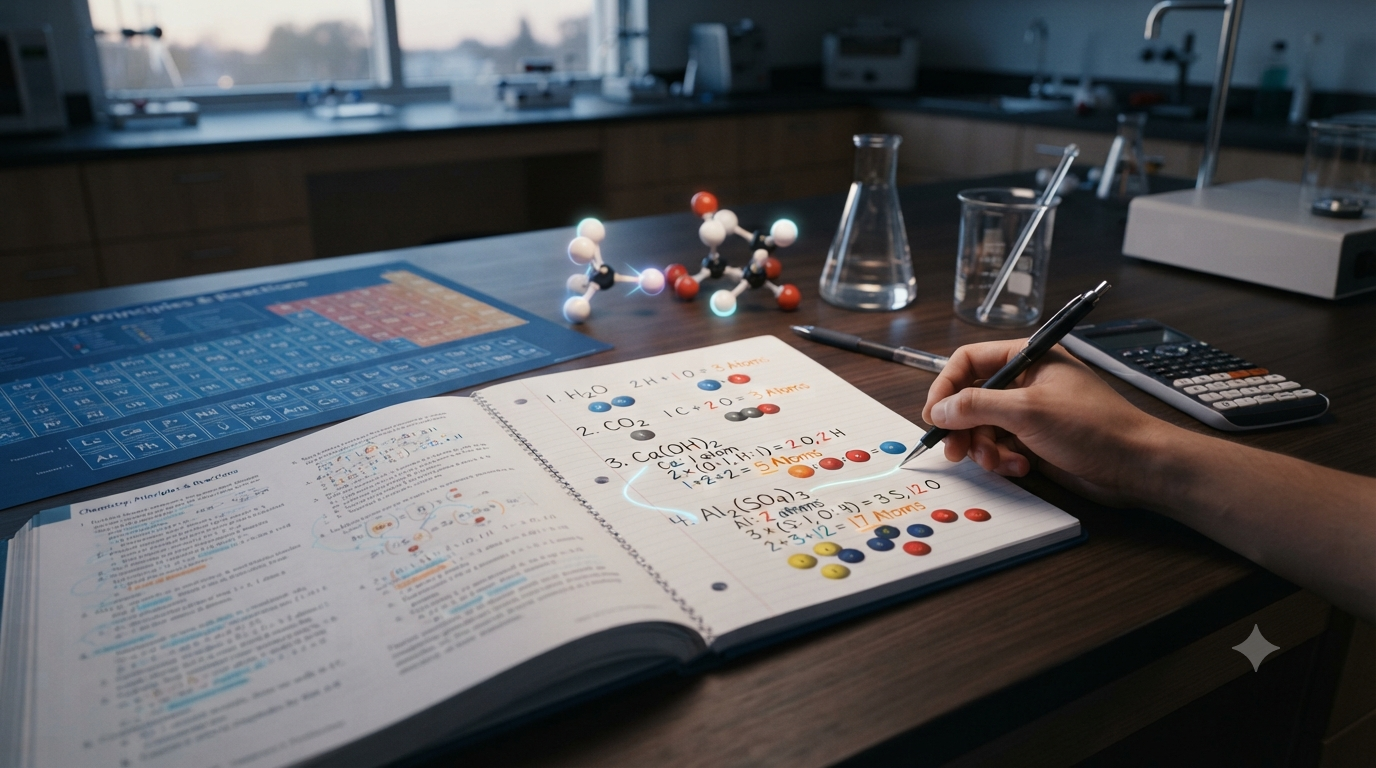
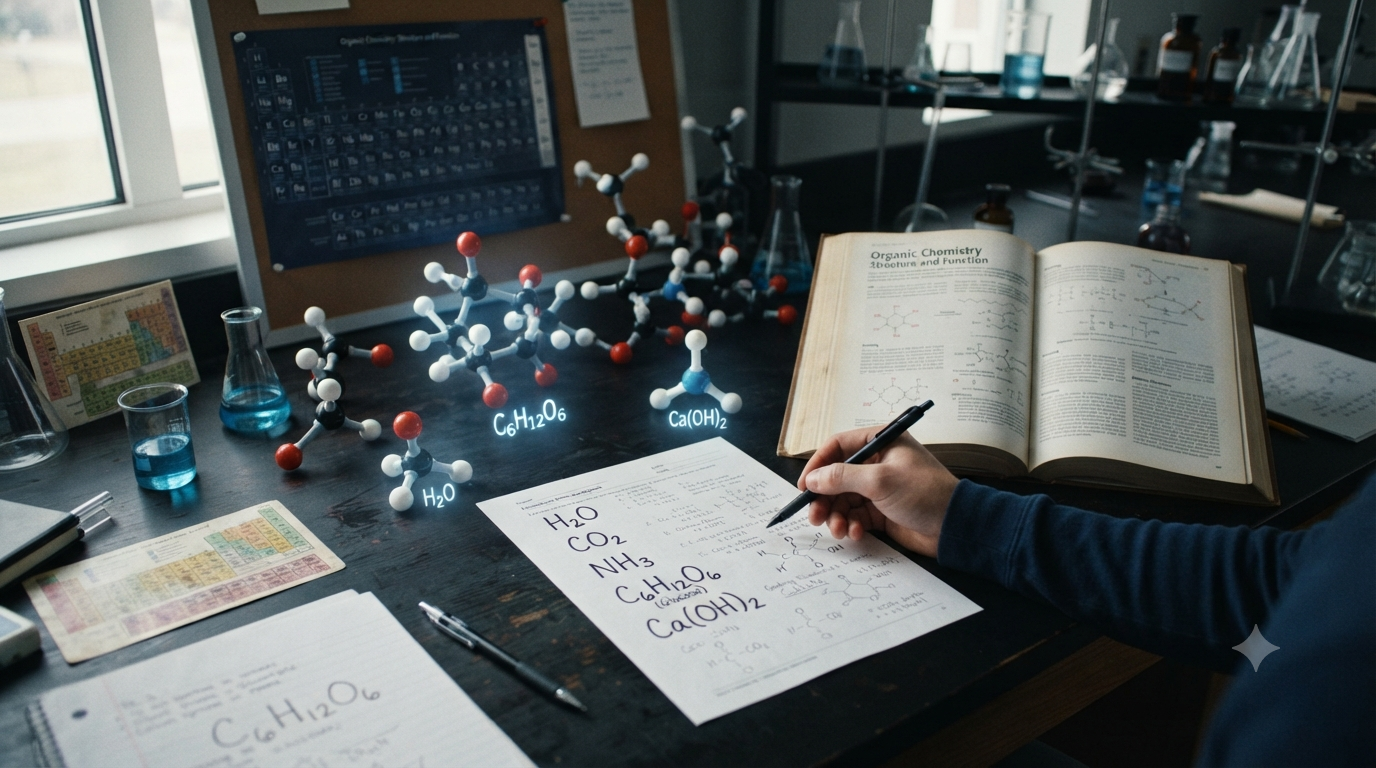
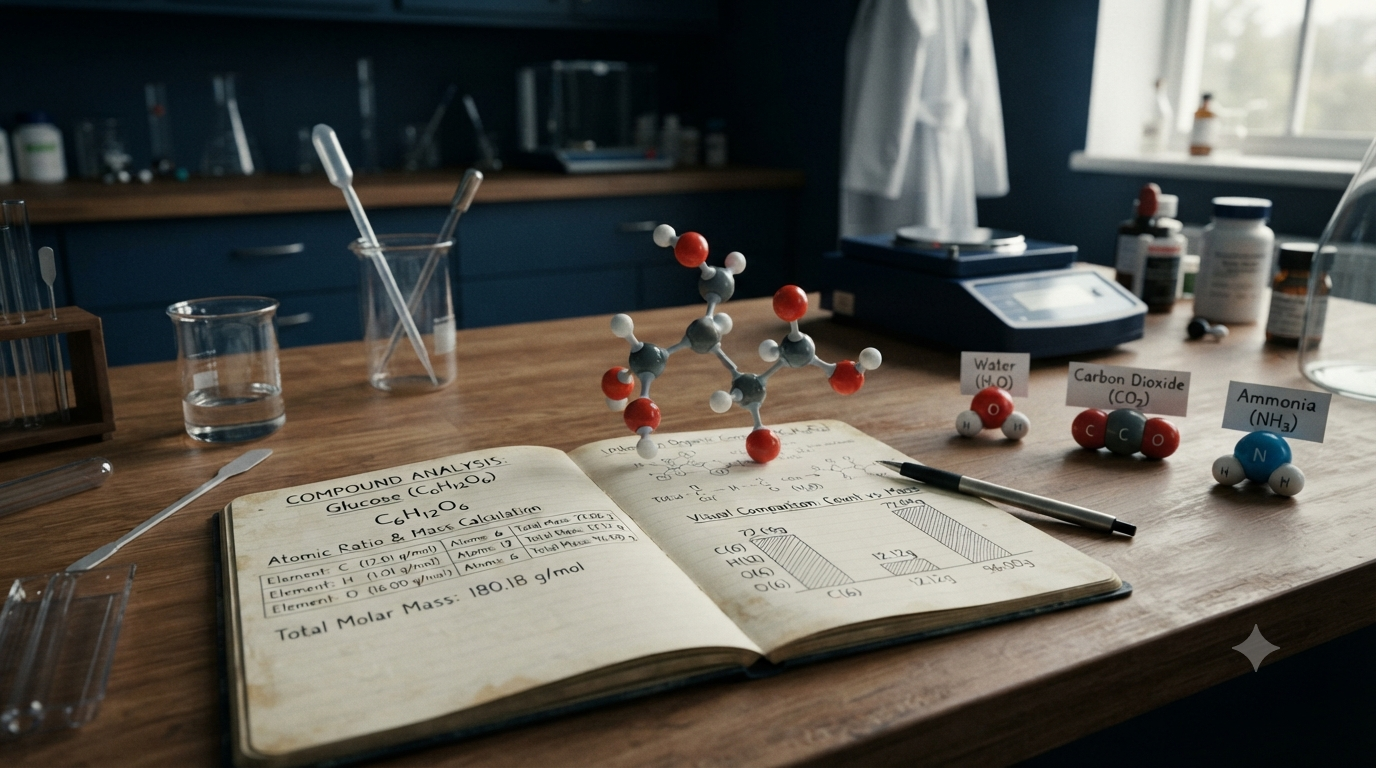
Diagram showing the difference between atomic ratios and mass ratios in chemical compounds using molecular formulas and atomic masses.

When we study chemical compounds, we often use ratios to describe how their elements are combined. Two important types of ratios are atomic ratios and mass ratios. Although both describe the composition of a compound, they answer different questions. An atomic ratio tells us how many atoms of one element are present compared with another element, while a mass ratio tells us how much mass each element contributes to the compound.

Understanding the difference between these two ratios is essential for learning chemical formulas, molecular composition, stoichiometry, and quantitative chemistry. For example, water has the formula H₂O. This formula tells us that hydrogen and oxygen are present in an atomic ratio of 2:1. However, because oxygen atoms are much heavier than hydrogen atoms, their mass ratio is not 2:1. The mass contribution of hydrogen and oxygen is very different.

What Is an Atomic Ratio?

An atomic ratio compares the number of atoms of different elements present in a compound. It is obtained directly from the subscripts in a chemical formula after simplifying the ratio when necessary.

Consider water, H₂O. The subscript 2 after H means that there are two hydrogen atoms for every one oxygen atom.

Therefore:

Atomic ratio of H : O = 2 : 1

The atomic ratio answers the question:

“How many atoms of one element are present compared with another element?”

It does not consider the masses of the atoms.

For example, in carbon dioxide, CO₂, there is one carbon atom and two oxygen atoms in each molecule.

Therefore:

Atomic ratio of C : O = 1 : 2

Similarly, ammonia, NH₃, contains one nitrogen atom and three hydrogen atoms.

Atomic ratio of N : H = 1 : 3

These ratios describe the relative numbers of atoms, not their relative masses.

What Is a Mass Ratio?

A mass ratio compares the masses contributed by different elements in a compound.

To calculate a mass ratio, we need two pieces of information:

  1. The number of atoms of each element.

  2. The relative atomic mass of each element.

The atomic ratio tells us the number of atoms, while the atomic masses tell us how much each of those atoms contributes to the total mass.

The general relationship is:

Mass contribution = Number of atoms × Atomic mass

Therefore, if a compound contains two elements A and B:

Mass ratio of A : B = (Number of A atoms × Atomic mass of A) : (Number of B atoms × Atomic mass of B)

This is why an atomic ratio and a mass ratio for the same compound are usually different.

Atomic Ratio and Mass Ratio in Water

Water provides one of the simplest examples.

The chemical formula of water is:

H₂O

The formula shows that one molecule contains:

  • 2 hydrogen atoms

  • 1 oxygen atom

So the atomic ratio is:

H : O = 2 : 1

Now consider their approximate atomic masses:

  • Hydrogen = 1

  • Oxygen = 16

The total mass contributed by hydrogen is:

2 × 1 = 2

The total mass contributed by oxygen is:

1 × 16 = 16

Therefore, the mass ratio is:

H : O = 2 : 16 = 1 : 8

So water has:

Atomic ratio = 2 : 1

Mass ratio = 1 : 8

This example clearly shows why the two ratios cannot be treated as the same thing.

Why Are Atomic and Mass Ratios Different?

The main reason is that atoms of different elements do not have the same mass.

An atomic ratio only counts atoms. It does not ask how heavy those atoms are.

Suppose a compound contains two atoms of element X and one atom of element Y. Its atomic ratio is:

X : Y = 2 : 1

If X has an atomic mass of 10 and Y has an atomic mass of 30, the mass contributions are:

X = 2 × 10 = 20

Y = 1 × 30 = 30

Therefore:

Mass ratio of X : Y = 20 : 30 = 2 : 3

The atomic ratio is 2:1, but the mass ratio is 2:3.

The difference occurs because the single Y atom is three times as massive as one X atom.

Using the Chemical Formula to Find Atomic Ratios

Chemical formulas are the starting point for finding atomic ratios.

Consider carbon dioxide:

CO₂

The absence of a subscript means one atom.

Therefore:

  • Carbon = 1 atom

  • Oxygen = 2 atoms

Atomic ratio:

C : O = 1 : 2

Now consider sulfur trioxide:

SO₃

There is one sulfur atom and three oxygen atoms.

Atomic ratio of S : O = 1 : 3

For calcium chloride:

CaCl₂

There is one calcium atom and two chlorine atoms.

Atomic ratio of Ca : Cl = 1 : 2

For aluminum oxide:

Al₂O₃

There are two aluminum atoms and three oxygen atoms.

Atomic ratio of Al : O = 2 : 3

These ratios come directly from the chemical formula.

Finding Mass Ratios From Atomic Ratios

Once the atomic ratio is known, the mass ratio can be calculated by multiplying each atomic amount by the corresponding atomic mass.

Consider carbon dioxide, CO₂.

The atomic ratio is:

C : O = 1 : 2

Approximate atomic masses are:

  • Carbon = 12

  • Oxygen = 16

Mass contributed by carbon:

1 × 12 = 12

Mass contributed by oxygen:

2 × 16 = 32

Therefore:

Mass ratio of C : O = 12 : 32

Simplifying:

C : O = 3 : 8

So carbon dioxide has:

Atomic ratio = 1 : 2

Mass ratio = 3 : 8

Again, the two ratios are clearly different.

Example With Calcium Carbonate

Calcium carbonate has the formula:

CaCO₃

The formula contains:

  • 1 calcium atom

  • 1 carbon atom

  • 3 oxygen atoms

Therefore, the atomic ratio is:

Ca : C : O = 1 : 1 : 3

Using approximate atomic masses:

  • Calcium = 40

  • Carbon = 12

  • Oxygen = 16

Mass contributions are:

Ca = 1 × 40 = 40

C = 1 × 12 = 12

O = 3 × 16 = 48

Therefore:

Mass ratio of Ca : C : O = 40 : 12 : 48

This can be simplified by dividing by 4:

Mass ratio = 10 : 3 : 12

Notice that the atomic ratio and mass ratio are very different:

Atomic ratio = 1 : 1 : 3

Mass ratio = 10 : 3 : 12

The three oxygen atoms make a large contribution to the total mass because each oxygen atom has a relatively high atomic mass.

Example With Ammonia

Ammonia has the formula:

NH₃

Its atomic ratio is:

N : H = 1 : 3

Approximate atomic masses are:

  • Nitrogen = 14

  • Hydrogen = 1

Mass contributions:

N = 1 × 14 = 14

H = 3 × 1 = 3

Therefore:

Mass ratio of N : H = 14 : 3

Here, three hydrogen atoms are present for every one nitrogen atom, but nitrogen contributes much more mass.

This is a useful reminder that a larger number of atoms does not necessarily mean a larger mass contribution.

Atomic Ratio Does Not Give Mass Ratio Directly

One common mistake is to assume that the atomic ratio can simply be converted into a mass ratio without considering atomic masses.

For example, if the atomic ratio is:

A : B = 2 : 1

It would be incorrect to conclude automatically that the mass ratio is also 2:1.

The correct calculation requires the atomic masses.

If the atomic mass of A is 5 and the atomic mass of B is 20:

Mass ratio = (2 × 5) : (1 × 20)

= 10 : 20

= 1 : 2

Thus:

Atomic ratio = 2 : 1

Mass ratio = 1 : 2

The same atomic ratio can produce different mass ratios depending on the atomic masses of the elements involved.

Atomic Ratio and Mass Ratio in Ionic Compounds

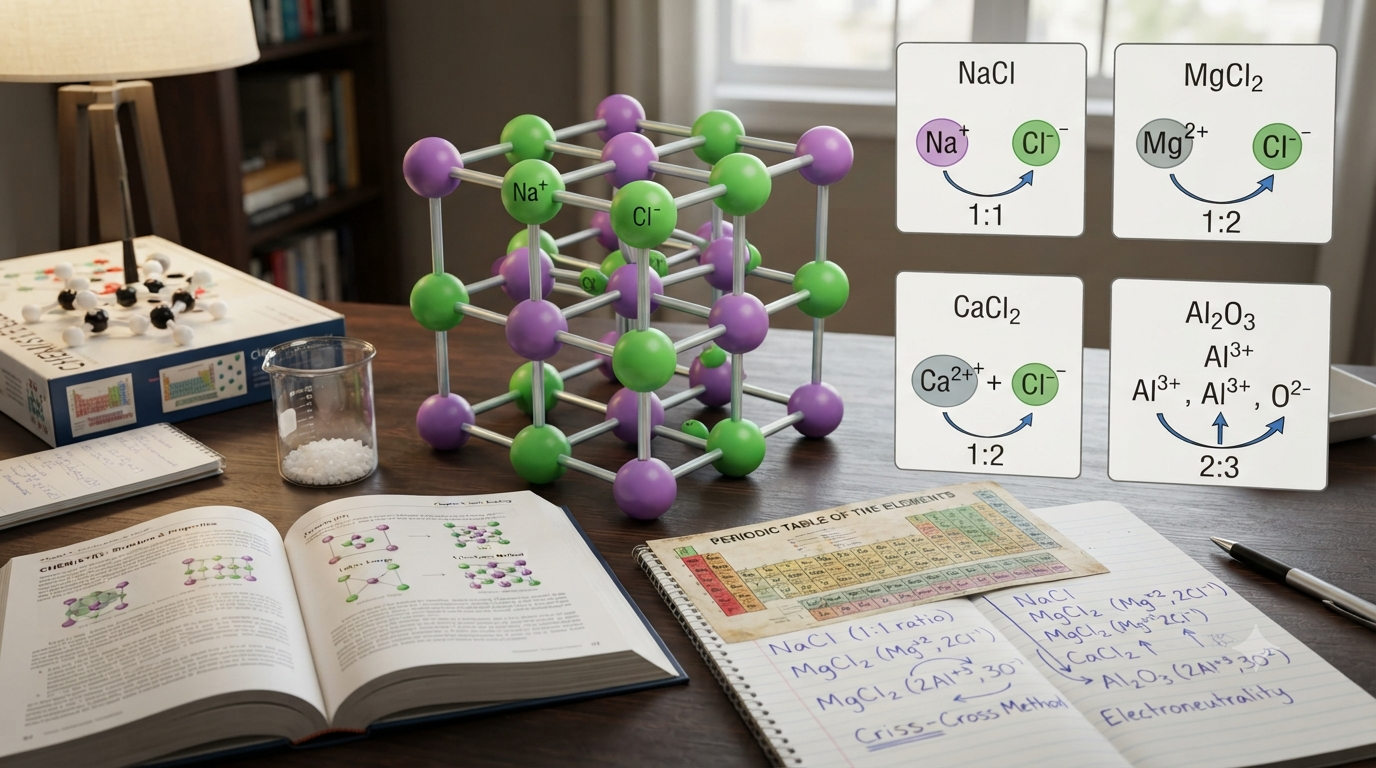
Atomic ratios are also important in ionic compounds, even though ionic compounds do not usually exist as separate molecules.

Consider sodium chloride:

NaCl

The formula indicates a 1:1 ratio of sodium ions to chloride ions.

Therefore:

Atomic ratio of Na : Cl = 1 : 1

Using approximate atomic masses:

  • Sodium = 23

  • Chlorine = 35.5

Mass ratio:

Na : Cl = 23 : 35.5

This is clearly not 1:1 by mass.

The formula tells us the relative number of ions in the simplest repeating ratio, while the mass ratio tells us how much each element contributes to the compound’s mass.

Why These Ratios Matter in Chemistry

Both atomic ratios and mass ratios are useful, but they are used for different purposes.

Atomic ratios are important when:

  • Writing and interpreting chemical formulas

  • Understanding the composition of compounds

  • Determining empirical formulas

  • Comparing numbers of atoms

  • Understanding molecular structures

  • Studying chemical reactions

Mass ratios are important when:

  • Calculating the mass of elements in compounds

  • Performing stoichiometric calculations

  • Determining percentage composition

  • Finding empirical formulas from experimental data

  • Calculating reactant and product quantities

  • Analyzing chemical samples

A strong understanding of both ratios makes quantitative chemistry much easier.

Atomic Ratio and Mass Ratio Are Connected

Although atomic and mass ratios are different, they are closely related.

The chemical formula provides the atomic ratio. The atomic masses then allow us to convert that atomic information into a mass ratio.

The basic process is:

Chemical formula → Atomic ratio → Multiply by atomic masses → Mass ratio

For a compound AₓBᵧ:

Atomic ratio = x : y

The corresponding mass ratio is:

A : B = (x × Atomic mass of A) : (y × Atomic mass of B)

This relationship connects the microscopic composition of a compound with its measurable mass.

Atomic Ratio Versus Mass Ratio

The difference can be summarized clearly.

FeatureAtomic RatioMass Ratio
What it comparesNumber of atomsMass contributed by elements
Based onChemical formulaChemical formula and atomic masses
Uses atomic masses?NoYes
Example for H₂OH = 2:1H = 1:8
Main purposeShows relative numbers of atomsShows relative masses of elements

The two ratios describe the same compound from different perspectives.

A Simple Method to Solve Ratio Problems

When asked to determine both ratios for a compound, follow these steps.

Step 1 Identify the Chemical Formula

Write the formula clearly.

For example:

H₂SO₄

Step 2 Count the Atoms

The formula contains:

  • 2 hydrogen atoms

  • 1 sulfur atom

  • 4 oxygen atoms

Therefore:

Atomic ratio = H : S : O = 2 : 1 : 4

Step 3 Find the Atomic Masses

Use the relative atomic masses:

  • H = 1

  • S = 32

  • O = 16

Step 4 Calculate Mass Contributions

Hydrogen:

2 × 1 = 2

Sulfur:

1 × 32 = 32

Oxygen:

4 × 16 = 64

Step 5 Write the Mass Ratio

H : S : O = 2 : 32 : 64

Divide by 2:

Mass ratio = 1 : 16 : 32

Thus, for sulfuric acid:

Atomic ratio = 2 : 1 : 4

Mass ratio = 1 : 16 : 32

This method works for compounds containing two, three, or more elements.

Connection With Percentage Composition

Mass ratios are also directly connected to percentage composition.

Once the mass contribution of each element is known, the total mass can be calculated. The percentage of an element is then found using:

Percentage by mass = (Mass contribution of element ÷ Total mass of compound) × 100

For water, the mass contributions are:

Hydrogen = 2

Oxygen = 16

Total mass:

2 + 16 = 18

Percentage of hydrogen:

(2 ÷ 18) × 100 ≈ 11.1%

Percentage of oxygen:

(16 ÷ 18) × 100 ≈ 88.9%

The atomic ratio tells us there are twice as many hydrogen atoms as oxygen atoms, while the mass ratio and percentage composition show that oxygen contributes most of the compound’s mass.

Common Mistakes to Avoid

Mistake 1 Treating Atomic Ratio as Mass Ratio

A ratio such as 2:1 describes atom numbers, not necessarily masses.

Mistake 2 Ignoring Subscripts

In H₂O, the subscript 2 must be included when counting hydrogen atoms.

Mistake 3 Forgetting Atomic Masses

Mass ratios require multiplication by the appropriate atomic masses.

Mistake 4 Forgetting to Simplify Ratios

After calculating mass contributions, simplify the ratio when possible.

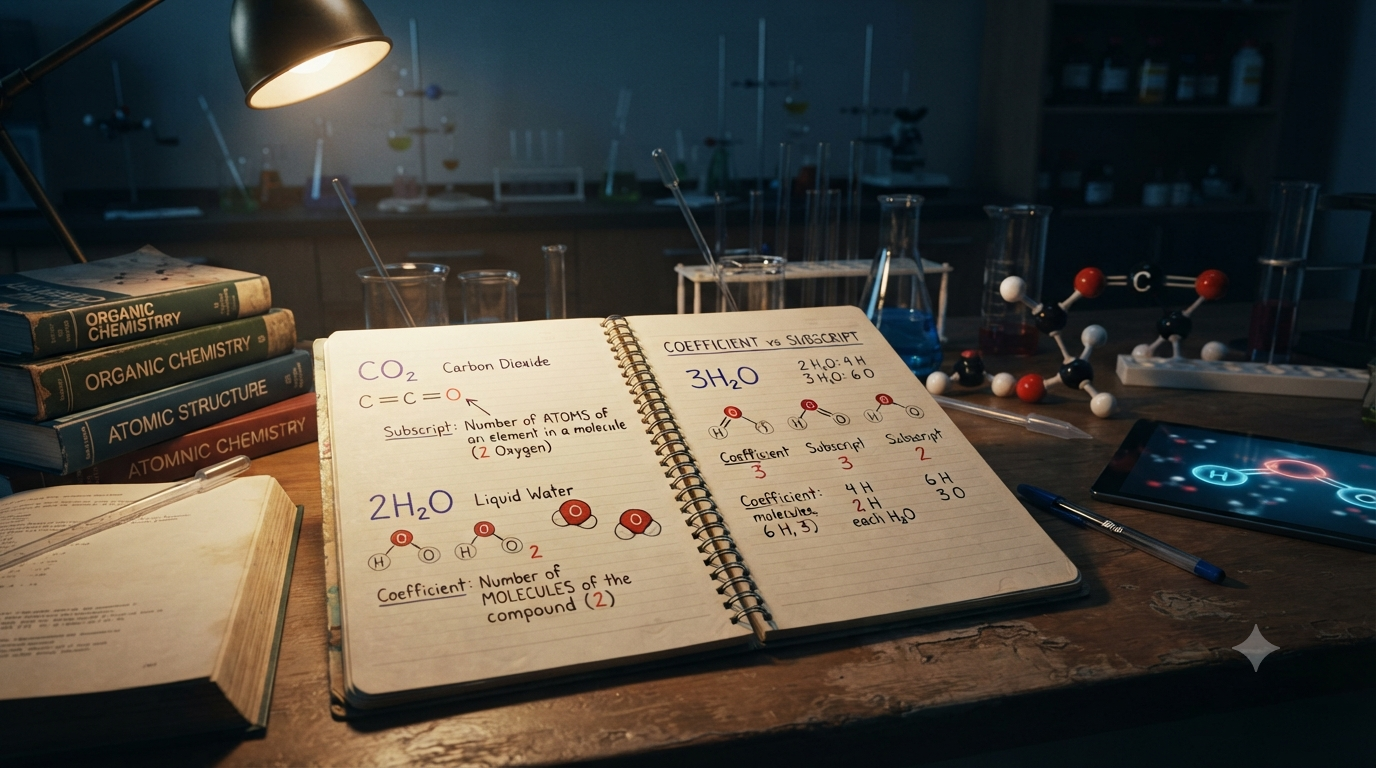
Mistake 5 Confusing Coefficients With Subscripts

In the expression:

2H₂O

the coefficient 2 means there are two water molecules. Each molecule contains two hydrogen atoms and one oxygen atom. Therefore, two molecules contain four hydrogen atoms and two oxygen atoms.

Coefficients affect the total number of atoms in a collection of particles, while subscripts describe the composition of each chemical formula unit or molecule.

Conclusion

Atomic ratios and mass ratios are two different ways of describing the composition of a chemical compound. An atomic ratio compares the numbers of atoms, while a mass ratio compares the masses contributed by those atoms. The atomic ratio can usually be obtained directly from the chemical formula, but the mass ratio requires the atomic masses of the elements.

For example, water has an atomic ratio of H = 2:1, but its mass ratio is H = 1:8. This difference exists because hydrogen and oxygen atoms have very different masses.

Learning to move from chemical formulas to atomic ratios and then to mass ratios provides an important foundation for stoichiometry, percentage composition, empirical formulas, and many other areas of chemistry. Once this relationship is understood, chemical formulas become more than symbols—they become a quantitative description of how matter is built.

FAQs

1. What is an atomic ratio in a compound?

An atomic ratio compares the numbers of atoms of different elements present in a compound. It is usually obtained from the subscripts in the chemical formula. For example, water has the formula H₂O, which contains two hydrogen atoms and one oxygen atom. Therefore, its atomic ratio of hydrogen to oxygen is 2:1. Similarly, carbon dioxide, CO₂, has an atomic ratio of carbon to oxygen of 1:2. Atomic ratios describe the relative numbers of atoms and do not consider the different masses of those atoms.

2. What is a mass ratio in a compound?

A mass ratio compares the masses contributed by different elements in a compound. To calculate it, the number of atoms of each element is multiplied by its relative atomic mass. For example, water contains two hydrogen atoms and one oxygen atom. Using atomic masses of approximately 1 for hydrogen and 16 for oxygen, their mass contributions are 2 and 16. Therefore, the mass ratio of hydrogen to oxygen is 2:16, or 1:8. Unlike an atomic ratio, a mass ratio considers both the number of atoms and their individual atomic masses.

3. Why are atomic ratios and mass ratios different?

Atomic ratios and mass ratios are different because atoms of different elements have different masses. An atomic ratio only compares the number of atoms, whereas a mass ratio considers how much those atoms weigh. For example, water has an atomic ratio of hydrogen to oxygen of 2:1. However, hydrogen has an atomic mass of about 1, while oxygen has an atomic mass of about 16. Consequently, two hydrogen atoms contribute a mass of about 2, while one oxygen atom contributes about 16. This gives a mass ratio of 1:8 rather than 2:1.

4. How can you find an atomic ratio from a chemical formula?

To find an atomic ratio, examine the subscripts in the chemical formula and use them as the relative numbers of atoms. If an element has no subscript, its number is understood to be one. For example, calcium chloride is CaCl₂. The formula contains one calcium atom and two chlorine atoms, so its atomic ratio is Ca = 1:2. For aluminum oxide, Al₂O₃, the atomic ratio is Al = 2:3. This method works directly for most chemical formulas and provides the simplest numerical relationship between the atoms of the elements.

5. How do you calculate a mass ratio from an atomic ratio?

To calculate a mass ratio, multiply the number of atoms of each element by its relative atomic mass. For example, carbon dioxide, CO₂, has an atomic ratio of C = 1:2. Carbon has an approximate atomic mass of 12, while oxygen has an atomic mass of 16. Therefore, carbon contributes 1 × 12 = 12 units of mass, while oxygen contributes 2 × 16 = 32 units. The mass ratio is therefore 12:32, which simplifies to 3:8. This method can be applied to compounds containing two or more elements.

6. What is the atomic ratio and mass ratio of water?

Water has the chemical formula H₂O. The formula contains two hydrogen atoms and one oxygen atom, so its atomic ratio is H = 2:1. Using approximate atomic masses of hydrogen = 1 and oxygen = 16, the hydrogen mass contribution is 2 × 1 = 2, while the oxygen contribution is 1 × 16 = 16. Therefore, the mass ratio is H = 2:16, which simplifies to 1:8. Thus, water demonstrates clearly that the atomic ratio and mass ratio of a compound can be very different.

7. Can the atomic ratio be used directly as the mass ratio?

No. An atomic ratio cannot normally be used directly as a mass ratio because different elements have different atomic masses. The atomic ratio only tells us how many atoms of each element are present relative to one another. To determine the mass ratio, each atomic amount must be multiplied by the corresponding atomic mass. For example, ammonia, NH₃, has an atomic ratio of nitrogen to hydrogen of 1:3. However, nitrogen has an atomic mass of about 14, while hydrogen has an atomic mass of about 1. Its mass ratio is therefore 14:3.

8. What is the difference between atomic ratio and mass ratio?

The main difference is what each ratio measures. An atomic ratio compares the relative numbers of atoms of different elements in a compound. It is generally obtained from the chemical formula. A mass ratio compares the relative masses contributed by those elements and requires their atomic masses. For example, CO₂ has an atomic ratio of C = 1:2. Its mass ratio is 12:32, or 3:8. Therefore, atomic ratios describe the numerical composition of atoms, while mass ratios describe the contribution of those atoms to the total mass of the compound.

9. Why are mass ratios important in chemistry?

Mass ratios are important because many chemical calculations involve measurable quantities of matter. They help determine the amount of each element present in a compound and are useful in percentage composition, stoichiometry, empirical formula calculations, and chemical analysis. For example, knowing the mass ratio of hydrogen to oxygen in water allows chemists to understand how much of each element contributes to a given mass of water. Mass ratios connect the microscopic composition represented by chemical formulas with quantities that can be measured in the laboratory, making them an important part of quantitative chemistry.

10. How are atomic ratios related to chemical formulas?

A chemical formula provides information about the relative number of atoms or ions present in a compound. The subscripts indicate the atomic ratio. For example, H₂SO₄ contains two hydrogen atoms, one sulfur atom, and four oxygen atoms, giving an atomic ratio of H:S = 2:1:4. These numbers can then be combined with the atomic masses of the elements to calculate their mass contributions. Therefore, a chemical formula provides the starting point for determining both atomic ratios and mass ratios, connecting the symbolic representation of a compound with its quantitative composition.

Related Posts

Leave a Comment

Your email address will not be published. Required fields are marked *

Scroll to Top