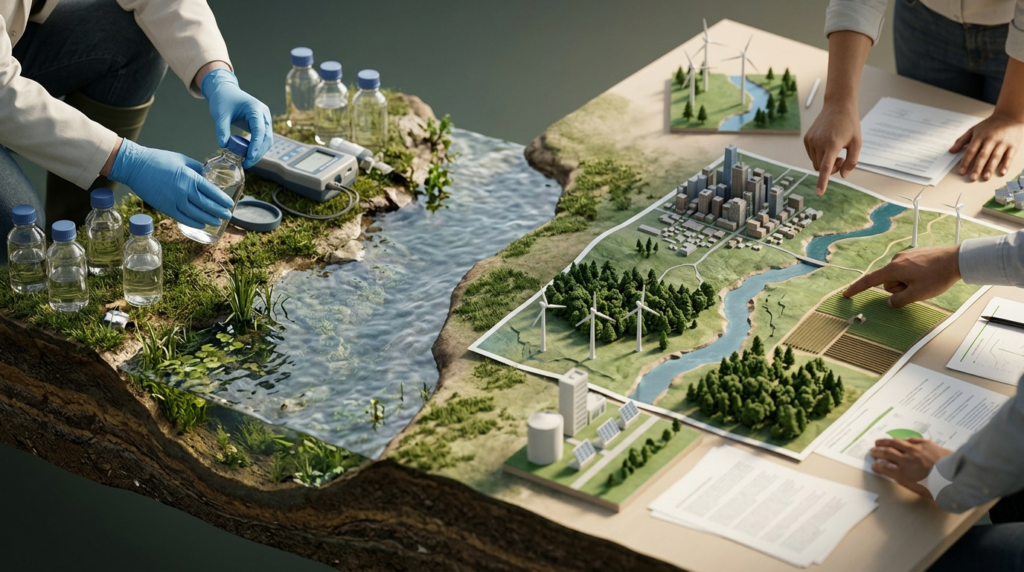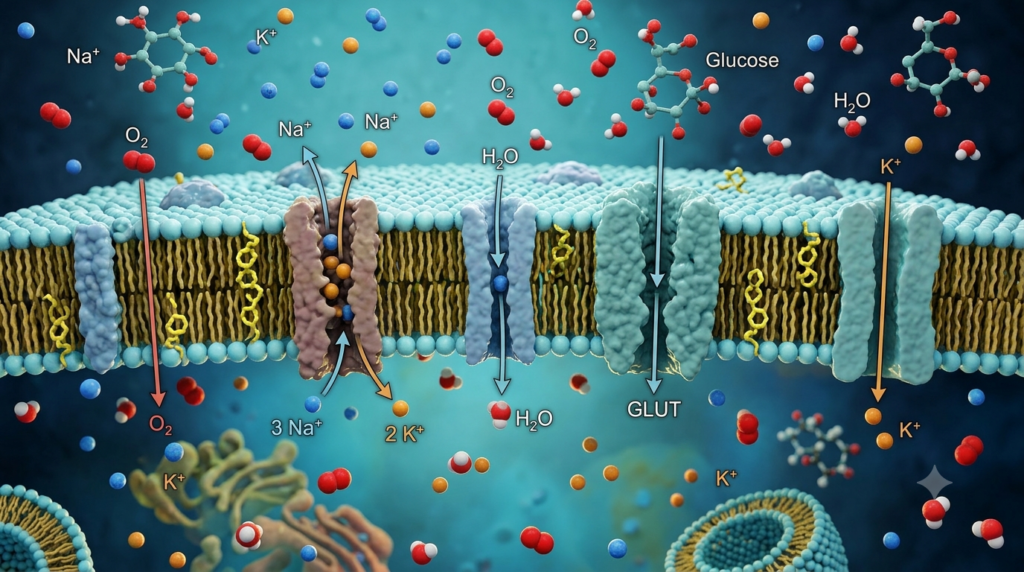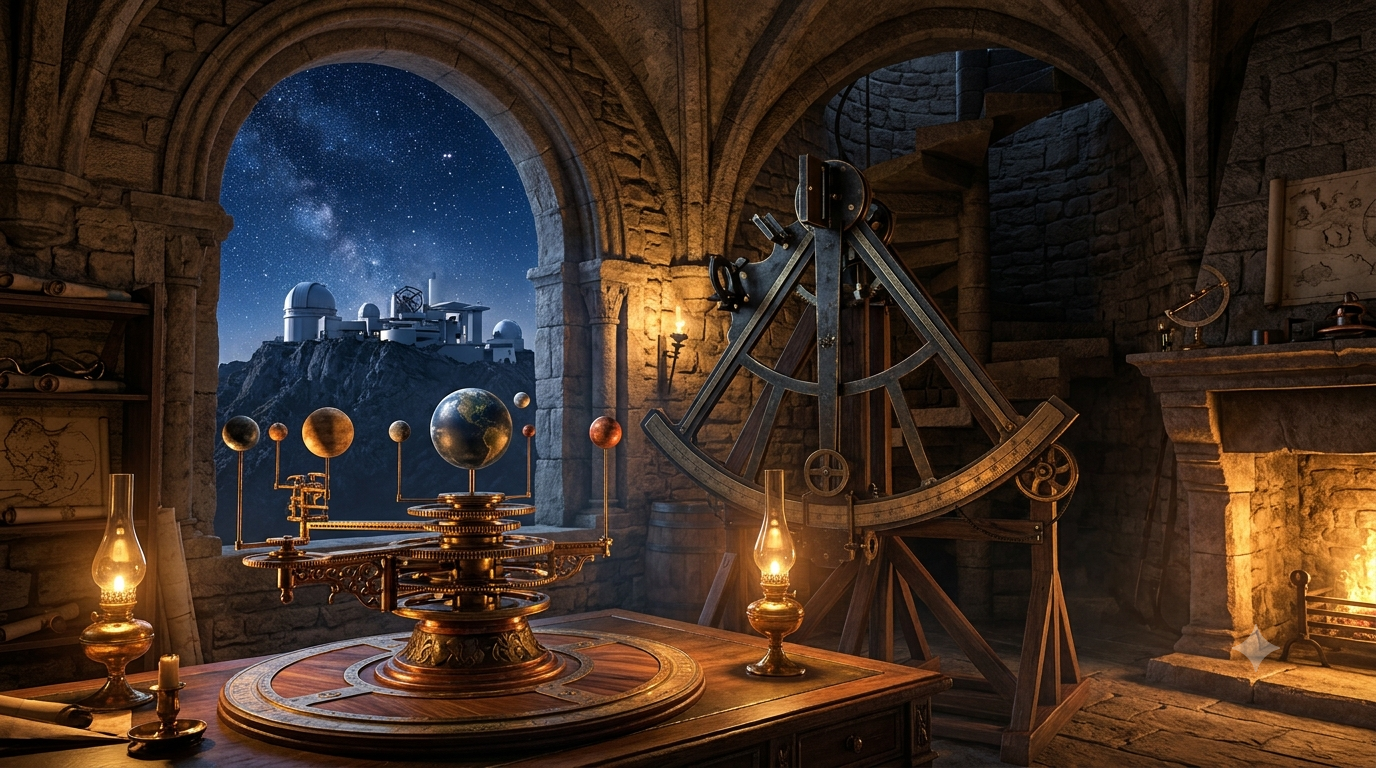
Science has played a major role in shaping human civilization. From the earliest observations of the Sun, Moon, and stars to modern discoveries in genetics, artificial intelligence, and space exploration, people have continuously tried to understand the world around them. The history of science is the story of how human beings developed knowledge through observation, experience, experimentation, logical reasoning, and the exchange of ideas.
In ancient times, people explained natural events through traditions, beliefs, and simple observations. Gradually, they began searching for explanations based on evidence and systematic investigation. This change transformed human understanding of nature, matter, life, and the universe. Scientific knowledge also influenced agriculture, medicine, engineering, transportation, communication, and industry. Learning about the history of science helps us understand not only how scientific discoveries occurred but also how human thinking and society developed over time.
1. What Is the History of Science?
The history of science is the study of how scientific ideas, methods, discoveries, and institutions have developed throughout human history. It examines the people, cultures, technologies, and circumstances that contributed to the growth of knowledge.
Science did not develop in a single place or during one particular period. It emerged gradually through the experiences of different communities and civilizations. Early humans learned to recognize patterns in nature, identify useful plants, make tools, control fire, and understand seasonal changes. These practical experiences provided some of the earliest foundations of human knowledge.
Over time, people began to investigate natural phenomena more systematically. They developed methods for measuring time, observing celestial movements, treating illnesses, constructing buildings, and calculating quantities. Later, scientific inquiry became increasingly organized through experiments, mathematical models, universities, laboratories, and research institutions.
The history of science therefore includes both famous discoveries and the gradual accumulation of knowledge across generations. It also shows that scientific understanding can change when new evidence becomes available.
2. Early Human Knowledge and the Origins of Science
The earliest foundations of scientific knowledge developed long before formal scientific institutions existed. Early human communities depended on careful observation and practical experience to survive.
Observation of Nature
Early humans observed animals, plants, weather conditions, rivers, mountains, and the changing seasons. They learned which plants could be used as food, which materials were suitable for making tools, and how environmental conditions affected their survival.
These observations were not always scientific in the modern sense, but they encouraged people to identify patterns and develop explanations based on experience.
For example, recognizing seasonal changes helped communities understand when certain plants would grow and when animals might migrate. Observing fire also taught people about heat, combustion, and the properties of different materials.
The Development of Tools and Practical Skills
The production of stone tools, the controlled use of fire, and the development of early shelters demonstrated growing knowledge of materials and physical processes.
As human societies became more complex, people learned to shape metals, produce pottery, weave fabrics, and construct stronger buildings. These activities required experimentation, practical reasoning, and the gradual improvement of techniques.
Such achievements formed an important foundation for later developments in chemistry, physics, engineering, and materials science.
Agriculture and the Understanding of Seasons
The development of agriculture was another major step in human knowledge. Farming communities needed to understand soil conditions, rainfall, irrigation, plant growth, and seasonal cycles.
People began observing the movement of the Sun and stars to estimate the passage of time and organize agricultural activities. These practices contributed to the development of calendars, astronomy, mathematics, and environmental knowledge.
Although early agricultural knowledge was primarily practical, it demonstrated how systematic observation could improve human life.
3. Science in Ancient Civilizations
Several ancient civilizations made important contributions to mathematics, astronomy, medicine, engineering, and the understanding of nature. Their achievements provided foundations that later scholars developed further.
Science in Ancient Mesopotamia
Mesopotamia, located in parts of present-day Iraq and surrounding regions, was home to civilizations that developed sophisticated systems of calculation, recordkeeping, and astronomical observation.
Mesopotamian scholars studied the movements of celestial objects and recorded astronomical events. Their observations helped them develop calendars and predict certain recurring celestial phenomena.
They also used mathematical systems for trade, construction, land measurement, and administration. Their use of a base-60 number system influenced the way time and angles are measured today. For example, an hour is divided into 60 minutes, and a circle is divided into 360 degrees.
These developments show how practical needs encouraged mathematical and astronomical knowledge.
Science in Ancient Egypt
Ancient Egyptian civilization made significant advances in mathematics, medicine, architecture, and astronomy.
Egyptian builders used geometric knowledge to construct large monuments, temples, and pyramids. Surveying techniques helped them measure land and organize construction projects.
Egyptian medical practitioners documented treatments for injuries and illnesses. Surviving medical texts describe observations about the human body, surgical procedures, and the use of medicinal substances.
The Egyptians also developed a calendar based on observations of the year and the seasonal cycle of the Nile River. Their achievements demonstrate the close relationship between scientific knowledge, practical problems, and organized society.
Science in Ancient India
Ancient India made important contributions to mathematics, astronomy, medicine, and philosophical thought.
Indian mathematicians developed sophisticated numerical methods and contributed to the development and transmission of the decimal place-value system. The use of zero as a number and as a positional placeholder became especially important for arithmetic and later mathematical development.
Scholars such as Aryabhata investigated mathematical problems and astronomical phenomena. His work included calculations related to planetary movements and explanations of eclipses based on astronomical processes.
Indian medical traditions also developed extensive knowledge of medicinal plants, anatomy, diagnosis, and treatments. Ayurveda emerged as an influential system of medical knowledge, although its historical practices should be distinguished from treatments validated through modern scientific research.
These contributions became part of broader networks of knowledge through which mathematical and astronomical ideas were transmitted and developed across regions.
Science in Ancient China
Ancient China contributed significantly to astronomy, medicine, engineering, agriculture, and technology.
Chinese inventors and craftspeople developed technologies such as papermaking, the magnetic compass, gunpowder, and printing. These innovations eventually influenced societies far beyond China.
Chinese astronomers maintained detailed records of celestial events, including eclipses and the appearance of comets. Such records are valuable for understanding historical astronomical phenomena.
Chinese agricultural knowledge also developed through experience with irrigation, soil management, and crop cultivation. Traditional Chinese medicine accumulated extensive practical knowledge, although individual treatments require evaluation according to modern evidence.
Together, these achievements illustrate the importance of cultural exchange and the independent development of knowledge in different civilizations.
Science in Ancient Greece
Ancient Greek thinkers helped establish influential traditions of rational inquiry and natural philosophy.
Philosophers such as Thales, Democritus, and Aristotle proposed explanations for natural phenomena. Their ideas were not always correct, and many lacked experimental confirmation, but they encouraged people to investigate nature through reasoning rather than relying exclusively on supernatural explanations.
Hippocrates became associated with an influential tradition of medical observation and reasoning. Euclid organized geometric knowledge into a systematic mathematical framework, while Archimedes made important contributions to mechanics, geometry, and hydrostatics.
Greek scholars also debated the structure of matter, the nature of motion, and the arrangement of the universe. Their writings influenced later scholars in the Islamic world and Europe.
However, ancient Greek thinkers were not the only originators of rational investigation. Scientific knowledge developed across many cultures, and the history of science is best understood as a connected global story.
4. Science During the Middle Ages
The Middle Ages witnessed important developments in scientific knowledge across the Islamic world, Asia, Africa, and Europe. Although this period is sometimes incorrectly portrayed as an era of scientific inactivity, many scholars made major contributions to mathematics, astronomy, medicine, optics, and natural philosophy.
The Golden Age of Science in the Islamic World
From approximately the eighth century onward, scholars working in major intellectual centers such as Baghdad translated, studied, and expanded knowledge from Greek, Persian, Indian, and other traditions.
The House of Wisdom in Baghdad is associated with the broader scholarly culture of translation and research during this period.
The mathematician Al-Khwarizmi contributed to the development of algebra and helped transmit important mathematical methods. The word algorithm ultimately derives from a Latinized form of his name, while the word algebra comes from the title of one of his works.
Ibn al-Haytham made important contributions to optics. He investigated vision and light through mathematical analysis and experimental approaches, challenging some earlier explanations of how sight works.
Physicians such as Al-Razi and Ibn Sina contributed to medical knowledge through clinical observation, classification, and the organization of medical learning. Ibn Sina’s Canon of Medicine became influential in several regions.
Scholars also improved astronomical tables, developed instruments, and studied the movement of celestial bodies. Their work preserved, criticized, and extended earlier knowledge rather than simply copying it.
Scientific Knowledge in Medieval Europe
European monasteries, cathedral schools, and later universities helped preserve and develop intellectual traditions. From the twelfth century onward, the translation of Arabic and Greek works into Latin introduced European scholars to important developments in mathematics, medicine, philosophy, and astronomy.
Universities gradually became important centers for teaching and debate. Scholars studied natural philosophy, mathematics, medicine, and logic.
Roger Bacon emphasized the importance of observation and experimental investigation, although scientific methods at the time remained different from modern laboratory science.
Medieval European scholars also improved mechanical technologies, agricultural practices, and astronomical instruments. These developments helped prepare the intellectual and technological environment for later scientific changes.
5. The Scientific Revolution
The Scientific Revolution, which developed mainly between the sixteenth and seventeenth centuries, marked a major transformation in the study of nature. Scholars increasingly combined observation, experimentation, mathematical analysis, and critical evaluation of established ideas.
This period did not create science from nothing. Instead, it brought together older traditions and new approaches that significantly changed scientific investigation.
Nicolaus Copernicus and the Heliocentric Model
For centuries, the Earth-centered model of the universe had been influential in European astronomy. In the sixteenth century, Nicolaus Copernicus proposed a model in which Earth and the other planets orbit the Sun.
His heliocentric model challenged established astronomical assumptions. Although his original model still contained important limitations, it encouraged further investigation into planetary motion and the structure of the solar system.
Galileo Galilei and Telescopic Observations
Galileo Galilei used telescopic observations to investigate the Moon, Jupiter, Venus, and the Sun. His observations revealed mountains and craters on the Moon, moons orbiting Jupiter, and phases of Venus.
These findings challenged aspects of traditional cosmology and provided important evidence for changing astronomical models.
Galileo also investigated motion and helped develop mathematical approaches to physical problems. His work became influential in the emergence of modern physics.
Johannes Kepler and Planetary Motion
Johannes Kepler used astronomical observations, especially those collected by Tycho Brahe, to develop mathematical laws describing planetary motion.
He demonstrated that planets travel in elliptical orbits rather than perfect circles. His laws improved the accuracy of astronomical predictions and later contributed to Isaac Newton’s theory of gravitation.
Isaac Newton and Classical Mechanics
In 1687, Isaac Newton published Philosophiæ Naturalis Principia Mathematica, a work that presented influential laws of motion and the law of universal gravitation.
Newton showed how mathematical principles could explain a wide range of physical phenomena, from falling objects on Earth to the motion of planets.
His work unified areas of mechanics and astronomy within a powerful theoretical framework. Newtonian physics became central to scientific research and engineering for centuries, although later developments showed that classical mechanics has limits under extreme conditions.
6. The Development of the Scientific Method
The scientific method developed gradually through the contributions of many thinkers and research traditions. It is not a single rigid procedure followed identically in every scientific field. Instead, it is a collection of approaches for investigating questions and evaluating explanations.
A typical scientific investigation begins with a question or observation. Researchers then develop a possible explanation, collect relevant evidence, conduct experiments or make further observations, and analyze the results.
The findings may support the explanation, challenge it, or reveal the need for a revised hypothesis.
Observation and Evidence
Scientific research begins with careful observation and the collection of reliable evidence. Observations may involve the human senses, measuring instruments, laboratory equipment, satellites, microscopes, or computer-based systems.
Accurate measurements allow researchers to compare results and identify patterns that might otherwise remain unnoticed.
Hypotheses and Experiments
A hypothesis is a proposed explanation that can be investigated through evidence. Depending on the research question, scientists may test hypotheses through controlled experiments, field studies, observational data, simulations, or mathematical analysis.
For example, researchers studying plant growth might compare plants exposed to different amounts of light while controlling other relevant conditions.
A well-designed investigation attempts to distinguish the effect being studied from other possible influences.
Reproducibility and Peer Review
Scientific findings become more reliable when other researchers can examine the methods, evaluate the evidence, and attempt to reproduce the results.
Peer review allows specialists to assess research before publication, although it cannot guarantee that every conclusion is correct.
Science progresses through ongoing criticism, replication, debate, and revision. Its strength comes not from the assumption that scientists are always right but from the ability to correct errors when better evidence becomes available.
7. The Industrial Revolution and Applied Science
The Industrial Revolution, which began in Britain during the eighteenth century and later spread to other regions, transformed manufacturing, transportation, agriculture, and everyday life.
Scientific understanding and technological innovation developed together during this period. Practical engineering problems encouraged further investigation, while advances in science helped improve industrial technologies.
Steam Power and Mechanical Engineering
Improvements in steam engines allowed factories, mines, and transportation systems to use mechanical power more effectively.
Engineers such as James Watt contributed to the development of more efficient steam engines. These machines helped increase industrial production and supported the expansion of railways and steam-powered ships.
The growth of mechanical engineering also encouraged more systematic study of energy, motion, heat, and materials.
Advances in Chemistry
Chemistry became increasingly important in industrial production. Scientific research contributed to the development of improved chemical processes, fertilizers, dyes, medicines, and industrial materials.
The work of Antoine Lavoisier helped establish modern chemical principles, including a clearer understanding of combustion and the conservation of mass in chemical reactions.
Later advances in chemical science contributed to the production of synthetic materials, improved agricultural inputs, and more efficient manufacturing methods.
Electricity and Communication
During the nineteenth century, scientists and engineers made major advances in understanding and using electricity and magnetism.
Research by Michael Faraday and James Clerk Maxwell helped establish important foundations of electromagnetism. These developments eventually supported electric motors, generators, electrical lighting, and modern communication systems.
The telegraph enabled messages to travel over long distances much faster than traditional physical delivery. Later, the telephone and radio further transformed communication.
The Industrial Revolution demonstrated that scientific knowledge could change economies and social structures on a large scale. It also introduced challenges involving pollution, working conditions, resource consumption, and inequality.
8. The Growth of Modern Physics
The late nineteenth and early twentieth centuries brought discoveries that challenged important assumptions of classical physics.
Albert Einstein and Relativity
Albert Einstein developed the special theory of relativity in 1905 and the general theory of relativity in 1915.
Special relativity showed that measurements of space and time depend on the relative motion of observers and established the relationship between mass and energy expressed by the equation E = mc².
General relativity described gravity as a consequence of the curvature of spacetime associated with mass and energy.
These theories transformed scientific understanding of the universe and became essential to modern research in cosmology, astrophysics, and gravitational physics.
The Development of Quantum Mechanics
Experiments involving atoms, light, and subatomic particles revealed that classical physics could not explain every aspect of nature.
Scientists including Max Planck, Niels Bohr, Werner Heisenberg, Erwin Schrödinger, and others contributed to the development of quantum theory.
Quantum mechanics describes the behavior of matter and energy at atomic and subatomic scales. It introduced concepts such as quantized energy levels, wave-particle duality, and probabilistic predictions.
Quantum theory also contributed to practical technologies, including semiconductors, lasers, and many modern electronic devices.
These developments illustrate how new evidence can require major changes in scientific explanations.
9. The Development of Biology, Medicine, and Genetics
Biological sciences expanded rapidly as scientists developed better microscopes, experimental techniques, and methods for studying living organisms.
Cell Theory and Microbiology
The invention and improvement of microscopes allowed researchers to observe structures that were invisible to the naked eye.
Scientists developed cell theory, which established that cells are fundamental units of life and that new cells arise from existing cells.
The work of researchers such as Louis Pasteur and Robert Koch contributed to the development of microbiology and the understanding of infectious diseases. Pasteur’s research helped establish the role of microorganisms in fermentation and certain diseases, while Koch’s work advanced the identification of disease-causing organisms.
These discoveries supported improvements in hygiene, food safety, vaccination, and public health.
Evolution and Natural Selection
In the nineteenth century, Charles Darwin presented evidence that species change over generations. His theory of evolution by natural selection explained how inherited variations can influence survival and reproduction.
Alfred Russel Wallace independently developed a similar idea of natural selection, and his work contributed to the development of evolutionary theory.
Evolutionary biology later expanded through genetics, paleontology, molecular biology, and population studies. Today, evolution provides a central framework for understanding the diversity and relationships of living organisms.
DNA and Modern Genetics
In the twentieth century, research established the molecular structure of DNA and clarified its role in storing hereditary information.
The double-helix model proposed in 1953 by James Watson and Francis Crick drew on crucial experimental evidence produced by Rosalind Franklin and other researchers, as well as the work of Maurice Wilkins and earlier scientists.
Later advances in molecular biology enabled researchers to investigate genes, inherited disorders, genetic variation, and the mechanisms of cellular activity.
Technologies such as DNA sequencing and gene editing have expanded research in medicine, agriculture, and biotechnology. However, these developments also raise important questions about privacy, fairness, safety, and the ethical use of genetic information.
10. The Space Age and Modern Astronomy
Human understanding of the universe has expanded enormously through advances in telescopes, mathematics, spacecraft, and space-based observatories.
During the twentieth century, rockets made it possible to send instruments and eventually humans beyond Earth’s atmosphere. In 1957, the Soviet Union launched Sputnik 1, the first artificial satellite to orbit Earth.
In 1969, the Apollo 11 mission achieved the first crewed landing on the Moon. These events marked major milestones in space exploration.
Spacecraft have since explored the Moon, Mars, Venus, Jupiter, Saturn, and other destinations. Robotic missions have returned samples, analyzed planetary environments, and investigated the possibility of past or present conditions suitable for life beyond Earth.
Telescopes have also transformed astronomy. The Hubble Space Telescope provided detailed observations of distant galaxies and cosmic phenomena, while the James Webb Space Telescope has expanded observations of early galaxies, star formation, and planetary atmospheres.
Modern cosmology investigates the origin, evolution, and large-scale structure of the universe. Evidence supports the conclusion that the observable universe has expanded from an earlier hot, dense state. Scientists continue to investigate unresolved questions about dark matter, dark energy, black holes, and the earliest stages of cosmic history.
11. Computers, the Internet, and Artificial Intelligence
Digital technology has transformed how scientific knowledge is created, analyzed, shared, and applied.
The Development of Computers
Early computers were designed to perform calculations and process information. Over time, advances in electronic components, integrated circuits, and software made computers smaller, faster, and more accessible.
Scientists now use computers to analyze experimental data, model complex systems, simulate physical processes, and study biological structures.
For example, climate researchers use computational models to investigate possible future climate conditions, while astronomers process enormous quantities of telescope data to identify distant objects.
The Internet and Global Collaboration
The internet allows researchers to share scientific papers, datasets, experimental methods, and research tools across geographical boundaries.
Digital communication has made international collaboration easier and helped scientific findings reach wider audiences. Online journals, educational platforms, and open-data projects have expanded access to information.
However, the availability of information does not automatically make it reliable. Readers must still distinguish credible research from misleading claims, fabricated information, and unsupported interpretations.
Artificial Intelligence in Scientific Research
Artificial intelligence and machine learning are increasingly used to recognize patterns, analyze large datasets, generate predictions, and support scientific discovery.
These technologies have applications in medical imaging, protein research, materials science, astronomy, environmental monitoring, and drug development.
Nevertheless, AI systems can produce errors, reflect biases in their training data, or generate results that are difficult to interpret. Scientific conclusions therefore require appropriate validation, human expertise, and transparent evaluation.
AI is becoming an important research tool, but it does not eliminate the need for sound scientific reasoning.
12. How Scientific Knowledge Has Changed Human Life
The development of science has influenced nearly every major aspect of modern civilization.
Improvements in Healthcare
Scientific research has contributed to vaccines, antibiotics, diagnostic imaging, surgical techniques, and improved understanding of diseases.
Public health measures such as sanitation, clean drinking water, food safety, and disease surveillance have also helped prevent illness and improve life expectancy in many populations.
However, access to medical advances remains unequal, and new health challenges continue to require research and cooperation.
Agricultural Development
Scientific knowledge has improved crop breeding, irrigation, soil management, pest control, and agricultural machinery.
Modern agricultural research has helped increase food production in many regions. At the same time, excessive fertilizer use, pesticide misuse, soil degradation, and unsustainable water consumption can cause environmental harm.
Scientific agriculture therefore needs to balance productivity with long-term ecological health.
Transportation and Communication
Advances in physics, engineering, materials science, and computing have made modern transportation systems possible. Trains, automobiles, aircraft, satellites, and digital networks connect people and communities around the world.
These systems support trade, education, research, and cultural exchange. They also create challenges involving energy consumption, emissions, infrastructure, and safety.
Environmental Awareness
Scientific research has improved understanding of ecosystems, biodiversity, pollution, climate change, and the relationships between human activities and natural systems.
Climate science, for example, uses observations, physical principles, and computer models to investigate changes in Earth’s climate.
This knowledge helps governments, communities, and organizations evaluate environmental risks and develop strategies for reducing harm.
13. The Challenges and Limitations of Scientific Progress
Although science has improved human life in many ways, scientific discoveries and technologies can also create serious challenges.
Nuclear technology provides a clear example. Knowledge of atomic processes has supported medical imaging, cancer treatment, and electricity generation, but it has also enabled the development of nuclear weapons.
Industrial technologies have increased production and convenience while contributing to pollution and environmental degradation. Genetic engineering and AI offer valuable possibilities but raise questions about safety, accountability, privacy, and fairness.
Scientific research can also be influenced by inadequate funding, conflicts of interest, poor experimental design, publication bias, or pressure to produce particular results. These problems make transparency, independent verification, ethical standards, and open scientific debate essential.
It is also important to recognize that scientific knowledge does not automatically determine how society should act. Science can help explain the likely consequences of different decisions, but ethical values, social priorities, and public discussion are needed when choosing how technologies should be used.
Responsible scientific progress requires both reliable evidence and careful consideration of its consequences.
14. The Future of Science and Human Knowledge
The future of science will likely involve increasingly powerful tools for observing, measuring, and understanding the natural world.
Artificial intelligence may accelerate data analysis and help researchers identify patterns that would be difficult to discover using traditional methods alone. Biotechnology may improve the diagnosis and treatment of diseases, while materials science may contribute to stronger, lighter, and more sustainable products.
Renewable energy technologies, improved energy storage, and advanced electrical systems may help societies reduce their dependence on fossil fuels. Research in climate science and ecology will remain important for protecting natural resources and responding to environmental change.
Astronomy and space exploration may reveal more about distant planets, the history of galaxies, and the conditions necessary for life. Research into fundamental physics may also improve our understanding of matter, energy, and the structure of the universe.
Despite these possibilities, many questions remain unanswered. Scientists continue to investigate the nature of dark matter and dark energy, the origins of life, the functioning of the human brain, and the limits of current physical theories.
Future progress will depend not only on new technologies but also on education, international collaboration, research integrity, and access to reliable information.
Conclusion
The history of science is the history of humanity’s continuing effort to understand the natural world. From early observations of nature to ancient mathematical systems, the Scientific Revolution, modern medicine, quantum physics, space exploration, and artificial intelligence, each period has contributed to the development of human knowledge.
Scientific progress has never been the achievement of one person or one civilization alone. It has emerged through the combined efforts of researchers, inventors, craftspeople, physicians, mathematicians, and communities across different times and places.
One of the most important lessons from this history is that knowledge develops through curiosity, evidence, cooperation, and the willingness to correct mistakes. Scientific explanations can change when stronger evidence becomes available, making science a continuous process rather than a finished collection of facts.
As humanity faces challenges involving health, energy, climate, technology, and the exploration of the universe, science will remain essential. By combining scientific understanding with ethical responsibility and open-minded thinking, people can use knowledge more wisely and build a better-informed future.
FAQs
1. What is the history of science?
The history of science is the study of how human understanding of nature, life, matter, and the universe has developed over time. It explores scientific discoveries, important thinkers, technological inventions, and the methods used to investigate natural phenomena. Early humans gained knowledge through observation and practical experience, while ancient civilizations developed mathematics, astronomy, medicine, and engineering. Later, the Scientific Revolution introduced major changes in scientific investigation. Modern science now includes fields such as genetics, quantum physics, space exploration, and artificial intelligence. Studying the history of science helps us understand how knowledge grows and influences human civilization.
2. How did science begin in human history?
Science began gradually when early humans observed nature and learned from their experiences. They studied seasonal changes, identified useful plants, developed tools, controlled fire, and learned practical ways to survive. Although these activities were not formal science, they encouraged observation, experimentation, and the recognition of patterns. As communities developed agriculture, they needed knowledge of weather, soil, water, and seasonal cycles. Over time, these practical skills expanded into more systematic investigations of natural phenomena. Ancient civilizations later developed organized knowledge in mathematics, astronomy, medicine, and engineering, creating foundations for the scientific disciplines studied today.
3. Which ancient civilizations contributed to the development of science?
Several ancient civilizations made important contributions to scientific knowledge. Mesopotamians developed mathematical systems and recorded astronomical observations, while Egyptians advanced geometry, medicine, and engineering. Ancient Indian scholars contributed to mathematics, astronomy, and medical traditions. Chinese civilizations developed technologies such as papermaking, printing, the magnetic compass, and gunpowder. Greek thinkers influenced mathematics, natural philosophy, mechanics, and logical reasoning. These civilizations exchanged ideas through trade, travel, translation, and scholarship. Their achievements provided foundations for later scientific developments. The history of science demonstrates that knowledge emerged across many cultures rather than originating exclusively in one civilization or geographical region.
4. What was the Scientific Revolution?
The Scientific Revolution was a major transformation in scientific thinking that developed mainly during the sixteenth and seventeenth centuries. Scholars increasingly used observation, experimentation, mathematics, and evidence to investigate nature. Nicolaus Copernicus proposed a Sun-centered model of the planetary system, while Galileo Galilei used telescopic observations to challenge established astronomical ideas. Johannes Kepler developed mathematical laws of planetary motion, and Isaac Newton formulated influential laws of motion and universal gravitation. These developments changed how people understood the universe and physical processes. The Scientific Revolution helped establish important foundations of modern science and encouraged critical examination of established explanations.
5. Who are some of the most important scientists in history?
Many scientists have contributed significantly to human knowledge. Archimedes advanced mathematics and mechanics, while Aryabhata contributed to mathematics and astronomy. Ibn al-Haytham made important contributions to optics and experimental investigation. Nicolaus Copernicus, Galileo Galilei, Johannes Kepler, and Isaac Newton transformed astronomy and physics. Antoine Lavoisier helped establish modern chemistry, and Charles Darwin developed the theory of evolution by natural selection. Albert Einstein transformed our understanding of space, time, and gravity. Rosalind Franklin contributed crucial experimental evidence to understanding DNA structure. These individuals represent only part of a much broader scientific history involving researchers from different cultures and generations.
6. How did the scientific method develop?
The scientific method developed gradually as researchers sought reliable ways to investigate questions and test explanations. It commonly involves observing a phenomenon, formulating a question, proposing a hypothesis, collecting evidence, conducting experiments or other investigations, and analyzing results. Scientists then evaluate whether the evidence supports their explanation or suggests that it should be revised. Reproducibility and peer review help other researchers assess scientific findings. However, scientific investigations do not always follow one fixed sequence because different fields require different approaches. The central principles are careful reasoning, reliable evidence, transparency, critical evaluation, and a willingness to correct errors when new information becomes available.
7. How did the Industrial Revolution influence scientific development?
The Industrial Revolution transformed scientific knowledge into technologies that changed manufacturing, transportation, agriculture, and everyday life. Improvements in steam engines increased the use of mechanical power in factories, mines, and transport systems. Advances in chemistry supported the development of industrial materials, fertilizers, and improved manufacturing processes. Research into electricity and magnetism eventually contributed to electric motors, generators, lighting, and communication technologies. Industrial growth also encouraged further scientific research by creating new technical challenges. However, industrialization contributed to pollution, resource depletion, and difficult working conditions. Its history demonstrates that technological progress can bring substantial benefits while also creating social and environmental problems.
8. How has science improved human life?
Science has improved human life through advances in healthcare, agriculture, transportation, communication, and environmental understanding. Medical research has contributed to vaccines, antibiotics, diagnostic tools, and better treatments for many diseases. Agricultural science has improved crop varieties, irrigation, and food production. Engineering and physics have supported safer transportation, electricity generation, and modern communication systems. Environmental research helps people understand pollution, biodiversity loss, and climate change. Scientific knowledge also supports the development of cleaner energy technologies and improved public health measures. However, scientific benefits are not distributed equally, and some technologies create new risks. Responsible application is essential to ensure that scientific progress benefits society.
9. What is the role of modern technology in scientific research?
Modern technology allows scientists to investigate questions that were once difficult or impossible to study. Computers help researchers analyze large datasets, perform calculations, and simulate complex systems. Microscopes reveal cellular structures, while telescopes and satellites provide information about distant astronomical objects and Earth’s environment. DNA sequencing enables detailed investigation of genetic information, and artificial intelligence can help identify patterns in scientific data. Digital communication also allows researchers worldwide to share findings and collaborate. Despite these advantages, technological tools can produce errors or misleading results if used incorrectly. Scientists must validate their methods, evaluate evidence carefully, and interpret findings using appropriate scientific knowledge.
10. Why is studying the history of science important?
Studying the history of science helps people understand how scientific knowledge develops and why evidence-based thinking matters. It reveals how earlier discoveries influenced modern medicine, technology, mathematics, astronomy, and other disciplines. It also demonstrates that scientific explanations can change when new observations and stronger evidence become available. Learning about the contributions of different civilizations encourages appreciation of cultural exchange and international collaboration. The history of science also highlights the ethical responsibilities associated with technological progress, including environmental protection and public safety. By understanding past achievements and mistakes, people can evaluate present-day scientific claims more critically and make better-informed decisions about future challenges.