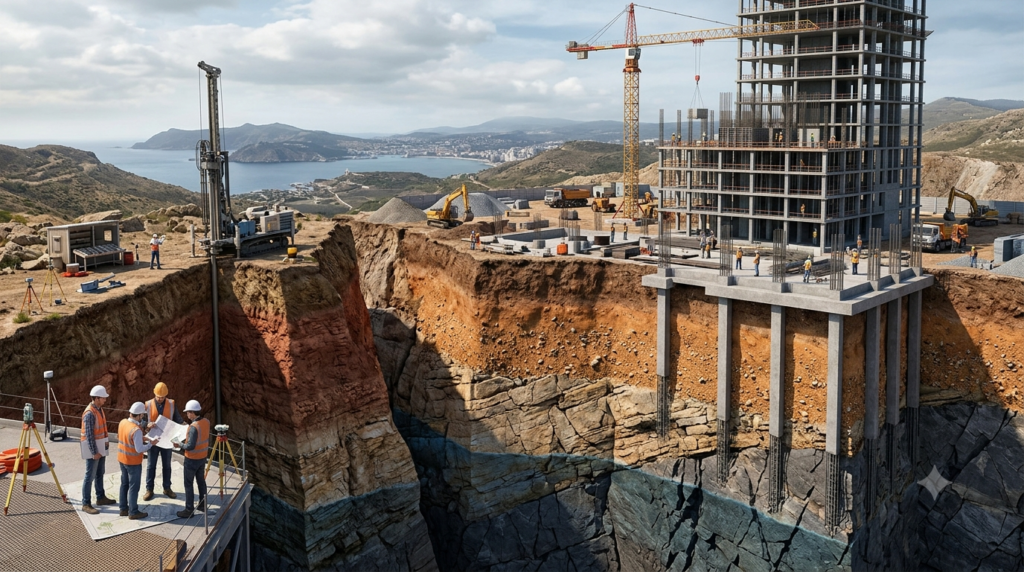
Science, technology, engineering, and mathematics are four closely connected fields that shape the modern world. They help us understand nature, develop useful tools, solve practical problems, and improve the quality of human life. From smartphones and medical equipment to bridges, satellites, and renewable energy systems, countless inventions and discoveries depend on the combined contributions of these four disciplines.
Science helps us understand how the world works, technology provides tools and practical applications, engineering turns ideas into functional solutions, and mathematics supplies the calculations and logical methods needed to make accurate decisions. Although each field has its own purpose, they frequently overlap and support one another.
Understanding the relationship between science, technology, engineering, and mathematics helps explain how scientific discoveries become useful products and how mathematical ideas contribute to real-world innovations. Together, these disciplines form an important foundation for research, industry, education, and future technological development.
What Are Science, Technology, Engineering, and Mathematics?
Before exploring their relationship, it is important to understand the meaning and purpose of each discipline.
1. Science
Science is the systematic study of the natural world through observation, experimentation, measurement, and logical reasoning. It helps people investigate natural phenomena, identify patterns, test explanations, and develop reliable knowledge about the universe.
Science includes several branches, such as physics, chemistry, biology, astronomy, and Earth science. Physics investigates matter, energy, forces, and motion. Chemistry studies substances and their properties. Biology explores living organisms and their processes, while astronomy examines celestial objects and the universe.
For example, scientists investigate how electricity flows through materials, how medicines affect the human body, and how planets move around stars. Their findings provide the knowledge needed to develop new technologies and solve practical problems.
2. Technology
Technology refers to the tools, systems, techniques, and processes that people develop to meet needs or solve problems. It includes simple tools, such as levers and pulleys, as well as advanced systems, such as artificial intelligence, medical imaging machines, communication networks, and spacecraft.
Technology often develops from scientific discoveries, but it also grows through practical experience, experimentation, and improvements to existing products.
For example, scientific research into electricity and semiconductor materials contributed to the development of computers, smartphones, and other electronic devices. Advances in biology and chemistry have also supported the development of diagnostic equipment, vaccines, and modern medicines.
Technology is not limited to electronic devices. Agricultural irrigation systems, construction techniques, water purification methods, and mechanical tools are also examples of technology.
3. Engineering
Engineering is the application of scientific knowledge, mathematical methods, and practical skills to design, build, test, and improve structures, machines, systems, and processes.
Engineers identify problems, establish design requirements, compare possible solutions, and evaluate whether a proposed system can operate safely and efficiently.
Engineering includes many branches, such as civil, mechanical, electrical, chemical, computer, aerospace, and biomedical engineering.
For example, civil engineers use knowledge of forces and material properties to design bridges and buildings. Electrical engineers develop power distribution systems and electronic circuits. Biomedical engineers combine engineering principles with biological knowledge to develop artificial limbs, medical instruments, and other healthcare technologies.
Engineering transforms ideas and theoretical knowledge into solutions that can be used in everyday life.
4. Mathematics
Mathematics is the study of numbers, quantities, patterns, structures, shapes, and logical relationships. It provides methods for measuring, calculating, modelling, analysing, and predicting the behaviour of different systems.
Important branches of mathematics include arithmetic, algebra, geometry, trigonometry, calculus, probability, and statistics.
Mathematics is essential in science because it allows researchers to describe observations precisely and express relationships through equations. Engineers use mathematical calculations to estimate loads, determine dimensions, analyse electrical circuits, and evaluate system performance.
For example, mathematics helps scientists calculate the speed of a moving object, engineers estimate the strength required for a bridge, and computer scientists design algorithms that process information efficiently.
Without mathematics, many scientific investigations and engineering projects would be difficult to measure, analyse, or reproduce accurately.
How Science, Technology, Engineering, and Mathematics Are Connected
The four disciplines are interconnected because progress in one field often supports progress in the others. Their relationship is not always a simple sequence. Sometimes scientific discoveries lead to new technologies, while new technologies allow scientists to make discoveries that were previously impossible.
Engineering connects scientific principles with practical design, and mathematics supports the analysis and testing required throughout the process.
Science Provides Knowledge for Innovation
Scientific research helps people understand the principles that govern natural and physical processes. This knowledge provides a foundation for developing new technologies and engineering solutions.
For example, research into the properties of semiconductor materials helped scientists understand how electrical conductivity could be controlled. Engineers and technology developers used this knowledge to create transistors and integrated circuits, which are essential components of modern computers and smartphones.
Similarly, research into the behaviour of light contributed to the development of lasers, fibre-optic communication, and advanced medical instruments.
Science therefore provides explanations and evidence that can guide innovation. However, scientific discoveries do not automatically become useful products. Additional engineering work, mathematical analysis, testing, and technological development are often required.
Technology Supports Scientific Discovery
Technology gives scientists the instruments and computational resources needed to investigate complex questions.
Microscopes allow researchers to observe structures that are too small to see with the naked eye. Telescopes collect information about distant celestial objects. Satellites monitor weather patterns, environmental changes, and Earth’s surface.
Computers also help researchers analyse large datasets, simulate physical processes, and compare theoretical predictions with experimental results.
For example, modern telescopes use advanced sensors and digital processing systems to collect information from distant galaxies. Scientists then use mathematical models to interpret these observations and improve their understanding of the universe.
This relationship works in both directions: science helps create new technologies, and those technologies make further scientific discoveries possible.
Engineering Applies Scientific and Mathematical Principles
Engineering uses scientific knowledge and mathematics to develop practical systems that meet specific requirements.
Consider the construction of a bridge. Engineers must understand forces, material properties, and environmental conditions. They use mathematics to calculate loads, dimensions, stresses, and expected deformation. They also apply engineering design methods to select suitable materials and structural arrangements.
Technology supports this process through computer-aided design software, simulation tools, surveying equipment, and modern construction machinery.
The finished bridge is the result of scientific understanding, mathematical calculations, engineering decisions, and technological methods working together.
Mathematics Connects Theory With Practical Results
Mathematics provides a common language for describing relationships and testing ideas across the other three disciplines.
Scientists use equations to represent physical laws and analyse experimental results. Engineers use calculations to determine whether a design can withstand expected conditions. Technology developers use mathematical methods to build algorithms, process signals, and improve system performance.
For example, predicting the movement of a spacecraft requires mathematical models of gravity, motion, velocity, and acceleration. Engineers use these calculations to plan trajectories, while technology systems monitor the spacecraft and adjust its operation when necessary.
Mathematics helps turn observations and design ideas into measurable predictions that can be evaluated against real-world results.
The Role of Each Discipline in a Shared Problem-Solving Process
A useful way to understand the relationship among these fields is to examine how they contribute to solving the same problem.
Suppose a community needs a reliable system for supplying clean drinking water.
Science helps identify contaminants and explains the chemical and biological processes that affect water quality. Mathematics helps calculate water demand, flow rates, treatment quantities, and system capacity. Engineering determines the design of treatment facilities, pipes, pumps, and storage tanks. Technology provides filtration equipment, sensors, automated controls, and monitoring systems.
The system must then be tested to determine whether it removes contaminants effectively and supplies enough water to the community. If the results are unsatisfactory, the design may need to be modified.
This example demonstrates that complex problems rarely belong to a single discipline. They often require scientific investigation, mathematical analysis, engineering design, and technological implementation.
Real-World Examples of Their Relationship
The relationship between science, technology, engineering, and mathematics becomes clearer when examined through practical applications.
1. Medical Technology
Modern healthcare depends on contributions from all four fields.
Science provides knowledge about human biology, diseases, cells, and the effects of medicines. Mathematics supports the analysis of clinical data, medical imaging, and treatment measurements. Engineering helps design medical devices, artificial organs, and diagnostic equipment. Technology makes these developments available through devices such as ultrasound machines, magnetic resonance imaging systems, and digital patient-monitoring equipment.
For example, an MRI scanner uses principles of physics and magnetic fields to obtain information from the human body. Engineering is required to design the scanner and its components, while mathematical algorithms help reconstruct images from the collected signals.
These combined contributions allow healthcare professionals to examine internal structures without performing many types of invasive procedures.
2. Renewable Energy
Renewable energy systems demonstrate how these disciplines contribute to sustainable development.
Science helps explain how sunlight can be converted into electricity and how wind produces mechanical energy. Mathematics helps estimate energy output, analyse weather data, and calculate system efficiency. Engineering is responsible for designing solar panels, wind turbines, electrical connections, and energy storage systems. Technology enables power conversion, automated monitoring, and the integration of renewable electricity into existing grids.
For example, engineers designing a solar power installation must consider sunlight intensity, panel orientation, electrical characteristics, and expected energy demand.
Scientific research into new materials can improve solar-cell performance, while mathematical models help predict how much electricity an installation may generate under different conditions.
3. Space Exploration
Space exploration requires the close cooperation of scientists, engineers, mathematicians, and technology specialists.
Science helps researchers understand planets, stars, radiation, and the physical conditions of space. Mathematics is used to calculate orbital paths, spacecraft velocities, gravitational effects, and communication delays. Engineering produces launch vehicles, spacecraft structures, thermal protection systems, and scientific instruments. Technology provides navigation systems, sensors, communication equipment, and automated controls.
For example, sending a robotic spacecraft to another planet requires precise calculations of its trajectory and the gravitational influences of celestial bodies. Engineers must design systems capable of surviving launch forces, extreme temperatures, and radiation.
Scientific instruments aboard the spacecraft then collect data that researchers use to investigate the destination.
4. Computer Science and Artificial Intelligence
Computing and artificial intelligence are other areas where the four disciplines work together.
Science contributes knowledge about information processing, cognition, physical systems, and the behaviour of complex processes. Mathematics provides logic, statistics, probability, linear algebra, and optimisation methods. Engineering supports the design of computer hardware, communication networks, and reliable software systems. Technology delivers practical applications, including search engines, translation systems, digital assistants, and image-recognition tools.
For example, an image-recognition system can be developed using mathematical methods to identify patterns in large collections of images. Computer engineers provide suitable hardware and processing systems, while scientific evaluation helps researchers measure the system’s accuracy and identify its limitations.
This combination allows computers to perform tasks that previously required extensive human effort.
5. Transportation and Infrastructure
Modern transportation systems also depend on the interaction of these disciplines.
Science explains friction, motion, energy conversion, and the properties of construction materials. Mathematics helps calculate vehicle speed, braking distance, structural loads, and traffic patterns. Engineering applies these principles to design roads, railway networks, aircraft, and vehicles. Technology provides navigation systems, traffic sensors, automated controls, and advanced manufacturing methods.
For example, designing a safe aircraft requires understanding aerodynamics, calculating forces, selecting suitable materials, and testing components under different operating conditions.
Computer simulations and advanced sensors help engineers evaluate designs before they are used in real-world environments.
STEM Education and Its Importance
The combined study of science, technology, engineering, and mathematics is commonly known as STEM education. It encourages learners to understand the connections between these subjects rather than treating each one as completely separate.
Traditional subject-based learning remains important because each discipline has its own concepts, methods, and knowledge. However, STEM activities show how these concepts can be applied together to solve practical problems.
For example, learners designing a small wind turbine may investigate how wind transfers energy, calculate blade dimensions, build a prototype, and measure its electrical output. The activity combines scientific investigation, mathematical calculations, engineering design, and technological application.
STEM education can develop several valuable skills:
Critical thinking: Examining evidence, questioning assumptions, and evaluating possible explanations.
Problem-solving: Identifying challenges and developing practical solutions.
Creativity: Generating ideas and improving existing designs.
Mathematical reasoning: Using numbers, equations, and models to understand relationships.
Technical skills: Learning how tools, machines, software, and digital systems operate.
Collaboration: Working with people who have different knowledge and expertise.
Communication: Explaining ideas, presenting results, and discussing evidence clearly.
These skills are useful not only in scientific and technical careers but also in everyday decision-making and many other professional fields.
The Difference Between STEM and Its Individual Disciplines
Although the four fields are closely related, they are not identical. Understanding their differences helps explain why each makes a distinct contribution to innovation.
| Discipline | Main purpose | Example |
|---|---|---|
| Science | Understand and explain the natural world | Investigating how electricity flows through a material |
| Technology | Develop and use tools, systems, and methods | Producing an electronic sensor |
| Engineering | Design and improve practical solutions | Designing a circuit for a monitoring device |
| Mathematics | Calculate, model, and analyse relationships | Calculating voltage, current, and resistance |
STEM brings these disciplines together when a problem benefits from their combined knowledge.
For instance, developing an environmental monitoring device may require scientific knowledge of air pollutants, mathematical methods for analysing measurements, engineering to design the device, and technology to collect and transmit data.
However, not every project needs all four disciplines to the same extent. Some scientific investigations may be mainly theoretical, while certain engineering tasks may focus heavily on design and testing. Their contributions depend on the nature of the problem.
Challenges in Integrating Science, Technology, Engineering, and Mathematics
Despite their strong relationship, combining these disciplines can present several challenges.
One challenge is the complexity of modern problems. Issues such as climate change, disease prevention, energy security, and water scarcity involve multiple scientific processes, technical limitations, economic considerations, and social needs.
Another challenge is that specialists often use different methods and terminology. Scientists may focus on understanding a phenomenon, engineers may prioritise safety and reliability, and technology developers may concentrate on performance and usability. Effective collaboration requires these groups to communicate clearly and understand one another’s priorities.
Access to suitable resources is also important. Advanced laboratories, computers, instruments, and specialised training may not be available to everyone. STEM education therefore benefits from affordable experiments, accessible digital resources, and practical activities that can be performed with everyday materials.
Finally, innovation must consider ethical and environmental consequences. A technology may be technically successful but still create problems related to privacy, pollution, resource consumption, or unequal access. Responsible development requires these consequences to be considered alongside scientific accuracy and engineering performance.
Future Developments in STEM
The relationship between science, technology, engineering, and mathematics will remain important as society addresses new challenges.
Artificial intelligence is changing how researchers analyse information and develop predictive models. Advances in biotechnology are creating new opportunities for disease research and medical treatment. Robotics is supporting manufacturing, agriculture, exploration, and healthcare. Renewable energy research is contributing to efforts to reduce dependence on fossil fuels.
Materials science may lead to stronger, lighter, and more efficient materials for construction, transportation, and electronics. Advances in space technology may improve our understanding of planets and the broader universe. Environmental monitoring systems can help researchers study changes in air quality, water resources, biodiversity, and climate.
Progress in these areas will depend on continued scientific research, mathematical analysis, engineering development, and technological improvement.
The future will also require people who can connect ideas across different fields. Specialists will remain essential, but collaboration between disciplines can help produce solutions that would be difficult to achieve through isolated efforts.
Conclusion
Science, technology, engineering, and mathematics are closely connected disciplines that contribute to understanding the world and improving human life. Science develops knowledge through observation and investigation, technology provides tools and practical applications, engineering transforms knowledge into useful designs, and mathematics supports precise calculations, logical reasoning, and prediction.
Their relationship can be seen in healthcare, renewable energy, space exploration, computer science, transportation, and countless other areas. Each discipline contributes different skills, but their combined use often produces more effective and reliable solutions.
Understanding these connections is important for education, research, industry, and society. By learning how scientific ideas, mathematical principles, engineering methods, and technological tools work together, people can better understand modern innovations and participate in solving real-world problems. Together, these four fields provide a powerful foundation for discovery, creativity, and future progress.