Science helps us understand the world around us, from the smallest particles inside atoms to the largest structures in the universe. It explains how living organisms grow, why objects move, how the Earth changes, and how different forms of energy affect our daily lives. Instead of studying every subject as a single field, scientists divide science into several branches, each focusing on particular questions and areas of knowledge.
The main branches of science include physical science, life science, Earth science, space science, and social science. Other important fields, such as environmental science, computer science, and interdisciplinary science, connect ideas from multiple areas to solve complex problems. Understanding these branches makes it easier to explore scientific topics, recognize how different subjects are related, and discover how scientific knowledge contributes to modern life.
1. Physical Science
Physical science studies non-living matter, energy, forces, motion, and the fundamental laws that govern the physical universe. It helps explain how materials behave, how energy changes from one form to another, and how natural processes occur.
Physics and chemistry are the two major branches of physical science. Although they investigate different aspects of nature, they often overlap. Physics explains the basic principles behind matter and energy, while chemistry focuses on the composition, properties, and transformations of substances.
1.1 Physics
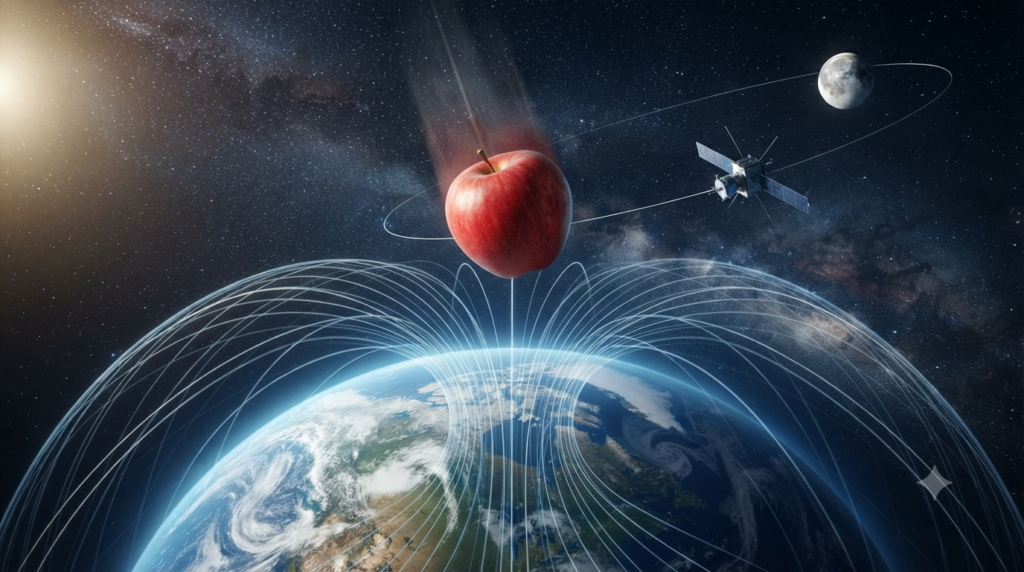
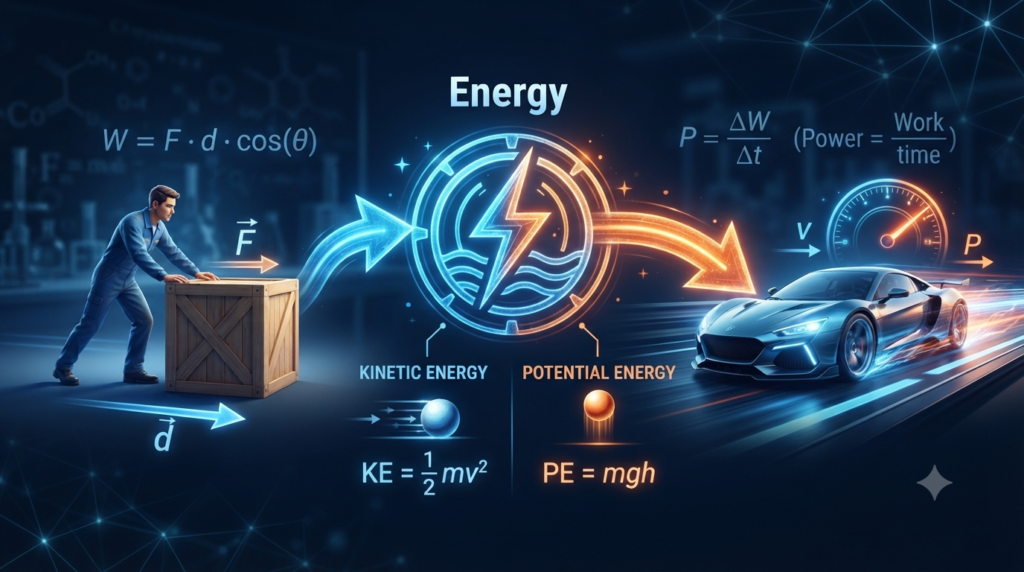
Physics is the branch of science that studies matter, energy, motion, forces, space, and time. It attempts to identify the basic rules that explain natural phenomena, from falling objects to the behavior of distant galaxies.
For example, physics explains why objects fall toward the Earth, how sound travels through air, how light behaves, and how electricity powers electronic devices. It also investigates advanced topics such as quantum mechanics, relativity, nuclear processes, and the structure of matter.
Some important areas of physics include:
Mechanics: Studies motion, forces, and the behavior of objects.
Thermodynamics: Examines heat, temperature, energy transfer, and the laws governing energy transformations.
Optics: Studies light, reflection, refraction, lenses, and optical instruments.
Electricity and magnetism: Investigates electric charges, electric currents, magnetic fields, and electromagnetic waves.
Quantum physics: Explores matter and energy at atomic and subatomic scales.
Nuclear physics: Studies atomic nuclei, radioactive decay, nuclear reactions, and related processes.
Astrophysics: Applies physical principles to stars, galaxies, black holes, and other celestial objects.
Physics has applications in engineering, medicine, telecommunications, energy production, transportation, and space exploration. Technologies such as solar panels, medical imaging equipment, lasers, and electric motors depend on principles developed through physics.
1.2 Chemistry
Chemistry studies the composition, structure, properties, and transformations of matter. It examines what substances are made of, how their particles are arranged, and how they interact during chemical reactions.
For example, chemistry explains why iron rusts, how food changes during cooking, why acids react with certain metals, and how medicines interact with substances in the human body.
The major branches of chemistry include:
Organic chemistry: Studies carbon-containing compounds, including many substances found in living organisms.
Inorganic chemistry: Examines metals, minerals, salts, and many other compounds that are not classified as organic.
Physical chemistry: Investigates the physical principles behind chemical systems, including energy changes and reaction rates.
Analytical chemistry: Identifies substances and determines their quantities in samples.
Biochemistry: Studies chemical substances and reactions within living organisms.
Environmental chemistry: Examines chemical processes in air, water, soil, and other environmental systems.
Chemistry plays an important role in developing medicines, fertilizers, cleaning products, batteries, plastics, fuels, and construction materials. It also helps scientists understand pollution, water quality, food preservation, and the chemical processes that support life.
2. Life Science
Life science, also called biological science, focuses on living organisms and the processes that make life possible. It investigates how organisms are structured, how they obtain energy, how they reproduce, how they evolve, and how they interact with their surroundings.
Life science includes the study of humans, animals, plants, microorganisms, and the biological systems within them. Biology is its central field, supported by specialized disciplines that examine particular organisms or biological processes.
2.1 Biology
Biology is the scientific study of life. It explores the characteristics of living organisms, their structures, their functions, their development, and their relationships with the environment.
Biologists study subjects ranging from microscopic cells to entire ecosystems. Their research helps explain how organisms survive, how genetic information is passed between generations, and how living populations change over time.
Important branches of biology include:
Botany: Studies plants, including their structures, growth, reproduction, and classification.
Zoology: Examines animals, their behavior, anatomy, development, and evolution.
Microbiology: Studies microorganisms such as bacteria, microscopic fungi, and many other microscopic life forms.
Genetics: Investigates genes, heredity, and variation among organisms.
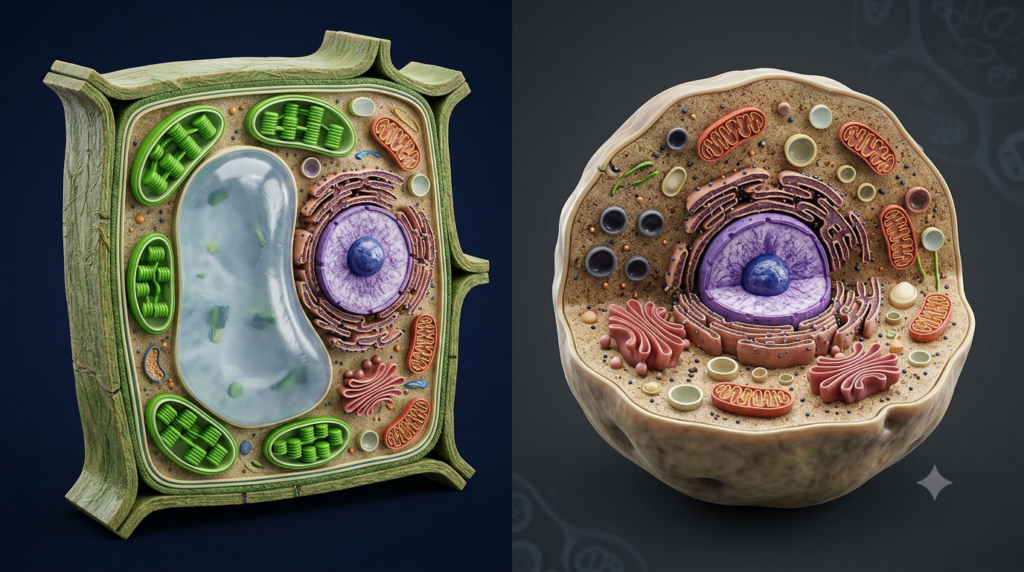
Cell biology: Examines cells, their structures, and the processes that occur within them.
Ecology: Studies interactions among organisms and between organisms and their environments.
Evolutionary biology: Investigates how populations and species change across generations.
Anatomy and physiology: Study the structures of organisms and how their bodies function.
Biology contributes to medicine, agriculture, conservation, biotechnology, and public health. It helps scientists understand diseases, improve crop production, protect endangered species, and develop biological technologies.
2.2 Medicine and Health Sciences
Medicine and health sciences focus on human health, disease prevention, diagnosis, treatment, and rehabilitation. They draw heavily on biology, chemistry, physics, and other scientific disciplines.
Medicine examines how the human body works, why illnesses develop, and how diseases can be managed or prevented. Health sciences also include fields such as epidemiology, nutrition science, immunology, and public health.
For example, immunology studies the immune system and its responses to infections, while epidemiology investigates the distribution and causes of diseases in populations.
These fields support the development of vaccines, diagnostic tests, surgical techniques, medicines, and preventive health programs. They also help communities respond to disease outbreaks and improve overall health.
2.3 Biotechnology
Biotechnology uses living organisms, cells, biological molecules, or biological processes to develop useful products and technologies.
Scientists use biotechnology to produce certain medicines, improve crops, develop diagnostic tools, and investigate genetic diseases. Modern biotechnology includes genetic engineering, tissue culture, molecular biology techniques, and some applications of synthetic biology.
For example, genetically engineered microorganisms can produce human insulin for medical use. Agricultural biotechnology can also help researchers develop crops with particular characteristics, although their benefits and risks must be assessed carefully.
Biotechnology connects biology with chemistry, engineering, medicine, and computer science. It is an important area of research in healthcare, agriculture, industry, and environmental management.
3. Earth Science
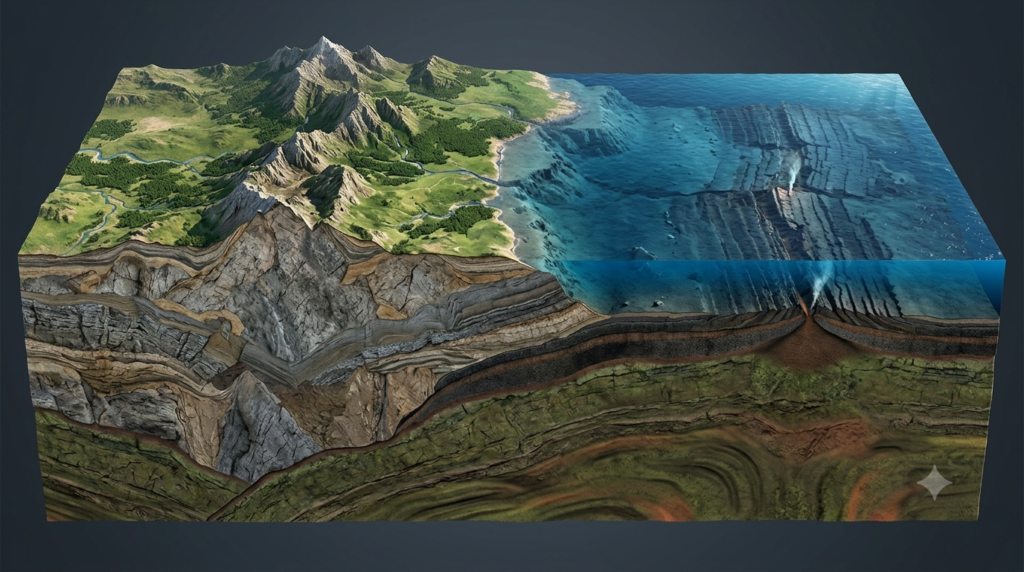
Earth science studies the Earth, including its structure, materials, history, atmosphere, oceans, and natural processes. It helps explain how mountains form, why earthquakes occur, how weather systems develop, and how the planet has changed over billions of years.
Earth scientists investigate the interactions among the solid Earth, water, air, and living systems. Their work supports natural hazard assessment, resource management, environmental protection, and climate research.
3.1 Geology
Geology is the study of the Earth’s solid materials, structure, history, and geological processes. It examines rocks, minerals, fossils, and the forces that shape the planet’s surface and interior.
Geologists investigate how mountains form, how tectonic plates move, how volcanoes erupt, and how sedimentary rocks develop. They also study Earth’s past through rock layers and fossils.
Important areas of geology include mineralogy, petrology, paleontology, structural geology, and economic geology. These specializations examine minerals, rocks, ancient life, rock deformation, and geological resources.
Geology is useful in construction, mining, groundwater exploration, earthquake hazard assessment, and the search for natural resources. Geological knowledge helps engineers evaluate the ground before building roads, bridges, dams, and other structures.
3.2 Meteorology
Meteorology is the scientific study of the atmosphere and short-term atmospheric conditions. It examines temperature, air pressure, humidity, wind, clouds, and precipitation to understand how weather develops.
Meteorologists use observations, satellites, radar systems, and computer models to forecast weather conditions. Their work helps predict storms, heavy rainfall, heat waves, and other potentially dangerous events.
Weather forecasting supports agriculture, aviation, shipping, transportation, and disaster preparedness. Accurate forecasts allow communities to prepare for severe weather and reduce risks to human life and property.
3.3 Oceanography
Oceanography studies the oceans, including their physical properties, chemical composition, marine organisms, and geological features.
Its major areas include physical oceanography, chemical oceanography, biological oceanography, and geological oceanography. These fields examine ocean currents, seawater chemistry, marine life, and the structure of the ocean floor.
Oceanographers investigate how oceans influence climate, how marine ecosystems function, and how pollution affects aquatic environments. They also study processes such as tides, waves, and the movement of heat through ocean water.
Oceanography contributes to marine conservation, fisheries management, coastal planning, climate research, and understanding the effects of rising sea levels.
3.4 Hydrology
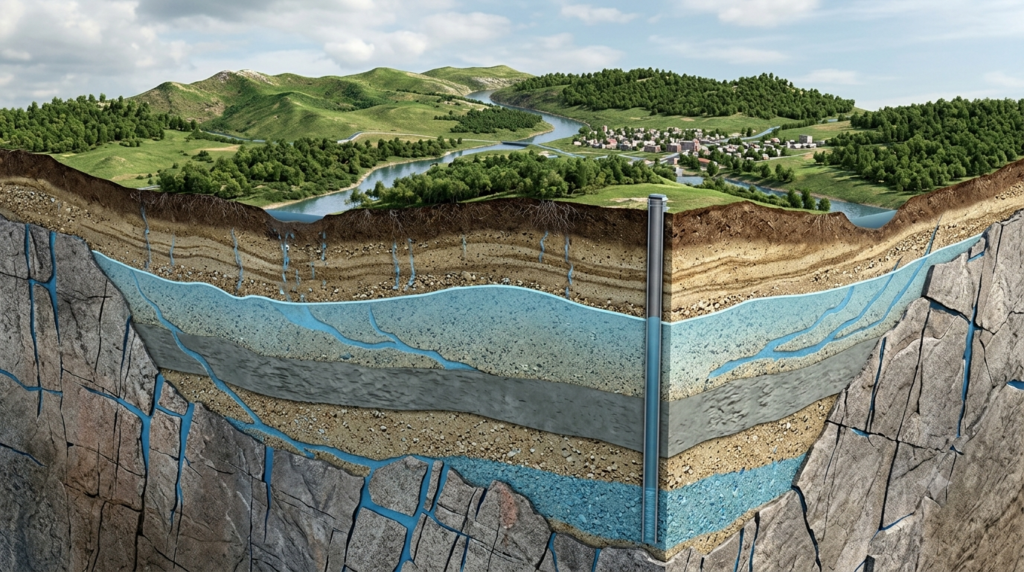
Hydrology studies the movement, distribution, and properties of water on, above, and below the Earth’s surface. It examines processes such as rainfall, evaporation, infiltration, groundwater flow, and river movement.
Hydrologists investigate how water moves through the water cycle and how it interacts with soil, rocks, vegetation, and human activities.
This field is important for drinking water supply, irrigation planning, flood prediction, drought assessment, and groundwater management. Hydrological research helps communities use water resources responsibly and prepare for changing rainfall patterns.
4. Space Science
Space science investigates objects, matter, energy, and processes beyond the Earth’s atmosphere, as well as the physical environment of space. It helps scientists understand the origin and evolution of the universe, the formation of planets, and the behavior of stars and galaxies.
Astronomy, astrophysics, and planetary science are major fields within space science. Although they overlap, each has its own focus.
4.1 Astronomy
Astronomy studies celestial objects and phenomena, including stars, planets, moons, comets, galaxies, and the universe as a whole.
Astronomers observe these objects using ground-based telescopes, space telescopes, radio instruments, and other scientific equipment. They analyze the light and other signals received from space to determine the properties, movement, distance, and composition of celestial objects.
Important areas of astronomy include observational astronomy, stellar astronomy, galactic astronomy, and cosmology. Cosmology focuses on the large-scale structure, history, and evolution of the universe.
Astronomy helps scientists investigate questions about the formation of stars, the evolution of galaxies, the nature of black holes, and the history of the universe.
4.2 Astrophysics
Astrophysics applies the principles of physics to understand astronomical objects and events. It examines the physical properties of stars, galaxies, black holes, neutron stars, and other celestial systems.
Astrophysicists use concepts such as gravity, radiation, nuclear reactions, and relativity to explain what they observe in space.
For example, astrophysics helps explain how stars produce energy through nuclear fusion, how black holes affect nearby matter, and how galaxies evolve over time.
While astronomy emphasizes the observation and study of celestial objects broadly, astrophysics focuses particularly on the physical explanations behind their behavior.
4.3 Planetary Science
Planetary science studies planets, moons, dwarf planets, asteroids, comets, and other objects associated with planetary systems.
Scientists examine the surfaces, interiors, atmospheres, geological histories, and possible habitability of these bodies. They use telescopes, spacecraft, landers, rovers, and laboratory analysis to investigate planetary environments.
Planetary science helps researchers understand how planets form, why Earth supports life, and whether conditions suitable for life may exist elsewhere.
It also contributes to the study of planetary defense, including the detection and assessment of asteroids that could approach Earth.
5. Social Science
Social science studies human behavior, societies, institutions, cultures, and relationships. Unlike the natural sciences, which primarily investigate the physical and biological world, social sciences focus on individuals and groups within social environments.
Social scientists use methods such as surveys, interviews, statistical analysis, observations, experiments, and historical comparisons. The methods they use depend on the research question and the nature of the evidence.
5.1 Psychology
Psychology studies the mind and behavior. It investigates how people think, feel, learn, remember, make decisions, and interact with others.
Psychologists explore topics such as memory, motivation, personality, emotions, learning, and social behavior. Different branches of psychology focus on different aspects of human experience.
For example, cognitive psychology examines mental processes, developmental psychology studies changes across a person’s life, and social psychology investigates how people influence one another.
Psychology contributes to education, workplace design, human-computer interaction, and the understanding of behavior. Clinical psychology also focuses on assessing and treating psychological difficulties within its professional scope.
5.2 Sociology
Sociology studies societies, social relationships, institutions, and patterns of human interaction. It examines how families, schools, workplaces, communities, and governments influence people’s lives.
Sociologists investigate subjects such as social inequality, urbanization, migration, education, culture, and social change.
Their research helps explain how social conditions affect opportunities, behavior, and access to resources. Sociology is useful in public policy, community development, education, and research on social problems.
5.3 Economics
Economics studies how individuals, businesses, governments, and societies use limited resources to meet different needs and wants.
It examines production, consumption, trade, employment, prices, income, and the allocation of resources.
Microeconomics focuses on decisions made by individuals and businesses, while macroeconomics examines larger economic systems, including inflation, unemployment, economic growth, and national income.
Economics helps policymakers and organizations evaluate choices, understand market behavior, and assess the effects of economic policies.
5.4 Political Science
Political science studies political systems, governments, public policies, power, and political behavior. It investigates how decisions are made, how institutions operate, and how authority is distributed within societies.
Political scientists examine elections, constitutions, international relations, political ideologies, and public administration.
Their research helps explain the functioning of governments, relationships between countries, and the factors that influence political participation and public policy.
6. Environmental Science
Environmental science studies the environment and the interactions among its physical, chemical, and biological components. It combines knowledge from biology, chemistry, geology, physics, ecology, and other fields to understand environmental problems.
Environmental scientists investigate air pollution, water contamination, soil degradation, biodiversity loss, climate change, and the effects of human activities on natural systems.
For example, understanding water pollution may require chemical analysis to identify contaminants, biological studies to assess effects on aquatic organisms, and hydrological research to determine how pollutants move through rivers and groundwater.
Environmental science supports pollution control, conservation, waste management, environmental impact assessments, and sustainable resource use.
It also helps scientists evaluate the causes and consequences of climate change. By combining evidence from multiple disciplines, environmental research can inform decisions about energy use, land management, urban development, and ecosystem protection.
7. Computer Science
Computer science studies computation, algorithms, data, programming, and the design of computer systems. It investigates how information can be represented, processed, stored, transmitted, and used to solve problems.
Computer science is closely connected to mathematics, logic, engineering, and information theory. It is also increasingly important in biology, medicine, astronomy, and environmental research.
Major areas of computer science include:
Algorithms: Develops step-by-step methods for solving computational problems.
Programming: Focuses on writing instructions that computers can execute.
Data structures: Studies ways to organize and manage information efficiently.
Artificial intelligence: Develops systems capable of performing tasks associated with abilities such as reasoning, prediction, and language processing.
Cybersecurity: Examines methods for protecting computer systems, networks, and information.
Computer networks: Studies how computers and other devices communicate and exchange data.
Database systems: Focuses on organizing, storing, retrieving, and managing data.
Computer science supports modern communication, scientific modeling, automation, digital services, and data analysis. Researchers use computers to simulate complex systems, analyze large datasets, and test hypotheses that may be difficult to investigate through direct observation alone.
Although computer science is often grouped with technology and engineering, it also has a strong scientific foundation because it investigates computation and develops general principles for processing information.
8. Mathematics as a Foundation of Science
Mathematics is the study of numbers, quantities, patterns, structures, shapes, and logical relationships. It is commonly classified as a formal science because it investigates abstract systems through definitions, logical reasoning, and proof.
Mathematics provides essential tools for many other scientific disciplines. Physics uses mathematical equations to describe motion and energy, chemistry uses calculations to analyze reactions, biology uses statistics to interpret experimental results, and astronomy uses mathematical models to understand celestial motion.
Important branches of mathematics include arithmetic, algebra, geometry, trigonometry, calculus, probability, and statistics.
Algebra studies symbols, quantities, and relationships.
Geometry investigates shapes, sizes, positions, and spatial properties.
Calculus examines change and accumulation.
Probability studies uncertainty and the likelihood of events.
Statistics develops methods for collecting, analyzing, interpreting, and presenting data.
Mathematics is not simply a supporting tool. It is also an independent field of investigation, with its own questions, methods, and discoveries. Its connection with science makes it especially valuable for developing models, testing predictions, and identifying patterns in observations.
9. Interdisciplinary Science
Interdisciplinary science combines knowledge, methods, and techniques from two or more scientific fields to investigate problems that cannot be fully understood through a single discipline.
Many modern research questions involve several interconnected processes. For example, understanding climate change requires knowledge of atmospheric physics, oceanography, chemistry, ecology, geology, and computer modeling.
Some important interdisciplinary fields include:
9.1 Biophysics
Biophysics applies physical principles and methods to biological systems. It investigates processes such as how molecules interact, how cells generate forces, and how electrical signals travel through nerve cells.
9.2 Geophysics
Geophysics applies physics and mathematical methods to study the Earth’s interior, magnetic field, gravity, earthquakes, and other physical processes.
It supports earthquake research, mineral exploration, and investigations of the Earth’s internal structure.
9.3 Bioinformatics
Bioinformatics combines biology, computer science, mathematics, and statistics to analyze biological data. It is especially useful for studying DNA sequences, proteins, genetic variation, and complex biological relationships.
9.4 Neuroscience
Neuroscience studies the nervous system, including the brain, spinal cord, and networks of nerve cells. It combines methods from biology, psychology, medicine, chemistry, and physics to investigate how the nervous system develops and functions.
9.5 Materials Science
Materials science investigates the relationships among the composition, structure, properties, processing, and performance of materials.
It combines chemistry, physics, and engineering to develop and improve materials used in electronics, medical devices, transportation, construction, and energy technologies.
Interdisciplinary science demonstrates that scientific branches are not isolated subjects. Their methods and discoveries often complement one another, making it possible to solve complicated problems and develop new technologies.
10. How the Main Branches of Science Are Connected
Although science is divided into branches for convenience, the natural world does not operate according to these divisions. Physical, chemical, biological, geological, and social processes often influence one another.
For example, studying a forest involves several branches of science. Biology explains how trees grow and how animals interact. Chemistry examines soil nutrients and the reactions involved in photosynthesis. Physics helps explain the movement of light and heat, while Earth science investigates soil formation, rainfall patterns, and geological conditions. Environmental science brings this knowledge together to understand the health of the entire ecosystem.
Medical research provides another example. Biology explains the functions of cells and organs, chemistry helps researchers develop medicines, physics supports medical imaging, and computer science assists with data analysis. Statistics helps researchers determine whether treatments are effective, while social science can explain how behavior and social conditions influence public health.
The relationships among scientific branches also change as knowledge advances. New instruments, research methods, and computational tools allow scientists to investigate questions that were previously difficult to answer.
Understanding these connections encourages a broader view of science and helps learners recognize that a single real-world problem may require knowledge from several disciplines.
Conclusion
The main branches of science provide different ways to investigate and understand the world. Physical science explores matter and energy, life science examines living organisms, Earth science investigates our planet, and space science studies the universe beyond Earth. Social science focuses on human behavior and societies, while environmental science examines interactions between natural systems and human activities. Computer science investigates computation, and mathematics provides a formal framework for describing patterns and relationships.
Interdisciplinary fields bring these areas together to address complex questions and develop practical solutions. Each branch contributes valuable knowledge, and their connections often lead to important discoveries. By understanding what each branch studies, learners can build a strong foundation in science, explore subjects that interest them, and appreciate how scientific knowledge helps explain everyday experiences and shape the future.
FAQs
1. What are the main branches of science?
The main branches of science include physical science, life science, Earth science, space science, and social science. Physical science studies matter and energy, while life science focuses on living organisms. Earth science examines the Earth, its structure, atmosphere, oceans, and natural processes. Space science investigates celestial objects and the universe. Social science studies human behavior, societies, and relationships. Other important fields include environmental science, computer science, and interdisciplinary science. Mathematics also provides essential methods for scientific research. Together, these disciplines help people understand natural phenomena, human activities, and the relationships between different parts of the world.
2. What is the difference between physical science and life science?
Physical science studies non-living matter, energy, forces, and physical processes, whereas life science focuses on living organisms and their activities. Physics and chemistry are major branches of physical science. Biology, genetics, microbiology, and ecology are important areas of life science. For example, studying how electricity flows through a wire belongs to physics, while investigating how plants grow belongs to biology. However, these branches often overlap. Biochemistry combines chemistry and biology to explain chemical processes in living organisms. Both physical science and life science contribute to medicine, technology, environmental research, and our understanding of the natural world.
3. What does Earth science study?
Earth science studies the Earth, including its structure, materials, atmosphere, oceans, water systems, and geological history. It helps explain natural processes such as earthquakes, volcanic eruptions, weather changes, erosion, and the movement of groundwater. Geology, meteorology, oceanography, and hydrology are important branches of Earth science. Geology investigates rocks and Earth’s structure, while meteorology studies the atmosphere and weather. Oceanography examines oceans, and hydrology focuses on the movement and distribution of water. Earth science is important for natural disaster preparedness, resource management, construction, climate research, and environmental protection. It helps scientists understand how our planet changes over time.
4. What is the difference between astronomy and astrophysics?
Astronomy is the scientific study of celestial objects and phenomena, including stars, planets, moons, galaxies, and the universe. Astronomers observe these objects using telescopes and other instruments to understand their properties, positions, movements, and development. Astrophysics applies the principles of physics to explain how these objects and systems behave. For example, astronomy may involve observing a star and measuring its brightness, while astrophysics investigates the physical processes that produce its energy. Both fields are closely connected and often overlap in research. They help scientists understand star formation, black holes, planetary systems, and the origin and evolution of the universe.
5. Why is biology important in everyday life?
Biology is important because it helps us understand living organisms, including humans, animals, plants, and microorganisms. It explains how the human body functions, how diseases develop, how plants produce food, and how organisms interact with their environments. Biological knowledge supports medical research, vaccine development, agriculture, food production, and wildlife conservation. For example, understanding genetics helps scientists investigate inherited conditions, while microbiology helps identify microorganisms responsible for certain infections. Ecology provides knowledge about ecosystems and biodiversity. Biology also helps people make informed decisions about nutrition, health, and environmental protection, making it an essential science for everyday life.
6. What is environmental science, and why is it important?
Environmental science studies the environment and the interactions among living organisms, air, water, soil, and human activities. It combines knowledge from biology, chemistry, physics, geology, and ecology to investigate environmental problems. These include air pollution, water contamination, climate change, deforestation, and biodiversity loss. Environmental scientists examine the causes and effects of these problems and develop methods to reduce environmental damage. Their work supports waste management, conservation, pollution control, and sustainable resource use. Environmental science is important because human health and economic activities depend on healthy natural systems. It helps communities and governments make informed decisions about protecting the environment for future generations.
7. What is the role of mathematics in science?
Mathematics provides the language and tools scientists use to describe patterns, measure quantities, analyze evidence, and develop scientific models. Physics uses equations to explain motion, forces, and energy. Chemistry uses mathematical calculations to study chemical reactions and concentrations. Biology uses statistics to analyze experiments and population changes, while astronomy uses mathematics to calculate planetary motion and celestial distances. Probability helps scientists understand uncertainty, and calculus is useful for studying continuous change. Mathematics is also an independent formal science that investigates numbers, structures, patterns, and logical relationships. Its methods make scientific explanations more precise and help researchers test predictions using quantitative evidence.
8. How are computer science and science connected?
Computer science is connected to science because computers help researchers collect, process, analyze, and interpret information. Computer science itself studies computation, algorithms, programming, data structures, and computer systems. Its applications support research across many scientific fields. For example, astronomers use computer programs to analyze telescope observations, biologists use computational tools to study DNA sequences, and climate scientists use simulations to investigate possible future conditions. Artificial intelligence can also help identify patterns in large datasets. These connections allow researchers to investigate complex questions more efficiently. Computer science has become an important part of modern scientific research, technological development, and problem-solving.
9. What is interdisciplinary science?
Interdisciplinary science combines knowledge and methods from two or more scientific fields to investigate complex questions. Many real-world problems cannot be fully understood through a single discipline. For example, climate change research combines atmospheric physics, chemistry, oceanography, biology, geology, and computer modeling. Biophysics applies physical principles to living systems, while bioinformatics combines biology, computer science, and statistics to analyze biological data. Neuroscience draws on biology, psychology, chemistry, and medicine to study the nervous system. Interdisciplinary science encourages collaboration between researchers with different areas of expertise. It helps scientists develop more complete explanations, solve practical problems, and discover new approaches to research.
10. Which branch of science should a beginner study first?
A beginner can start with general science because it introduces fundamental concepts from physics, chemistry, biology, Earth science, and space science. This broad foundation helps learners understand the basic principles behind natural phenomena before exploring specialized subjects. The best branch to study next depends on personal interests and goals. Someone interested in living organisms may choose biology, while a person curious about matter and energy may prefer physics or chemistry. Learners fascinated by planets and galaxies can explore astronomy, while those interested in environmental problems may study environmental science. Starting with basic concepts, practical examples, and simple experiments makes learning science easier and more enjoyable.