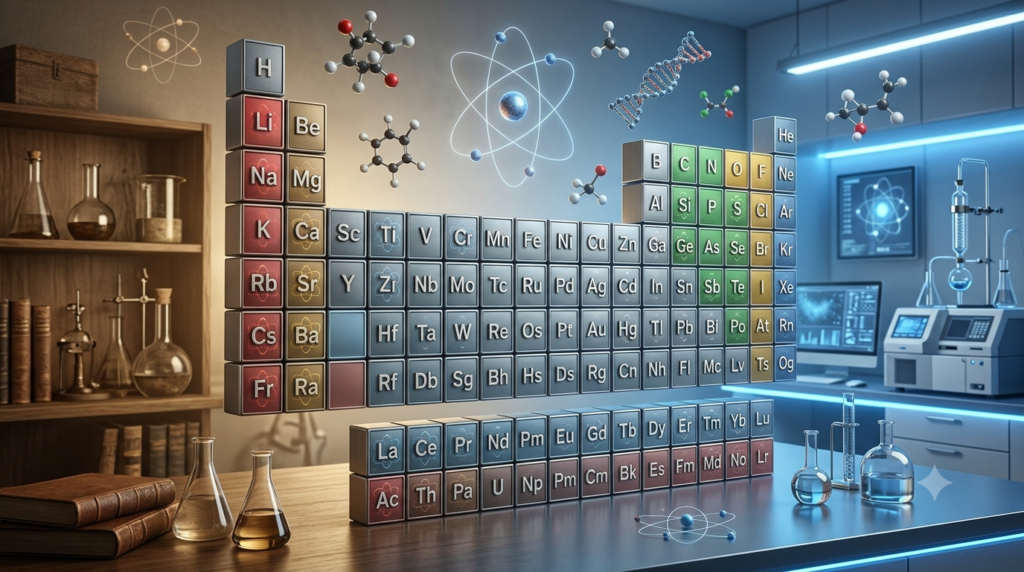
The periodic table is one of the most important tools in chemistry because it helps us understand and predict the behaviour of chemical elements. Every element has its own chemical properties, but these properties are not completely random. They follow certain patterns when we move across a period or down a group in the periodic table. These patterns are known as periodic trends.
Chemical reactivity describes how easily an element participates in a chemical reaction with other substances. Some elements react very quickly, while others are relatively unreactive under normal conditions. For example, sodium reacts vigorously with water, whereas gold is much less reactive and does not easily react with most common substances.
The chemical reactivity of an element depends mainly on its electronic configuration, atomic size, ionisation energy, electronegativity, and the number of electrons in its outermost shell. Understanding these properties helps explain why certain elements are highly reactive and why others are chemically stable.
In this article, we will explore the major periodic trends that influence the chemical reactivity of elements and understand how these trends change across periods and down groups.
1. What Is Chemical Reactivity?
Chemical reactivity is the tendency of an element or substance to undergo a chemical reaction and form new substances. It describes how readily an element gains, loses, or shares electrons during a chemical reaction.
Atoms generally participate in chemical reactions to achieve a more stable electronic arrangement. For many main-group elements, this involves attaining an electron configuration similar to that of a noble gas.
For example, sodium has one electron in its outermost shell. It can lose this electron to form a positively charged sodium ion.
Na → Na⁺ + e⁻
Similarly, chlorine has seven electrons in its outermost shell. It can gain one electron to form a negatively charged chloride ion.
Cl + e⁻ → Cl⁻
When sodium and chlorine react, they form sodium chloride (NaCl), commonly known as table salt.
The tendency of an element to lose, gain, or share electrons plays an important role in determining its chemical reactivity.
2. Factors Affecting the Chemical Reactivity of Elements
Several atomic properties influence how easily an element participates in chemical reactions. The most important factors are discussed below.
2.1 Atomic Radius
Atomic radius refers to the approximate distance between the nucleus and the outermost region of an atom.
Atomic size affects how strongly the nucleus attracts the outermost electrons. When the atomic radius is large, the valence electrons are generally farther away from the nucleus and experience weaker attraction.
As a result, large atoms, particularly metals, can often lose their outermost electrons more easily.
For example, potassium has a larger atomic radius than sodium. Its outermost electron is farther from the nucleus, making it easier to remove. Therefore, potassium is more reactive than sodium.
Effect on reactivity:
For alkali metals, reactivity generally increases with increasing atomic radius.
For halogens, reactivity generally decreases with increasing atomic radius because larger atoms attract an incoming electron less strongly.
2.2 Ionisation Energy
Ionisation energy is the minimum energy required to remove an electron from an isolated gaseous atom in its ground state.
A lower ionisation energy means that an atom can lose an electron more easily. This is particularly important for metals because they commonly form positive ions by losing electrons.
For example, alkali metals have relatively low first ionisation energies. They readily lose their single valence electron and form positive ions.
Na → Na⁺ + e⁻
As we move down Group 1, ionisation energy generally decreases. Consequently, the outermost electron becomes easier to remove, and metallic reactivity increases.
Effect on reactivity:
Lower ionisation energy generally increases the reactivity of metals that react by losing electrons.
Higher ionisation energy generally makes electron removal more difficult.
Ionisation energy is therefore an important factor in understanding the chemical behaviour of metallic elements.
2.3 Electron Affinity
Electron affinity describes the energy change when an isolated gaseous atom gains an electron to form a negative ion.
Elements that readily accept electrons often have favourable electron affinity values. This property is especially important for non-metals such as halogens.
For example, chlorine readily gains one electron to complete its outermost electron shell.
Cl + e⁻ → Cl⁻
Halogens generally have a strong tendency to gain electrons. However, electron affinity does not follow a perfectly regular pattern across every element because atomic structure and electron-electron repulsion also influence it.
For example, chlorine has a more negative electron affinity than fluorine, even though fluorine is more electronegative.
Effect on reactivity:
A favourable electron gain generally supports the formation of negative ions.
Electron affinity helps explain the behaviour of non-metals that participate in electron-transfer reactions.
2.4 Electronegativity
Electronegativity is the ability of an atom to attract shared electrons towards itself in a chemical bond.
An element with high electronegativity attracts bonding electrons more strongly, while an element with low electronegativity has a weaker attraction for shared electrons.
Fluorine is the most electronegative element in the periodic table. This strong attraction for electrons explains many of its chemical properties.
Across a period, electronegativity generally increases from left to right. Down a group, it generally decreases.
Effect on reactivity:
Highly electronegative elements often show a strong tendency to attract electrons.
Less electronegative metals commonly lose electrons during chemical reactions.
Electronegativity influences the type and polarity of chemical bonds formed between elements.
Electronegativity is particularly useful for understanding the chemical behaviour of non-metals and the formation of ionic and covalent compounds.
2.5 Valence Electrons
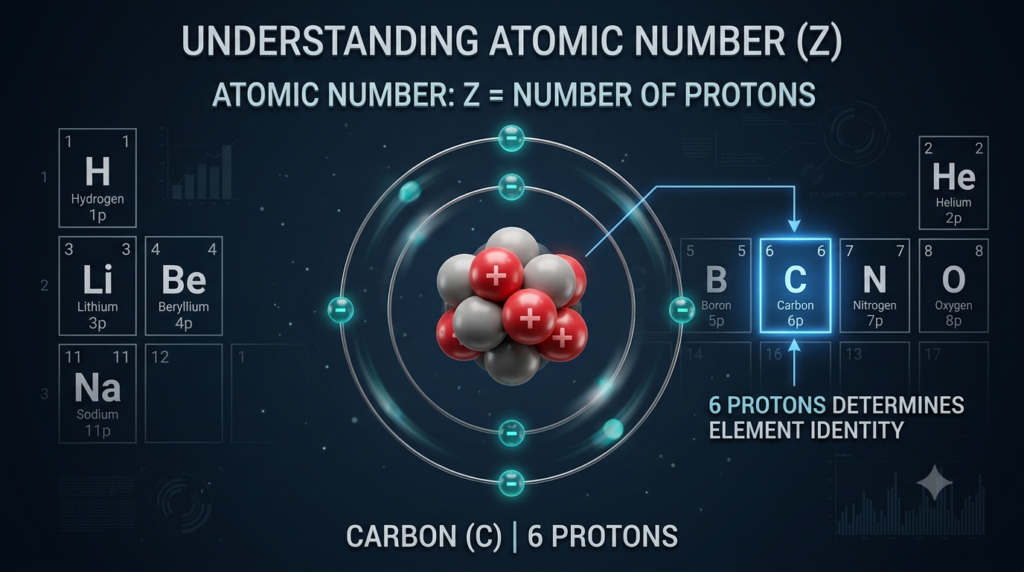
Valence electrons are the electrons present in the outermost occupied shell of an atom. They play the most important role in chemical bonding and reactions.
Elements in the same main-group column generally have the same number of valence electrons. This is one reason why they often show similar chemical properties.
For example:
Lithium has one valence electron.
Magnesium has two valence electrons.
Aluminium has three valence electrons.
Oxygen has six valence electrons.
Chlorine has seven valence electrons.
Metals with one, two, or three valence electrons often lose electrons to form positive ions. Non-metals with five, six, or seven valence electrons often gain or share electrons.
Noble gases generally have complete outermost electron shells, which makes them relatively stable and less reactive.
Therefore, the number of valence electrons is an important factor in determining the chemical reactivity of an element.
2.6 Effective Nuclear Charge
Effective nuclear charge is the net positive charge experienced by an electron in an atom after considering the shielding effect of other electrons.
Although the nucleus contains positively charged protons, inner electrons partially reduce the attractive force experienced by outer electrons. This effect is called shielding.
Across a period, the nuclear charge increases as the number of protons increases. However, the additional electrons generally enter the same principal energy level, so shielding does not increase enough to cancel the increased nuclear attraction.
Consequently, effective nuclear charge generally increases across a period.
This stronger attraction affects atomic radius, ionisation energy, and electronegativity.
Down a group, additional electron shells increase shielding and atomic size. The outermost electrons therefore experience a weaker attraction to the nucleus.
Effective nuclear charge helps explain several important periodic trends that influence chemical reactivity.
3. Periodic Trends in Chemical Reactivity Across a Period
A period is a horizontal row in the periodic table. As we move from left to right across a period, the atomic number increases and electrons are added to the same principal energy level in the general case.
Several important atomic properties change systematically across a period.
3.1 Decrease in Metallic Character
Metallic character refers to the tendency of an element to lose electrons and form positive ions.
As we move from left to right across a period, effective nuclear charge generally increases. The nucleus attracts the outermost electrons more strongly, making them more difficult to remove.
Therefore, metallic character generally decreases across a period.
For example, consider the third period:
Sodium → Magnesium → Aluminium → Silicon → Phosphorus → Sulfur → Chlorine → Argon
Sodium is a highly electropositive metal, while magnesium and aluminium are also metals. Silicon is a metalloid, and phosphorus, sulfur, and chlorine are non-metals. Argon is a noble gas.
This change in metallic character also influences the chemical reactivity of these elements.
3.2 Increase in Non-Metallic Character
Non-metallic character describes the tendency of an element to accept or share electrons rather than lose them.
Across a period, non-metallic character generally increases because the effective nuclear charge increases and atoms attract electrons more strongly.
For example, chlorine has a strong tendency to gain an electron and form a chloride ion.
As a result, the chemical behaviour gradually changes from predominantly metallic on the left side of a period to predominantly non-metallic on the right side.
3.3 Changes in Ionisation Energy
First ionisation energy generally increases from left to right across a period.
This happens because atomic radius generally decreases and the attraction between the nucleus and the outermost electrons becomes stronger.
Consequently, removing an electron becomes more difficult.
There are some exceptions to this general trend because of subshell arrangements and electron pairing.
For example, the first ionisation energy of oxygen is slightly lower than that of nitrogen because of electron-electron repulsion in one of oxygen’s paired 2p orbitals.
3.4 Changes in Electronegativity
Electronegativity generally increases across a period from left to right.
This is mainly because effective nuclear charge increases and atomic size decreases.
As a result, non-metals on the right side of the periodic table generally attract bonding electrons more strongly than metals on the left side.
Fluorine has the highest electronegativity value on the Pauling scale.
3.5 Overall Change in Chemical Reactivity Across a Period
The change in chemical reactivity across a period is not a simple continuous increase or decrease.
Metallic reactivity generally decreases from left to right because metals become less willing to lose electrons.
Non-metallic reactivity generally increases towards the halogens because these elements have a strong tendency to gain or attract electrons.
Noble gases are generally very unreactive because their outermost electron shells are complete.
Therefore, the reactivity pattern across a period depends on whether we are considering metals or non-metals.
4. Periodic Trends in Chemical Reactivity Down a Group
A group is a vertical column in the periodic table. Elements in the same main group generally have the same number of valence electrons and often show similar chemical properties.
However, their reactivity can change significantly as we move from the top to the bottom of a group.
4.1 Increase in Atomic Radius
Atomic radius generally increases down a group because each successive element has an additional occupied electron shell.
For example, the atomic size of lithium is smaller than that of sodium, and sodium is smaller than potassium.
Li < Na < K
As atomic size increases, the outermost electrons become farther from the nucleus.
This change influences ionisation energy and the tendency of an atom to lose electrons.
4.2 Decrease in Ionisation Energy
Ionisation energy generally decreases down a group.
The outermost electrons are located in increasingly distant shells and experience greater shielding from inner electrons.
Therefore, less energy is generally required to remove an outermost electron.
This is especially important for alkali metals because they readily lose their single valence electron.
4.3 Changes in Electronegativity
Electronegativity generally decreases down a group.
As atomic size increases, the nucleus has a weaker attraction for shared electrons in a chemical bond.
This trend helps explain why the chemical behaviour of elements in a group can change as we move down the periodic table.
4.4 Changes in Metallic and Non-Metallic Character
Metallic character generally increases down a group for metallic elements because their outermost electrons become easier to remove.
In contrast, non-metallic character generally decreases down a group among non-metals.
These changes influence how elements participate in chemical reactions and which types of ions or compounds they form.
5. Reactivity Trends of Alkali Metals
Alkali metals belong to Group 1 of the periodic table. They include lithium, sodium, potassium, rubidium, caesium, and francium.
These elements have one electron in their outermost shell.
They generally lose this electron to form positive ions with a +1 charge.
M → M⁺ + e⁻
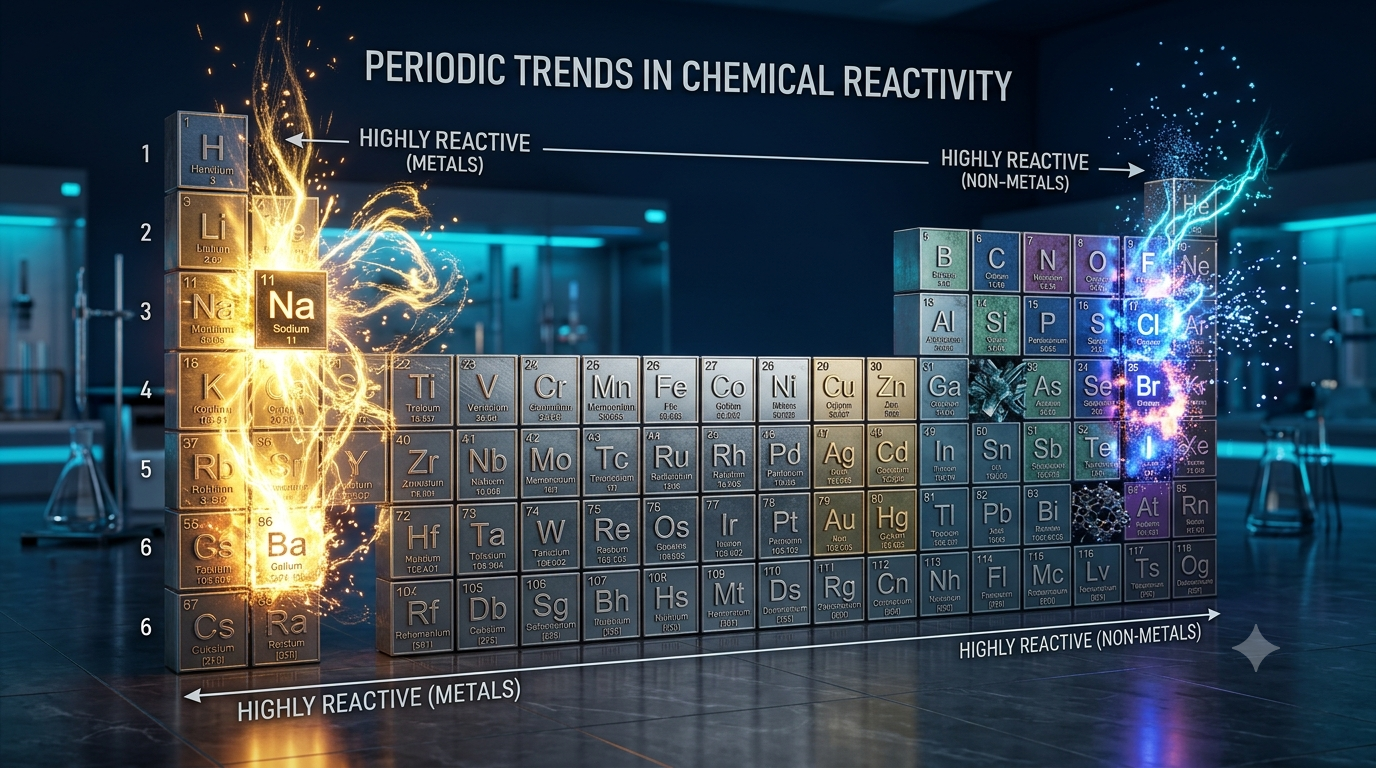
Alkali metals are highly reactive, and their reactivity generally increases down the group.
The main reason is the increase in atomic radius and the decrease in first ionisation energy.
The outermost electron becomes easier to remove as we move down the group.
For example, lithium reacts with water less vigorously than sodium, while potassium reacts more vigorously than sodium.
The general reactivity order is:
Li < Na < K < Rb < Cs
Francium is expected to be highly reactive based on its position, but it is extremely rare and radioactive, making its chemical properties difficult to investigate experimentally.
Reaction of Alkali Metals with Water
Alkali metals react with water to produce metal hydroxides and hydrogen gas.
2Na + 2H₂O → 2NaOH + H₂
The reaction produces sodium hydroxide, which is alkaline, and hydrogen gas.
The reactions generally become more vigorous down Group 1.
This is an important example of how periodic trends influence the chemical reactivity of elements.
6. Reactivity Trends of Halogens
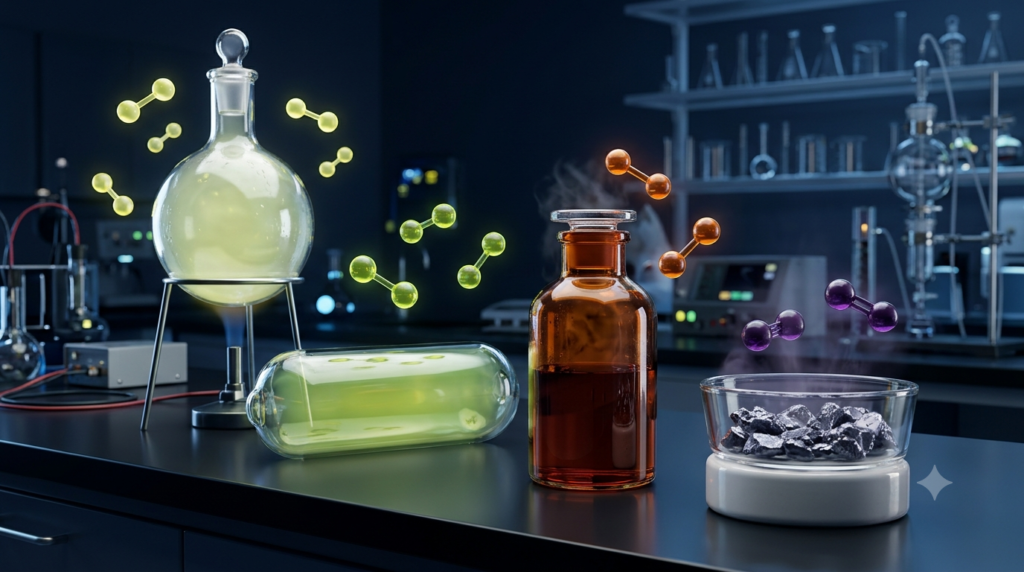
Halogens belong to Group 17 of the periodic table. They include fluorine, chlorine, bromine, iodine, and astatine.
These elements have seven electrons in their outermost shell.
They generally gain one electron to form negative ions with a −1 charge.
X + e⁻ → X⁻
Unlike alkali metals, the reactivity of halogens generally decreases down the group.
Fluorine is the most reactive halogen, followed by chlorine, bromine, and iodine.
The general reactivity order is:
F₂ > Cl₂ > Br₂ > I₂
This trend is different from that of alkali metals.
As we move down Group 17, atomic radius and electron shielding increase. The attraction between the nucleus and an incoming electron becomes weaker.
Therefore, the ability of halogen atoms to gain electrons generally decreases.
Displacement Reactions of Halogens
A more reactive halogen can displace a less reactive halogen from its salt solution.
For example, chlorine can displace bromine from potassium bromide solution.
Cl₂ + 2KBr → 2KCl + Br₂
However, bromine cannot displace chlorine from potassium chloride because bromine is less reactive than chlorine.
These reactions provide experimental evidence for the decreasing reactivity of halogens down Group 17.
7. Reactivity Trends of Noble Gases
Noble gases belong to Group 18 of the periodic table. They include helium, neon, argon, krypton, xenon, and radon.
Most noble gases have complete outermost electron shells. Helium has two electrons in its only occupied shell, while the other commonly discussed noble gases have eight electrons in their outermost shell.
This electronic arrangement makes them relatively stable.
They generally have high ionisation energies and low tendencies to gain or share electrons.
As a result, noble gases are much less reactive than most other elements.
However, it is incorrect to say that all noble gases are completely unreactive.
Some heavier noble gases, particularly xenon, can form chemical compounds under suitable conditions.
For example, xenon reacts with fluorine to form xenon fluorides.
Xe + F₂ → XeF₂
This reaction demonstrates that noble gases can participate in chemical reactions, although their reactivity is generally limited.
8. Reactivity Trends of Transition Metals
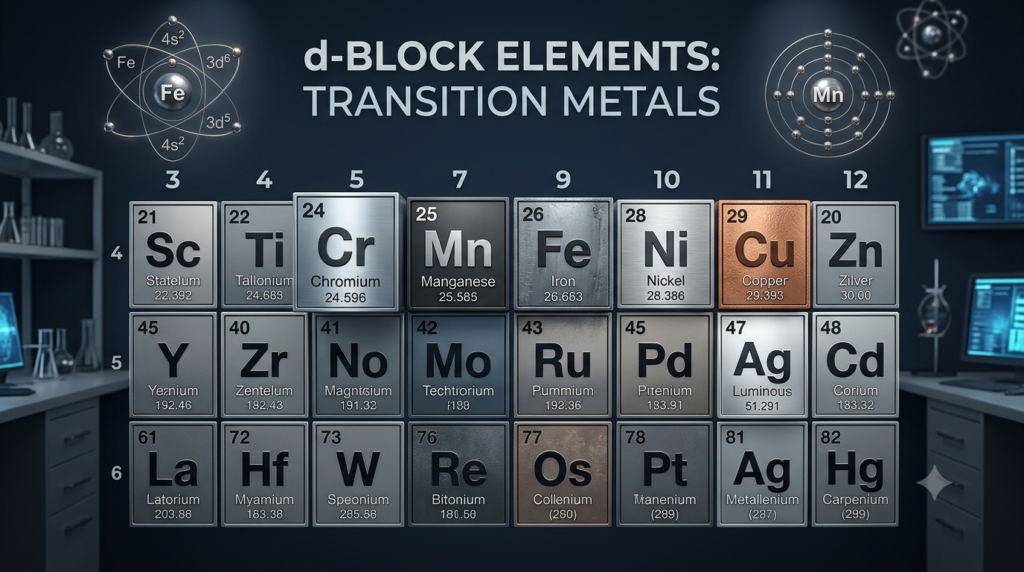
Transition metals are located in the central d-block of the periodic table.
Examples include iron, copper, nickel, chromium, manganese, and zinc.
Unlike alkali metals and halogens, transition metals do not show one simple reactivity trend across the entire block.
Their chemical behaviour depends on several factors, including electronic configuration, oxidation states, ionisation energies, and the stability of their compounds.
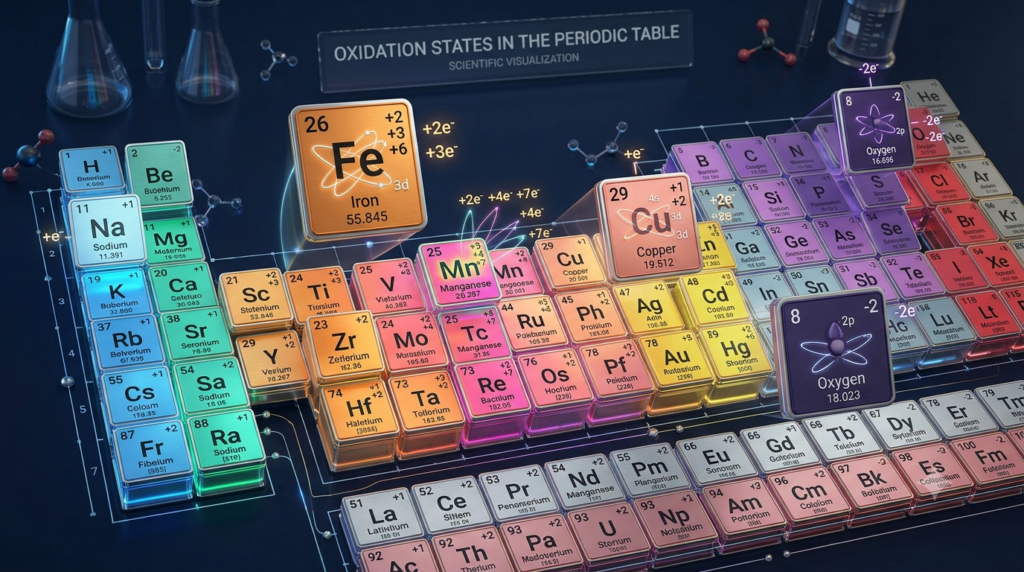
Many transition metals can form ions with different positive charges.
For example:
Iron can form Fe²⁺ and Fe³⁺ ions.
Copper can form Cu⁺ and Cu²⁺ ions.
Manganese can show several oxidation states.
Some transition metals are highly reactive, while others are relatively unreactive.
For example, iron reacts with oxygen and moisture to form rust, whereas gold is resistant to corrosion under ordinary conditions.
Transition metals also commonly act as catalysts. They can increase the rate of chemical reactions without being permanently consumed.
Therefore, their chemical reactivity is influenced by more complex factors than those responsible for the general trends in Groups 1 and 17.
9. Comparison Between Metallic and Non-Metallic Reactivity
Metallic and non-metallic elements generally show opposite reactivity trends in the periodic table.
Metals usually react by losing electrons, whereas many non-metals react by gaining or sharing electrons.
| Property | Metals | Non-metals |
|---|---|---|
| General electron behaviour | Lose electrons | Gain or share electrons |
| Common ions | Positive ions | Negative ions |
| Across a period | Metallic reactivity generally decreases | Non-metallic reactivity generally increases towards halogens |
| Down a group | Reactivity generally increases for Group 1 metals | Reactivity generally decreases for halogens |
| Important factor | Low ionisation energy | Electron attraction and electron gain tendency |
| Example | Sodium, potassium | Fluorine, chlorine |
These patterns are general trends and should not be applied equally to every element. Different chemical reactions may involve different mechanisms and energy changes.
10. Why Do Noble Gases Have Low Chemical Reactivity?
Noble gases are generally unreactive because their outermost electron shells are already complete.
A complete valence shell represents a particularly stable electronic arrangement.
For example, neon has the electronic configuration 2,8. Its outermost shell contains eight electrons.
Because of this stable arrangement, neon does not readily lose, gain, or share electrons.
Noble gases also have relatively high ionisation energies, making electron removal difficult.
However, heavier noble gases such as xenon can form compounds because their electrons can participate in bonding under suitable conditions.
Thus, the low reactivity of noble gases is mainly associated with their stable electronic configurations.
11. Importance of Periodic Trends in Predicting Chemical Reactivity
Understanding periodic trends is useful in many areas of chemistry and science.
11.1 Predicting Chemical Reactions
Periodic trends help predict whether an element is likely to lose, gain, or share electrons.
For example, sodium readily loses an electron, while chlorine readily accepts an electron. This helps explain the formation of sodium chloride.
11.2 Understanding Ionic Bond Formation
The difference in electron behaviour between metals and non-metals helps explain ionic bonding.
Metals generally lose electrons, while non-metals often gain electrons. The resulting oppositely charged ions attract each other through electrostatic forces.
11.3 Selecting Suitable Materials
Knowledge of chemical reactivity helps scientists and engineers select materials for different applications.
For example, metals that resist corrosion are useful in construction, electrical equipment, and manufacturing.
11.4 Understanding Industrial Chemistry
Periodic trends help chemists understand the behaviour of elements used in industrial processes.
The reactivity of metals, non-metals, and catalysts plays an important role in manufacturing chemicals, producing materials, and developing new technologies.
11.5 Understanding Environmental Processes
Chemical reactivity is important in environmental processes such as oxidation, corrosion, atmospheric reactions, and the formation of pollutants.
Understanding how elements react helps scientists study these processes and develop methods to reduce environmental damage.
12. Important Points to Remember
Chemical reactivity describes how readily an element participates in chemical reactions.
Valence electrons play a major role in determining chemical behaviour.
Atomic radius generally increases down a group and decreases across a period.
First ionisation energy generally increases across a period and decreases down a group.
Electronegativity generally increases across a period and decreases down a group.
Metallic character generally decreases across a period and increases down a group.
Alkali metal reactivity generally increases down Group 1.
Halogen reactivity generally decreases down Group 17.
Noble gases are relatively unreactive because of their stable electronic configurations.
Transition metals show varied chemical reactivity and can have multiple oxidation states.
Periodic trends help explain and predict the chemical behaviour of elements.
Conclusion
Periodic trends provide a systematic way to understand the chemical reactivity of elements. Properties such as atomic radius, ionisation energy, electron affinity, electronegativity, effective nuclear charge, and valence electrons determine how atoms behave during chemical reactions.
Metallic reactivity generally increases down Group 1 because outermost electrons become easier to remove. In contrast, halogen reactivity generally decreases down Group 17 because the attraction for an incoming electron becomes weaker. Across a period, metallic character generally decreases while non-metallic character increases.
Although these trends have some exceptions, they provide a useful foundation for understanding the chemical behaviour of elements. By studying periodic trends, we can better predict chemical reactions, understand bonding, and explain why different elements have different levels of reactivity.
FAQs
1. What are periodic trends in chemical reactivity?
Periodic trends in chemical reactivity are the predictable patterns in the chemical behaviour of elements across periods and down groups in the periodic table. These trends are influenced by atomic radius, ionisation energy, electron affinity, electronegativity, effective nuclear charge, and valence electrons. They help explain why some elements readily lose electrons, while others tend to gain or share electrons. For example, alkali metals become more reactive down Group 1, whereas halogens become less reactive down Group 17. Understanding these patterns helps chemists predict how different elements participate in chemical reactions.
2. What factors affect the chemical reactivity of elements?
The chemical reactivity of elements depends on several atomic properties. The most important factors include atomic radius, ionisation energy, electron affinity, electronegativity, effective nuclear charge, and the number of valence electrons. Atomic radius influences the distance between the nucleus and outermost electrons. Ionisation energy determines how easily an atom loses an electron, while electron affinity describes the energy change when an atom gains an electron. Electronegativity indicates how strongly an atom attracts shared electrons in a chemical bond. Together, these properties determine how easily an element participates in chemical reactions.
3. How does chemical reactivity change across a period?
Chemical reactivity changes according to the metallic or non-metallic nature of elements as we move from left to right across a period. Metallic reactivity generally decreases because atoms hold their outermost electrons more strongly and become less likely to lose them. In contrast, non-metallic reactivity generally increases towards the halogens because their tendency to attract or gain electrons becomes stronger. Noble gases at the end of a period are generally unreactive because their outermost electron shells are complete. Therefore, chemical reactivity does not follow one continuous increasing or decreasing pattern across a period.
4. How does chemical reactivity change down a group?
Chemical reactivity changes differently for metals and non-metals when moving down a group. For alkali metals, reactivity generally increases because atomic radius increases and ionisation energy decreases. Their outermost electrons become easier to remove. However, the reactivity of halogens generally decreases down the group because their ability to attract an incoming electron becomes weaker. These opposite patterns demonstrate that chemical reactivity depends on whether an element reacts mainly by losing or gaining electrons. The electronic configuration and atomic properties of elements help explain these differences in chemical behaviour.
5. Why does the reactivity of alkali metals increase down Group 1?
The reactivity of alkali metals increases down Group 1 because their atomic radius increases and their first ionisation energy decreases. Each successive element has an additional occupied electron shell, placing its outermost electron farther from the nucleus. Inner electrons also increase the shielding effect. Consequently, the attraction between the nucleus and the outermost electron becomes weaker, allowing the atom to lose that electron more easily. Since alkali metals react mainly by losing one valence electron to form positive ions, their chemical reactivity generally increases from lithium to caesium.
6. Why does the reactivity of halogens decrease down Group 17?
The reactivity of halogens decreases down Group 17 because their atomic size and electron shielding increase. As a result, the attraction between the nucleus and an incoming electron becomes weaker. Halogens have seven valence electrons and generally react by gaining one electron to complete their outermost shell. Fluorine attracts an incoming electron more effectively than the heavier halogens under the relevant chemical conditions. Therefore, fluorine is the most reactive halogen, followed by chlorine, bromine, and iodine. This decreasing reactivity is also demonstrated by displacement reactions involving halogen solutions.
7. Why are noble gases generally chemically unreactive?
Noble gases are generally chemically unreactive because they have complete outermost electron shells. This electronic arrangement provides considerable stability, so they have little tendency to lose, gain, or share electrons during ordinary chemical reactions. They also generally have high ionisation energies, making electron removal difficult. Helium has two electrons in its only occupied shell, while neon and argon have eight electrons in their outermost shells. However, noble gases are not completely unreactive. Heavier elements such as xenon can form compounds with highly reactive elements like fluorine under suitable conditions.
8. What is the relationship between ionisation energy and metallic reactivity?
Ionisation energy and metallic reactivity generally have an inverse relationship. Ionisation energy is the minimum energy required to remove an electron from an isolated gaseous atom. Metals commonly react by losing their outermost electrons to form positive ions. Therefore, metals with lower ionisation energies can generally lose electrons more easily and show greater reactivity in suitable reactions. For example, potassium has a lower first ionisation energy than sodium and is more reactive. This relationship helps explain why the reactivity of alkali metals generally increases down Group 1 of the periodic table.
9. Which element is the most reactive non-metal in the periodic table?
Fluorine is generally considered the most reactive non-metal in the periodic table. It belongs to Group 17 and has seven electrons in its outermost shell. Its small atomic radius and strong attraction for electrons contribute to its high chemical reactivity. Fluorine readily reacts with many elements and forms compounds with metals and non-metals. It is also the most electronegative element. Because of its extreme reactivity, fluorine gas is highly corrosive and dangerous to handle. Its chemical reactions must be carried out using specialised equipment and appropriate safety precautions.
10. Why are periodic trends important in predicting chemical reactions?
Periodic trends are important because they help chemists understand and predict how elements behave during chemical reactions. By studying atomic radius, ionisation energy, electronegativity, electron affinity, and valence electrons, scientists can estimate whether an element is likely to lose, gain, or share electrons. These properties help explain ionic bonding, metallic behaviour, oxidation, and the formation of chemical compounds. Periodic trends are also useful in industrial chemistry, materials science, and environmental research. They provide a foundation for understanding why elements in the same group often show similar chemical properties and how their reactivity changes.