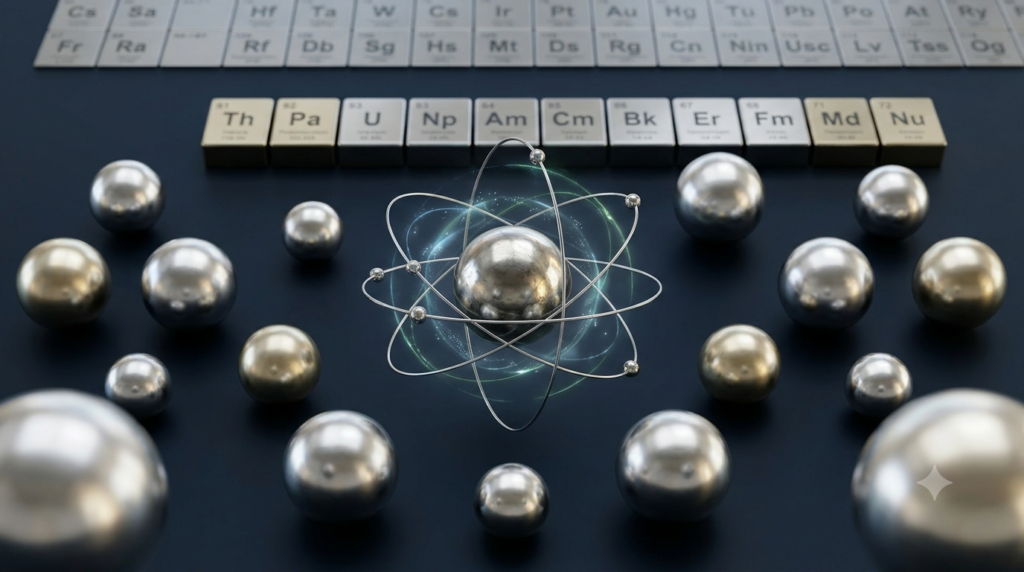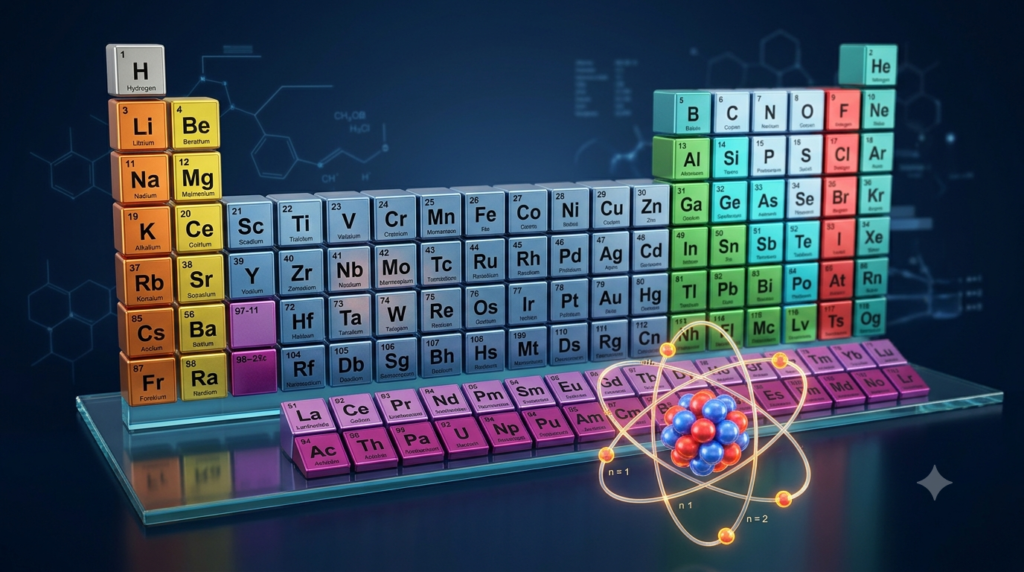
The periodic table is divided into four main blocks based on the type of orbital into which the last electron of an atom enters. These blocks are known as the s-block, p-block, d-block, and f-block. Among them, the s-block elements occupy an important position because they include some of the most reactive and commonly occurring metals in nature.
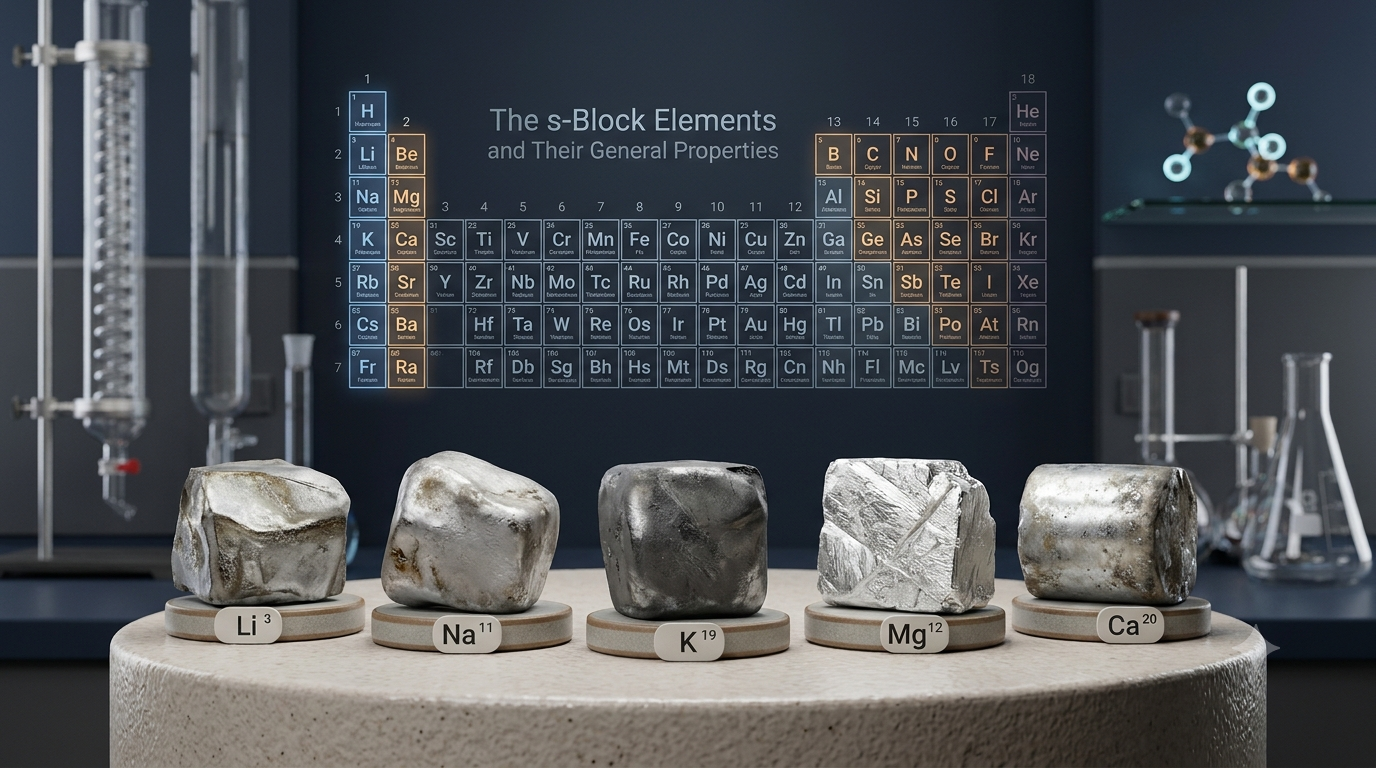
The s-block elements are mainly found in Groups 1 and 2 of the periodic table. They include alkali metals and alkaline earth metals. These elements have their outermost electrons in the s-orbital, which gives them similar electronic configurations and certain common chemical properties.
Elements such as lithium, sodium, potassium, magnesium, and calcium are important examples of s-block elements. They are widely used in industries, agriculture, medicine, and everyday life. Understanding their general properties helps explain their chemical behaviour, reactivity, and position in the periodic table.
1. What Are s-Block Elements?
The s-block elements are those elements in which the last electron enters the outermost s-orbital of the atom. They are located on the left side of the periodic table and mainly belong to Group 1 and Group 2.
The s-orbital can hold a maximum of two electrons. Therefore, the general electronic configurations of these elements are:
Group 1: ns¹
Group 2: ns²
Here, n represents the principal quantum number or the outermost electron shell.
For example:
Lithium (Li): 1s² 2s¹
Sodium (Na): 1s² 2s² 2p⁶ 3s¹
Magnesium (Mg): 1s² 2s² 2p⁶ 3s²
Calcium (Ca): [Ar] 4s²
Because of their electronic configurations, s-block elements generally lose their outermost electrons easily and form positive ions.
2. Position of s-Block Elements in the Periodic Table
The s-block elements are located in the first two groups of the periodic table. Hydrogen and helium also have s-orbital configurations, although their properties and positions require special consideration.
The elements belonging to the two main groups are:
Group 1 – Alkali Metals
Lithium (Li)
Sodium (Na)
Potassium (K)
Rubidium (Rb)
Caesium (Cs)
Francium (Fr)
Group 2 – Alkaline Earth Metals
Beryllium (Be)
Magnesium (Mg)
Calcium (Ca)
Strontium (Sr)
Barium (Ba)
Radium (Ra)
Hydrogen is placed in Group 1 because its electronic configuration is 1s¹. However, it is a non-metal and has properties different from those of alkali metals.
Helium has the electronic configuration 1s². Although it belongs to the s-block based on its electronic configuration, it is placed in Group 18 because it has a completely filled outermost shell and behaves like a noble gas.
3. Classification of s-Block Elements
The s-block elements are mainly classified into two groups: alkali metals and alkaline earth metals.
3.1 Alkali Metals
Alkali metals are the elements belonging to Group 1 of the periodic table, excluding hydrogen.
Their general electronic configuration is ns¹. Each alkali metal contains one electron in its outermost s-orbital.
These elements are highly reactive metals and readily lose their single valence electron to form positively charged ions with a +1 oxidation state.
Examples include lithium, sodium, potassium, rubidium, caesium, and francium.
Alkali metals react with water to produce metal hydroxides and hydrogen gas. Their hydroxides are generally strongly basic, which is why these metals are called alkali metals.
For example:
2Na + 2H₂O → 2NaOH + H₂
Sodium reacts with water to form sodium hydroxide and hydrogen gas.
3.2 Alkaline Earth Metals
Alkaline earth metals belong to Group 2 of the periodic table.
Their general electronic configuration is ns². They have two electrons in their outermost s-orbital.
These elements generally lose both valence electrons to form positive ions with a +2 oxidation state.
Examples include beryllium, magnesium, calcium, strontium, barium, and radium.
They are generally less reactive than alkali metals, although their reactivity increases down the group.
For example:
Ca + 2H₂O → Ca(OH)₂ + H₂
Calcium reacts with water to form calcium hydroxide and hydrogen gas.
4. General Electronic Configuration of s-Block Elements
The electronic configuration of an element describes how electrons are distributed among its atomic orbitals.
The defining characteristic of s-block elements is that their last electron enters the s-orbital of the outermost shell.
Their general electronic configurations are:
Group 1: ns¹
Group 2: ns²
For example, the electronic configuration of sodium is 1s² 2s² 2p⁶ 3s¹. Its outermost shell contains one electron.
Similarly, magnesium has the electronic configuration 1s² 2s² 2p⁶ 3s², meaning that it has two electrons in its outermost shell.
The number of valence electrons determines many of their chemical properties. Group 1 elements generally lose one electron, while Group 2 elements generally lose two electrons to achieve stable electronic configurations.
5. General Physical Properties of s-Block Elements
Although alkali metals and alkaline earth metals share some characteristics, they also show important differences in their physical properties.
5.1 Metallic Character
Most s-block elements are metals. They generally have a shiny appearance when freshly cut or polished.
They are good conductors of heat and electricity because they contain mobile electrons that can move through the metallic structure.
Alkali metals are generally softer than alkaline earth metals.
5.2 Atomic Size
The atomic size of s-block elements increases down a group.
As we move from top to bottom, new electron shells are added to the atoms. This increases the distance between the nucleus and the outermost electrons.
For example, the atomic size of lithium is smaller than that of sodium, while potassium is larger than sodium.
The same general trend is observed in Group 2.
5.3 Density
Density is the mass per unit volume of a substance.
Alkali metals generally have low densities compared with many other metals. Lithium, sodium, and potassium are less dense than water.
In Group 2, density generally increases down the group, although some irregularities occur.
5.4 Melting and Boiling Points
Alkali metals generally have relatively low melting and boiling points compared with most other metals.
Their melting points generally decrease down the group because the metallic bonding becomes weaker as atomic size increases.
Alkaline earth metals generally have higher melting and boiling points than alkali metals in the same period, although there are some exceptions to the trend.
5.5 Metallic Bonding
The strength of metallic bonding depends on factors such as the number of delocalised electrons and the size of the metal atoms.
Alkali metals contribute one valence electron per atom to metallic bonding, whereas alkaline earth metals contribute two.
This helps explain why alkaline earth metals are generally harder and have higher melting points than alkali metals.
6. General Chemical Properties of s-Block Elements
The chemical properties of s-block elements are mainly determined by their valence electrons.
They generally have low ionisation enthalpies and readily form positive ions.
6.1 Formation of Positive Ions
Alkali metals have one valence electron and generally lose it to form M⁺ ions.
For example:
Na → Na⁺ + e⁻
Alkaline earth metals have two valence electrons and generally lose both to form M²⁺ ions.
For example:
Mg → Mg²⁺ + 2e⁻
The formation of these stable positive ions is one of the most important chemical characteristics of s-block elements.
6.2 Reaction with Oxygen
s-Block elements react with oxygen to form different types of oxides.
Alkali metals show different behaviour when reacting with oxygen.
Lithium generally forms normal oxide (Li₂O).
Sodium mainly forms peroxide (Na₂O₂).
Potassium, rubidium, and caesium can form superoxides (KO₂, RbO₂, and CsO₂).
Alkaline earth metals generally form normal oxides with the formula MO.
For example:
2Mg + O₂ → 2MgO
Magnesium reacts with oxygen to form magnesium oxide.
6.3 Reaction with Water
Alkali metals react with water to form metal hydroxides and hydrogen gas.
The general reaction is:
2M + 2H₂O → 2MOH + H₂
The reaction becomes more vigorous down Group 1.
For example, lithium reacts relatively slowly with water, while sodium and potassium react much more vigorously.
Alkaline earth metals show different levels of reactivity with water.
Beryllium does not react with water under ordinary conditions because of its protective oxide layer.
Magnesium reacts very slowly with cold water but reacts more readily with hot water or steam.
Calcium, strontium, and barium react with cold water, with reactivity increasing down the group.
6.4 Reaction with Acids
Many s-block metals react with dilute acids to produce salts and hydrogen gas.
For example:
Mg + 2HCl → MgCl₂ + H₂
Magnesium reacts with hydrochloric acid to produce magnesium chloride and hydrogen gas.
The reaction rate depends on the metal’s reactivity and the nature of the acid.
6.5 Reaction with Halogens
s-Block elements react with halogens to form ionic compounds called halides.
Alkali metals generally form halides with the formula MX, whereas alkaline earth metals generally form halides with the formula MX₂.
For example:
2Na + Cl₂ → 2NaCl
Mg + Cl₂ → MgCl₂
Sodium forms sodium chloride, while magnesium forms magnesium chloride.
6.6 Reaction with Hydrogen
s-Block elements can react with hydrogen to form hydrides.
Alkali metals generally form ionic hydrides with the formula MH.
For example:
2Na + H₂ → 2NaH
Alkaline earth metals generally form hydrides with the formula MH₂.
For example:
Ca + H₂ → CaH₂
These hydrides contain the hydride ion (H⁻) and react with water to release hydrogen gas.
7. Ionisation Enthalpy of s-Block Elements
Ionisation enthalpy is the energy required to remove an electron from an isolated gaseous atom.
s-Block elements generally have low first ionisation enthalpies because their outermost electrons are relatively far from the nucleus and experience comparatively weak attraction.
The first ionisation enthalpy generally decreases down both groups because atomic size and shielding increase.
This means that the outermost electron becomes easier to remove as we move down the group.
Group 2 elements generally have higher first ionisation enthalpies than Group 1 elements in the same period because their nuclear charge is greater and their outermost electrons experience stronger attraction.
The low ionisation enthalpies of s-block elements explain why they readily form positive ions.
8. Electronegativity of s-Block Elements
Electronegativity is the tendency of an atom to attract shared electrons towards itself in a chemical bond.
s-Block elements generally have low electronegativity values compared with many p-block elements.
Their electronegativity generally decreases down a group as atomic size increases and the attraction for bonding electrons becomes weaker.
Because of their low electronegativity, s-block metals commonly form ionic compounds with highly electronegative non-metals such as oxygen, chlorine, and fluorine.
9. Reducing Nature of s-Block Elements
A reducing agent is a substance that donates electrons to another substance and is itself oxidised.
Most s-block metals act as strong reducing agents because they readily lose their valence electrons.
For example:
Na → Na⁺ + e⁻
Sodium loses an electron and is oxidised to a sodium ion.
The reducing nature of alkali metals is generally strong because they have low ionisation enthalpies.
However, the reducing strength does not always follow a simple trend based only on ionisation enthalpy. In aqueous solutions, hydration enthalpy also plays an important role.
Lithium, for example, is the strongest reducing agent among alkali metals in aqueous solution because of the exceptionally high hydration enthalpy of its small Li⁺ ion.
10. Flame Colour of s-Block Elements
Many s-block elements produce characteristic colours when heated in a flame.
This happens because their electrons absorb energy and move to higher energy levels. When the electrons return to lower energy levels, they release energy in the form of visible light.
Different elements produce different flame colours because their electronic energy-level differences are different.
Some common flame-test colours are:
Lithium: Crimson red
Sodium: Golden yellow
Potassium: Lilac
Calcium: Brick red
Strontium: Crimson red
Barium: Apple green
Flame tests are useful for identifying certain metal ions in chemical laboratories.
11. Nature of Oxides and Hydroxides
The oxides and hydroxides of s-block elements generally show basic properties.
Alkali metal oxides and hydroxides are strongly basic.
For example, sodium oxide reacts with water to form sodium hydroxide.
Na₂O + H₂O → 2NaOH
Similarly, alkaline earth metal oxides generally react with water to form hydroxides, although the reactions vary in speed and extent.
MgO + H₂O → Mg(OH)₂
The basic character of Group 2 oxides and hydroxides generally increases down the group.
Beryllium is an important exception because beryllium oxide and beryllium hydroxide are amphoteric. They can react with both acids and bases.
12. Solubility of s-Block Compounds
The solubility of s-block compounds in water varies depending on the nature of the metal ion and the anion.
Most alkali metal salts are soluble in water. This is one of the characteristic features of Group 1 compounds.
For example, sodium chloride and potassium nitrate are highly soluble in water.
However, alkaline earth metal compounds show more variation in solubility.
The solubility of Group 2 hydroxides generally increases down the group.
In contrast, the solubility of Group 2 sulphates generally decreases down the group.
For example, magnesium sulphate is soluble in water, while barium sulphate is almost insoluble.
These differences are important in understanding precipitation reactions and the behaviour of inorganic compounds.
13. Diagonal Relationship in s-Block Elements
A diagonal relationship refers to the similarity in properties between certain elements that are diagonally adjacent in the periodic table.
In the s-block, lithium shows similarities with magnesium, while beryllium shows similarities with aluminium.
These similarities arise mainly because of comparable ionic sizes, charge density, and polarising power.
For example:
Lithium and magnesium form nitrides directly with nitrogen.
Their carbonates decompose on heating to form oxides and carbon dioxide.
Their fluorides and phosphates have relatively low solubility in water.
Similarly, beryllium and aluminium show similarities in the amphoteric nature of their oxides and hydroxides.
Diagonal relationships help explain why some elements show properties that differ from the general trends of their groups.
14. Biological Importance of s-Block Elements
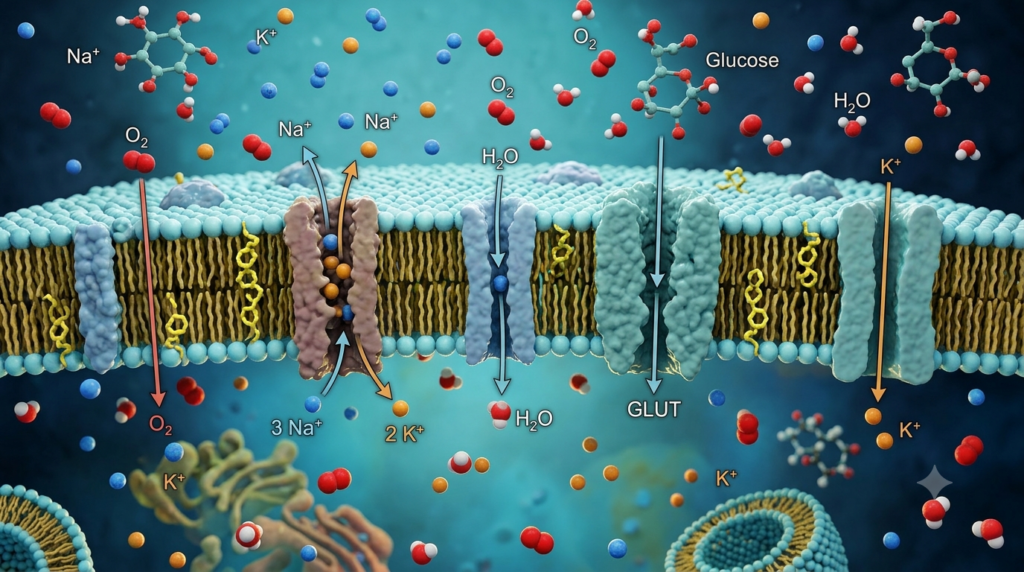
Several s-block elements play essential roles in biological systems.
Sodium (Na): Sodium ions help maintain fluid balance and are important for nerve impulse transmission and muscle function.
Potassium (K): Potassium is essential for normal nerve activity, muscle contraction, and maintaining the electrical balance of cells.
Magnesium (Mg): Magnesium is important for many enzyme reactions and is a central component of chlorophyll in plants.
Calcium (Ca): Calcium is necessary for strong bones and teeth. It also plays an important role in blood clotting, muscle contraction, and nerve signalling.
Lithium (Li): Certain lithium compounds are used in medicine, particularly in the treatment of bipolar disorder, under medical supervision.
These examples show that s-block elements are not only important in chemistry but also have significant biological and medical applications.
15. Uses of s-Block Elements
s-Block elements have numerous applications in everyday life, industries, agriculture, and medicine.
Some important uses are described below.
Lithium: Lithium is widely used in rechargeable batteries, especially in mobile phones, laptops, and electric vehicles. Some lithium compounds are also used in medicine.
Sodium: Sodium compounds are used in the manufacture of soaps, detergents, glass, and various industrial chemicals. Sodium vapour lamps have also been used for street lighting.
Potassium: Potassium compounds are important ingredients in fertilisers. They help support plant growth and improve agricultural productivity.
Magnesium: Magnesium is used in lightweight metal alloys, fireworks, and flares. Magnesium compounds are also used in medicines and industrial processes.
Calcium: Calcium compounds are used in cement, plaster, construction materials, and agriculture. Calcium is also essential for human and animal health.
Strontium: Strontium compounds are used in red fireworks and certain specialised materials.
Barium: Barium sulphate is used as a contrast agent in certain medical imaging procedures. Other barium compounds have industrial applications.
16. Differences Between Alkali Metals and Alkaline Earth Metals
Although both groups belong to the s-block, they differ in several important properties.
| Property | Alkali Metals | Alkaline Earth Metals |
|---|---|---|
| Group | Group 1 | Group 2 |
| General configuration | ns¹ | ns² |
| Valence electrons | 1 | 2 |
| Common oxidation state | +1 | +2 |
| Reactivity | Generally more reactive | Generally less reactive |
| Atomic size | Generally larger in the same period | Generally smaller in the same period |
| Hardness | Generally softer | Generally harder |
| Melting points | Generally lower | Generally higher |
| Hydroxides | Generally highly soluble | Solubility varies |
| Nature of oxides | Basic | Basic, except amphoteric BeO |
These differences are mainly related to their electronic configurations, atomic sizes, and ionisation enthalpies.
17. Why Are s-Block Elements Highly Reactive?
Most s-block elements are highly reactive because they can easily lose their outermost electrons.
Group 1 elements have only one valence electron. Removing this electron allows them to achieve a stable noble gas electronic configuration.
Similarly, Group 2 elements lose two valence electrons to form stable positive ions.
Their relatively low ionisation enthalpies make electron removal easier compared with many other metals.
The reactivity of alkali metals generally increases down the group because their outermost electrons become farther from the nucleus and easier to remove.
For this reason, alkali metals are not generally found in nature in their free metallic state. They usually occur as compounds in minerals and salts.
18. Storage of s-Block Elements
Some s-block elements react rapidly with oxygen and moisture present in the atmosphere.
Alkali metals such as sodium and potassium are therefore stored under kerosene or suitable mineral oil to prevent contact with air and water.
This is necessary because they can react vigorously with moisture and may catch fire under certain conditions.
Other reactive alkali metals, such as lithium, are also stored under suitable protective conditions.
Alkaline earth metals are generally less reactive than alkali metals, but some of them also require protection from air and moisture.
Proper storage is essential for laboratory safety and for maintaining the purity of these metals.
Conclusion
The s-block elements form an important part of the periodic table and include the alkali metals of Group 1 and alkaline earth metals of Group 2. Their characteristic electronic configurations, ns¹ and ns², determine many of their physical and chemical properties.
These elements generally have low ionisation enthalpies, high electropositive character, and a strong tendency to form positive ions. Their reactions with oxygen, water, acids, and halogens demonstrate their characteristic chemical behaviour.
Although alkali metals and alkaline earth metals share several properties, they differ in reactivity, hardness, ion formation, and the behaviour of their compounds. Their applications in batteries, agriculture, construction, medicine, and biological systems make them extremely important in everyday life and modern technology.
Understanding the s-block elements provides a strong foundation for studying periodic trends, chemical bonding, inorganic chemistry, and the behaviour of metals.
FAQs
1. What are s-block elements?
s-block elements are the elements in which the last electron enters the outermost s-orbital of an atom. They are mainly located in Groups 1 and 2 of the periodic table. These elements include alkali metals and alkaline earth metals. Their general electronic configurations are ns¹ for Group 1 and ns² for Group 2. Most s-block elements are metals and have a strong tendency to lose their outermost electrons to form positive ions. They are important in various chemical reactions, industrial processes, biological systems, and everyday applications.
2. Which elements are included in the s-block?
The s-block mainly includes the elements of Group 1 and Group 2 of the periodic table. Group 1 contains lithium, sodium, potassium, rubidium, caesium, and francium. Group 2 contains beryllium, magnesium, calcium, strontium, barium, and radium. Hydrogen and helium also have s-orbital electronic configurations. However, hydrogen is a non-metal with unique properties, while helium is placed in Group 18 because of its completely filled outermost shell. These elements are classified according to their electronic configurations and their positions in the periodic table.
3. Why are Group 1 elements called alkali metals?
Group 1 elements, excluding hydrogen, are called alkali metals because they react with water to form metal hydroxides, which are generally strongly basic or alkaline in nature. These elements have one electron in their outermost s-orbital and readily lose it to form positively charged ions with a +1 oxidation state. For example, sodium reacts with water to produce sodium hydroxide and hydrogen gas. Other examples include lithium and potassium. Their high reactivity and ability to form alkaline hydroxides are the main reasons behind the name alkali metals.
4. Why are Group 2 elements called alkaline earth metals?
Group 2 elements are called alkaline earth metals because their oxides and hydroxides generally show basic or alkaline properties, and many of their naturally occurring compounds are found in the Earth’s crust. These elements include beryllium, magnesium, calcium, strontium, barium, and radium. They have two electrons in their outermost s-orbital and generally lose both electrons to form +2 ions. Their oxides and hydroxides are important in various industrial and chemical applications. The term alkaline earth reflects their basic chemical nature and natural occurrence in the Earth’s crust.
5. What is the general electronic configuration of s-block elements?
The general electronic configuration of s-block elements depends on whether they belong to Group 1 or Group 2. Group 1 elements have the configuration ns¹, meaning that they contain one electron in their outermost s-orbital. Group 2 elements have the configuration ns², indicating that their outermost s-orbital contains two electrons. Here, n represents the principal quantum number or outermost electron shell. These configurations explain why Group 1 elements generally form +1 ions and Group 2 elements form +2 ions during chemical reactions.
6. Why are s-block elements highly reactive?
Most s-block elements are highly reactive because they have relatively low ionisation enthalpies and can easily lose their outermost electrons. Group 1 elements lose one electron to form +1 ions, whereas Group 2 elements generally lose two electrons to form +2 ions. The tendency to lose electrons helps these elements achieve stable electronic configurations. Their reactivity generally increases down each group because atomic size increases and the attraction between the nucleus and outermost electrons becomes weaker. This is why alkali metals such as potassium and caesium are extremely reactive.
7. Why are alkali metals stored under kerosene?
Alkali metals such as sodium and potassium are stored under kerosene or suitable mineral oil to prevent them from coming into contact with atmospheric oxygen and moisture. These metals are highly reactive and can react vigorously with water, producing hydrogen gas and heat. Under certain conditions, the heat generated may cause the hydrogen to ignite. Contact with oxygen can also lead to oxidation of the metal. Storing them under a protective liquid reduces exposure to air and moisture, helping maintain their purity and preventing dangerous reactions during laboratory storage.
8. What are the general physical properties of s-block elements?
s-block elements generally show metallic properties. Most are shiny when freshly cut, and they conduct heat and electricity effectively. Their atomic size generally increases down a group because additional electron shells are added. Alkali metals are usually soft and have relatively low melting points, while alkaline earth metals are generally harder and have higher melting points. Many alkali metals also have low densities. Their physical properties vary depending on the element and its position in the periodic table. These characteristics help distinguish s-block elements from other groups of metals.
9. What is the difference between alkali metals and alkaline earth metals?
Alkali metals belong to Group 1 and have one valence electron, whereas alkaline earth metals belong to Group 2 and have two valence electrons. Their general electronic configurations are ns¹ and ns², respectively. Alkali metals generally form +1 ions, while alkaline earth metals form +2 ions. Alkali metals are usually softer and more reactive than alkaline earth metals in the same period. Their melting points are also generally lower. Both groups are electropositive metals, but differences in their electronic configurations result in different chemical behaviour and compound formation.
10. What are the important uses of s-block elements?
s-block elements have many important applications in everyday life, industry, agriculture, and medicine. Lithium is widely used in rechargeable batteries for electronic devices and electric vehicles. Sodium compounds are used in the manufacture of soaps, glass, and other industrial chemicals. Potassium compounds are important ingredients in agricultural fertilisers. Magnesium is used in lightweight alloys and fireworks, while calcium compounds are used in cement and construction materials. Magnesium and calcium are also essential for biological processes. These applications demonstrate the importance of s-block elements in modern technology, healthcare, and daily life.