The environment includes everything that surrounds living organisms and influences their survival, growth, and development. It consists of living things, such as plants, animals, and microorganisms, as well as non-living elements, such as air, water, soil, sunlight, and temperature. These elements work together to maintain ecological balance and support life on Earth.
The components of the environment are broadly classified into two main groups: biotic components and abiotic components. Biotic components include all living organisms and their interactions, while abiotic components are the physical and chemical factors that influence life. Although these components are different in nature, they are closely connected. For example, plants need sunlight, water, air, and minerals to grow, while animals depend on plants or other animals for food. Understanding these components helps us learn how ecosystems function and why protecting the natural environment is essential.
What Are Biotic Components of the Environment?
Biotic components are the living parts of the environment. They include all organisms that carry out life processes, such as nutrition, respiration, growth, reproduction, and responses to their surroundings.
Examples of biotic components include trees, grasses, birds, insects, fish, humans, bacteria, and fungi. These organisms interact with one another in different ways. Some organisms produce their own food, others consume plants or animals, and some break down dead organic matter.
Biotic components play important roles in maintaining the balance of ecosystems. Plants produce food and release oxygen through photosynthesis. Animals help transfer energy through food chains, while decomposers recycle nutrients by breaking down dead organisms and waste materials.
Characteristics of Biotic Components
Biotic components have several characteristics that distinguish them from non-living environmental factors.
Growth: Living organisms grow and develop during their life cycles.
Reproduction: Organisms can produce offspring, allowing their populations to continue.
Nutrition: Living things obtain or produce the nutrients and energy required for survival.
Respiration: Organisms release usable energy from nutrients through cellular processes.
Response to stimuli: Living organisms respond to changes in their surroundings.
Life cycle: Organisms generally pass through stages of development, reproduction, ageing, and death.
Interactions: Organisms interact with other living things and with their physical surroundings.
These characteristics help explain how living organisms function and contribute to the environment.
Types of Biotic Components
Biotic components are commonly classified into three major groups according to their roles in the flow of energy and the cycling of nutrients: producers, consumers, and decomposers.
1. Producers
Producers are organisms that make their own organic food from inorganic substances. Most producers use sunlight as an energy source through photosynthesis. Green plants, algae, and certain bacteria are important examples of producers.
During photosynthesis, plants use sunlight, carbon dioxide, and water to produce glucose and release oxygen.
Photosynthesis equation:
6CO₂ + 6H₂O + light energy → C₆H₁₂O₆ + 6O₂
Producers form the foundation of most food chains because they convert energy into a form that other organisms can obtain by feeding.
For example, grass produces food using sunlight. A grasshopper eats the grass, a frog eats the grasshopper, and a snake may eat the frog. In this food chain, grass acts as the producer.
Producers also help regulate atmospheric carbon dioxide, release oxygen, provide habitats, and support biodiversity. In aquatic ecosystems, phytoplankton and algae perform similar functions.
2. Consumers
Consumers are organisms that obtain energy by feeding on other organisms or their organic matter. Unlike producers, they cannot produce all their food requirements from inorganic substances alone.
Consumers are divided into several groups according to their feeding habits.
Primary Consumers
Primary consumers feed directly on producers. They are commonly herbivores.
Examples include deer, rabbits, cows, goats, and grasshoppers. These animals obtain energy by eating plants or plant material.
Secondary Consumers
Secondary consumers feed on primary consumers. They may be carnivores or omnivores.
For example, a frog that eats a grasshopper acts as a secondary consumer in a grassland food chain.
Tertiary Consumers
Tertiary consumers feed on secondary consumers. They may occupy higher trophic levels in a food chain.
For instance, a snake that eats a frog may act as a tertiary consumer in a simple grass-based food chain.
Omnivores
Omnivores eat both plant and animal matter. Humans, bears, and many bird species are examples of omnivores.
Consumers help regulate populations, transfer energy between trophic levels, and influence the structure of ecological communities.
3. Decomposers
Decomposers are organisms that break down dead plants, dead animals, and organic waste into simpler substances. Bacteria and fungi are the principal decomposers in many ecosystems.
When a tree sheds its leaves, or an animal dies, decomposers break down the organic material. This process releases nutrients into the surrounding soil or water, where they can become available to other organisms.
Decomposition is essential because it prevents the continuous accumulation of dead organic matter and supports nutrient cycling.
For example, fungi growing on fallen wood break down complex organic substances. The nutrients released during decomposition can later be absorbed by plant roots.
Some organisms, such as earthworms and certain insects, fragment dead material and help decomposers work more efficiently. These organisms are often called detritivores, distinguishing them from organisms that chemically break down organic matter externally.
What Are Abiotic Components of the Environment?
Abiotic components are the non-living physical and chemical factors present in the environment. They influence the survival, distribution, growth, and reproduction of living organisms.
Important abiotic components include sunlight, water, air, soil, temperature, minerals, humidity, wind, and pH.
For example, plants require sunlight for photosynthesis, fish need suitable water conditions, and desert organisms must tolerate limited water availability. Changes in abiotic conditions can affect entire ecosystems.
Abiotic components also influence which species can survive in a particular habitat. A cactus can survive in dry environments because it has adaptations that reduce water loss, whereas many aquatic organisms cannot survive for long outside water.
Types of Abiotic Components
Abiotic components can be understood by examining the major physical and chemical factors that support or limit life.
1. Sunlight
Sunlight is the primary energy source for most ecosystems on Earth. Green plants and algae capture solar energy during photosynthesis and convert it into chemical energy stored in organic compounds.
This stored energy enters food chains when organisms consume producers.
Sunlight also influences temperature, seasonal changes, plant growth, and the daily activity patterns of animals. The amount of sunlight available varies with latitude, season, time of day, cloud cover, and the depth of water.
For example, plants growing in a forest understory often receive less sunlight than trees growing in open areas. As a result, shade-tolerant plants are more likely to survive beneath dense forest canopies.
2. Water
Water is essential for almost all known forms of life. It acts as a solvent, transports nutrients, supports chemical reactions, and helps regulate temperature.
Plants absorb water through their roots and use it during photosynthesis. Animals require water for digestion, circulation, temperature regulation, and other physiological processes.
Water is also a habitat for organisms such as fish, aquatic plants, plankton, and many microorganisms.
The availability of water influences the distribution of species. Rainforests support abundant vegetation because of their generally high rainfall, whereas deserts support organisms adapted to prolonged periods of water scarcity.
Water quality is equally important. Pollution, excessive salinity, and changes in acidity can make water unsuitable for certain organisms.
3. Air
Air is a mixture of gases surrounding Earth. Its composition makes it essential for many biological and environmental processes.
Oxygen supports aerobic cellular respiration in most animals, plants, fungi, and many microorganisms. Carbon dioxide is used by plants and algae during photosynthesis. Nitrogen is an important component of proteins and nucleic acids, although most organisms cannot use atmospheric nitrogen directly and depend on biological nitrogen fixation or other nitrogen transformations.
The atmosphere also regulates Earth’s temperature and helps protect life from harmful solar radiation.
Air pollution caused by vehicle emissions, industrial activities, and the burning of fossil fuels can harm living organisms and disturb ecosystems. Therefore, maintaining air quality is important for environmental health.
4. Soil
Soil is a mixture of mineral particles, organic matter, water, air, and living organisms. Although soil contains living components, its mineral composition and physical properties are important abiotic factors.
Soil provides physical support and nutrients for plants. It also stores water, allows gas exchange around roots, and provides habitats for many organisms.
The characteristics of soil vary according to its texture, structure, mineral content, moisture, and acidity.
For example, sandy soil drains water quickly, while clay-rich soil generally retains more water. Different plants are adapted to different soil conditions.
Soil fertility influences agricultural productivity and natural vegetation. Erosion, pollution, excessive chemical use, and deforestation can reduce soil quality and affect the organisms that depend on it.
5. Temperature
Temperature influences the rate of biological and chemical processes. Every organism has a range of temperatures within which it can function effectively.
Temperature affects enzyme activity, metabolism, growth, reproduction, and the availability of water. Extremely high or low temperatures can damage cells or prevent organisms from surviving.
For example, polar bears are adapted to cold environments, while many reptiles depend on external heat sources to regulate their body temperature.
Temperature also influences the distribution of ecosystems. Tropical forests, temperate grasslands, and polar regions support different communities of organisms because their climatic conditions differ.
Climate change can alter temperature patterns and affect the timing of flowering, migration, breeding, and other ecological events.
6. Minerals and Nutrients
Minerals and nutrients are essential chemical substances that organisms need for growth and normal functioning.
Plants absorb nutrients such as nitrogen, phosphorus, potassium, calcium, and magnesium from the soil or water. These elements contribute to protein formation, energy transfer, cell structure, and photosynthesis.
Animals obtain minerals through food and water. Calcium, for example, is important for bones and teeth in many animals, while iron is required for oxygen transport in human blood.
Nutrient availability can influence plant growth and ecosystem productivity. However, excessive nutrient inputs from fertilizers and sewage can cause eutrophication in lakes and other water bodies. This may lead to excessive algal growth and oxygen depletion.
7. Humidity and Wind
Humidity refers to the amount of water vapour present in the air. It influences evaporation, transpiration, water loss, and the activity of many organisms.
High humidity can reduce the rate at which water evaporates from surfaces, while low humidity can increase water loss from exposed organisms.
Wind affects seed dispersal, pollen movement, evaporation, and the exchange of gases between the atmosphere and Earth’s surface. Strong winds can also damage vegetation, increase soil erosion, and influence the shape of plants growing in exposed locations.
Together, humidity and wind contribute to the local environmental conditions experienced by organisms.
8. pH and Salinity
The pH of soil or water indicates how acidic or alkaline it is. It affects the availability of nutrients and the ability of organisms to survive.
Some plants grow best in slightly acidic soils, while others tolerate alkaline conditions. Many aquatic organisms also require a suitable pH range for normal development.
Salinity refers to the concentration of dissolved salts in water or soil. Freshwater organisms generally cannot tolerate the high salt concentrations experienced by many marine organisms. Similarly, salt-tolerant plants can survive in coastal or saline environments where many other plants struggle.
Changes in pH or salinity caused by pollution, irrigation practices, or other environmental processes can alter species composition and ecosystem functioning.
Differences Between Biotic and Abiotic Components
Biotic and abiotic components differ in their basic nature and ecological roles, but both are essential for the functioning of ecosystems.
| Basis | Biotic Components | Abiotic Components |
|---|---|---|
| Meaning | Living components of the environment | Non-living physical and chemical components |
| Examples | Plants, animals, bacteria, fungi | Water, sunlight, air, soil minerals |
| Life processes | Living organisms carry out life processes | Do not carry out biological life processes |
| Energy role | Capture, transfer, or process energy in ecosystems | Provide energy sources and conditions needed for energy flow |
| Nutrient role | Absorb, use, transform, and recycle nutrients | Supply and store nutrients and chemical substances |
| Response to changes | Organisms respond biologically to environmental changes | Physical and chemical conditions change according to environmental processes |
| Ecological function | Form populations, communities, food webs, and decomposer systems | Determine the physical and chemical conditions of habitats |
Both categories are interconnected. A change in one may affect the other, sometimes producing significant consequences for an entire ecosystem.
Interactions Between Biotic and Abiotic Components
Biotic and abiotic components do not function independently. Their interactions determine how ecosystems develop, maintain stability, and respond to environmental changes.
Plants Depend on Abiotic Factors
Plants need sunlight, water, carbon dioxide, and mineral nutrients to grow. The availability of these resources affects their growth rates, distribution, and reproduction.
For example, a plant growing in nutrient-poor soil may develop more slowly than a similar plant growing in fertile soil, provided other conditions are suitable.
Animals Depend on Both Living and Non-Living Factors
Animals depend on other organisms for food and often for shelter. At the same time, they require appropriate temperatures, water, oxygen, and suitable habitats.
Fish depend on aquatic plants or other organisms for food, depending on their species, and require water with suitable oxygen levels and temperature.
Microorganisms Influence Soil and Water
Bacteria and fungi break down organic material and release nutrients. These activities influence soil fertility and nutrient availability.
Other microorganisms participate in the nitrogen cycle by converting nitrogen between different chemical forms. Such processes help maintain the availability of nutrients needed by plants and other organisms.
Living Organisms Change Their Physical Environment
Biotic components can modify abiotic conditions. Trees provide shade, reduce the impact of wind, and influence soil moisture. Plant roots help stabilize soil and reduce erosion.
Coral organisms build reef structures that provide habitats for numerous marine species. Earthworms can improve soil structure by creating channels that support water movement and aeration.
These examples show that organisms do not merely respond to their environment; they also help shape it.
Examples of Biotic and Abiotic Components in Different Ecosystems
The combination of living and non-living components varies across ecosystems. Their interactions determine the characteristics of each habitat.
Forest Ecosystem
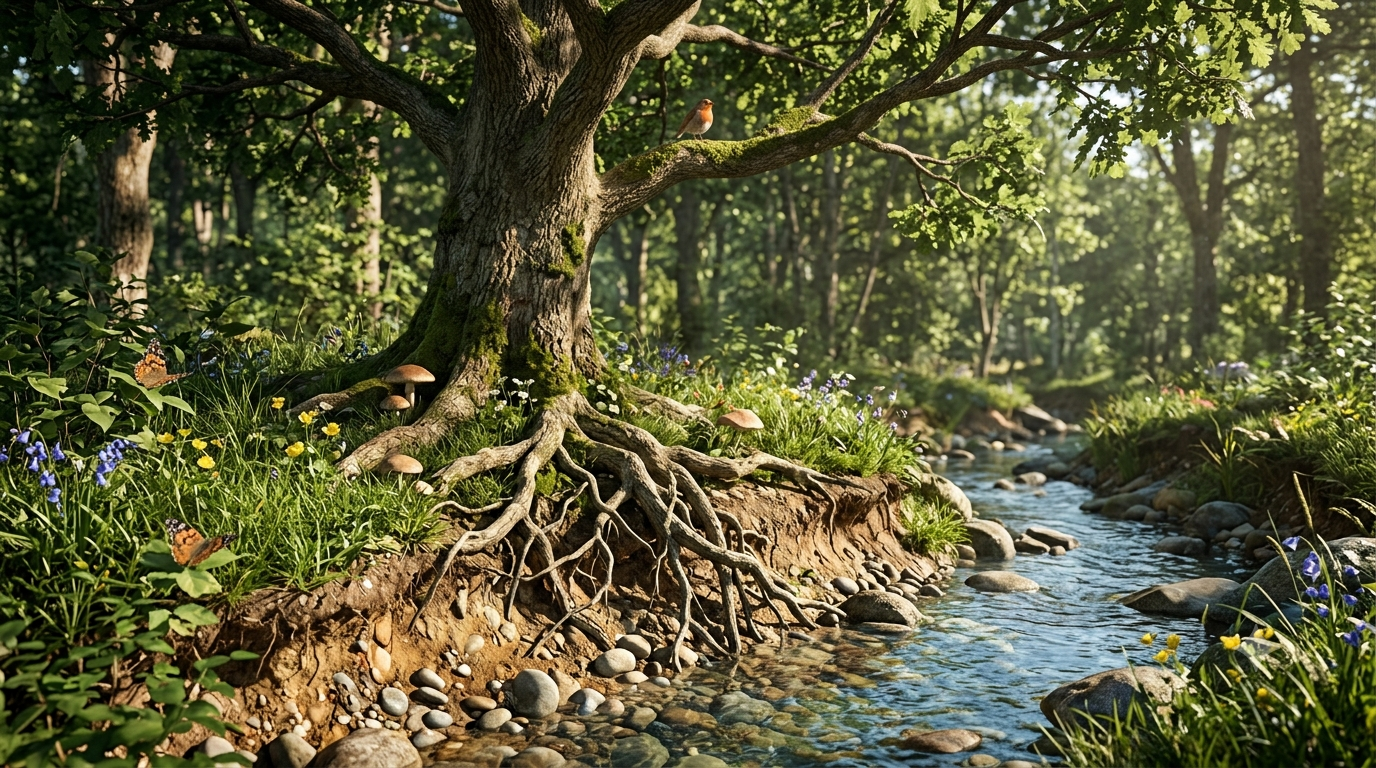
A forest contains trees, shrubs, grasses, insects, birds, mammals, fungi, and bacteria as biotic components. Sunlight, rainfall, temperature, soil, and air are important abiotic components.
Trees capture solar energy, herbivores feed on plants, predators feed on other animals, and decomposers return nutrients to the soil. The amount of rainfall and sunlight strongly influences forest structure and species diversity.
Aquatic Ecosystem
In a pond, lake, river, or ocean, biotic components include fish, algae, aquatic plants, plankton, and microorganisms.
Abiotic components include water temperature, dissolved oxygen, light penetration, salinity, pH, and nutrient concentration.
These factors influence the types and numbers of organisms that can survive. For example, reduced dissolved oxygen can stress or kill fish, while excessive nutrients may cause algal blooms.
Desert Ecosystem
Desert ecosystems contain plants such as cacti, insects, reptiles, birds, and small mammals. Important abiotic components include limited water, intense sunlight, sandy or rocky soil, and large temperature variations in some deserts.
Many desert organisms conserve water, avoid extreme daytime heat, or remain active during cooler periods. These adaptations help them survive under challenging conditions.
Grassland Ecosystem
Grasslands contain grasses, flowering plants, grazing animals, insects, predators, and decomposers.
Rainfall, soil fertility, temperature, and seasonal changes influence the distribution of vegetation and animals. Grazing, fire, and interactions between species can also shape grassland communities.
Marine Ecosystem
Marine ecosystems include phytoplankton, seaweeds, corals, fish, marine mammals, and many microorganisms. Salinity, water pressure, temperature, dissolved oxygen, currents, and sunlight are important abiotic factors.
Near the ocean surface, sunlight supports photosynthesis by phytoplankton and algae. In deeper waters, light becomes limited, so many organisms depend directly or indirectly on organic matter produced elsewhere.
Importance of Biotic and Abiotic Components
Both biotic and abiotic components are necessary for maintaining ecological processes and supporting life.
1. Maintaining ecological balance: Interactions between organisms and their surroundings regulate populations, food webs, and ecosystem functions.
2. Supporting food chains: Producers capture energy, consumers transfer it through feeding relationships, and decomposers help recycle nutrients.
3. Recycling nutrients: Decomposers and other organisms return nutrients to soil and water, making them available for reuse.
4. Providing habitats: Abiotic conditions such as water, temperature, soil, and light determine which organisms can live in particular places.
5. Supporting biodiversity: Suitable environmental conditions and interactions among species allow diverse communities to develop.
6. Regulating climate and atmospheric gases: Vegetation absorbs carbon dioxide during photosynthesis, while ecosystems influence carbon storage, water cycling, and local climatic conditions.
7. Supporting human life: Healthy ecosystems provide food, freshwater, raw materials, fertile soil, and other resources essential to human well-being.
The continued functioning of ecosystems depends on the availability of resources and the balance of interactions between living organisms and non-living factors.
Human Activities and Their Effects on Environmental Components
Human activities can alter both biotic and abiotic components of the environment. Some changes are necessary for human development, but poorly managed activities can damage ecosystems.
Deforestation reduces vegetation cover, destroys habitats, and can increase soil erosion. Industrial emissions and vehicle exhaust contribute to air pollution, which affects plants, animals, and human health.
Water pollution from sewage, industrial waste, and agricultural runoff can harm aquatic organisms and change water chemistry. Excessive use of fertilizers may increase nutrient concentrations in lakes and rivers, causing eutrophication.
Climate change alters temperature, rainfall, sea levels, and the frequency or intensity of certain extreme weather events. These changes can affect species distributions, breeding patterns, food availability, and ecosystem stability.
Overfishing, hunting, and habitat destruction reduce populations of many organisms and can disrupt food webs. Soil degradation and the overuse of natural resources can also reduce the ability of ecosystems to support life.
Environmental protection requires reducing pollution, conserving habitats, managing natural resources responsibly, restoring damaged ecosystems, and using sustainable agricultural and industrial practices.
How Can We Protect Biotic and Abiotic Components?
Protecting the environment involves maintaining healthy populations of organisms while preserving the physical and chemical conditions they need.
Conserve forests: Protecting and restoring forests supports biodiversity, reduces soil erosion, and stores carbon.
Reduce pollution: Proper waste management and cleaner production methods help protect air, soil, and water.
Save water: Efficient water use and the prevention of water contamination help maintain freshwater ecosystems.
Protect wildlife: Conserving habitats and preventing illegal hunting support healthy populations and food webs.
Maintain soil health: Sustainable farming, crop rotation, and erosion-control practices help preserve soil structure and fertility.
Use energy responsibly: Improving energy efficiency and increasing the use of low-carbon energy sources can reduce greenhouse gas emissions.
Restore ecosystems: Reforestation, wetland restoration, and the recovery of damaged habitats can improve ecological functioning.
Spread environmental awareness: Education helps people understand how everyday choices affect natural systems.
These actions are most effective when individuals, communities, industries, and governments work together to protect ecosystems.
Conclusion
Biotic and abiotic components are the two fundamental groups of environmental factors that support life on Earth. Biotic components include living organisms such as plants, animals, bacteria, and fungi, while abiotic components include non-living factors such as sunlight, water, air, soil, temperature, and minerals. Producers, consumers, and decomposers perform different but interconnected roles in energy flow and nutrient cycling.
The relationship between these components determines the structure and functioning of ecosystems. Living organisms depend on suitable physical and chemical conditions, while organisms also influence their surroundings through processes such as photosynthesis, decomposition, and soil formation. Human activities can disturb these relationships, making environmental conservation increasingly important. By protecting biodiversity, reducing pollution, and using natural resources responsibly, we can help maintain healthy ecosystems for present and future generations.
FAQs
1. What are biotic and abiotic components of the environment?
Biotic and abiotic components are the two major groups of factors that make up the environment. Biotic components include living organisms such as plants, animals, fungi, bacteria, and other microorganisms. Abiotic components are the non-living physical and chemical factors, including sunlight, water, air, soil, temperature, and minerals. Both groups interact continuously to support life and maintain ecological balance. For example, plants depend on sunlight, water, and soil nutrients for growth, while animals depend on plants or other animals for food. Together, biotic and abiotic components determine the structure and functioning of ecosystems.
2. What are the main examples of biotic components?
The main examples of biotic components include plants, animals, humans, fungi, bacteria, algae, and other microorganisms. These organisms perform different functions in ecosystems. Green plants and algae act as producers because they manufacture food through photosynthesis. Animals function as consumers because they obtain energy by eating plants or other organisms. Fungi and many bacteria act as decomposers by breaking down dead organic matter and releasing nutrients. These groups depend on one another through food chains, food webs, and nutrient cycles. Their interactions help maintain ecosystem balance, support biodiversity, and ensure the continuous movement of energy and nutrients through the environment.
3. What are the main examples of abiotic components?
The main examples of abiotic components are sunlight, water, air, soil, temperature, minerals, humidity, wind, pH, and salinity. These non-living factors influence the survival, growth, and distribution of organisms. Sunlight provides energy for photosynthesis, while water supports essential biological processes. Air supplies gases such as oxygen and carbon dioxide, and soil provides plants with physical support and nutrients. Temperature affects metabolic activities, while pH and salinity influence the suitability of soil and water for different species. The availability and combination of these factors determine the characteristics of habitats such as forests, deserts, grasslands, rivers, and oceans.
4. What is the difference between biotic and abiotic components?
The main difference is that biotic components are living organisms, whereas abiotic components are non-living environmental factors. Plants, animals, fungi, and bacteria are examples of biotic components. Sunlight, water, air, soil minerals, and temperature are examples of abiotic components. Biotic components carry out life processes such as growth, reproduction, and metabolism. Abiotic components do not perform biological life processes, but they provide the resources and conditions required for life. For example, plants use sunlight, water, and carbon dioxide to produce food. Both types of components interact closely and are essential for maintaining healthy ecosystems.
5. What are producers, consumers, and decomposers?
Producers, consumers, and decomposers are the three major functional groups of biotic components in many ecosystems. Producers, such as green plants and algae, make organic food using sunlight or other energy sources. Consumers, including herbivores, carnivores, and omnivores, obtain energy by feeding on other organisms or organic matter. Decomposers, particularly fungi and bacteria, break down dead organisms and organic waste into simpler substances. These groups work together to maintain ecosystem functioning. Producers introduce energy into most food chains, consumers transfer energy between trophic levels, and decomposers recycle nutrients that can become available to producers again.
6. How do biotic and abiotic components interact with each other?
Biotic and abiotic components interact through the exchange of energy, nutrients, and resources. Plants absorb water and minerals from the soil and use sunlight and carbon dioxide for photosynthesis. Animals depend on suitable temperatures, water, oxygen, and food to survive. Decomposers break down dead organisms and return nutrients to the environment. Living organisms can also change abiotic conditions. For example, tree roots help stabilize soil, while tree canopies provide shade and influence moisture levels. These interactions connect living organisms with their surroundings and help maintain ecosystem functions. A significant change in one component can affect many other components.
7. Why are abiotic components important for living organisms?
Abiotic components provide the essential resources and environmental conditions needed for organisms to survive, grow, and reproduce. Sunlight supplies energy for photosynthesis, water supports chemical reactions, and air provides important gases. Soil supplies nutrients and physical support for plants, while suitable temperatures allow biological processes to function effectively. The availability of these factors also determines where different species can live. For example, cacti survive in deserts because they possess adaptations for conserving water, whereas many aquatic organisms require permanent access to water. When abiotic conditions change significantly, organisms may experience stress, migrate, adapt, or disappear from affected habitats.
8. How do biotic and abiotic components affect food chains?
Biotic and abiotic components influence food chains by determining energy availability, organism survival, and the transfer of nutrients. Producers, such as plants, capture energy and form the foundation of most food chains. Consumers obtain energy by feeding on producers or other consumers, while decomposers break down organic matter and recycle nutrients. Abiotic factors such as sunlight, water, temperature, and soil fertility influence the growth of producers and the availability of food for other organisms. For example, a prolonged drought can reduce grass growth, leaving less food for herbivores and subsequently affecting predators. Therefore, changes in environmental conditions can disrupt entire food chains.
9. How do human activities affect biotic and abiotic components?
Human activities can change both living organisms and non-living environmental conditions. Deforestation destroys habitats and reduces biodiversity, while pollution contaminates air, water, and soil. Excessive fertilizer use can increase nutrient levels in water bodies, sometimes causing algal blooms and oxygen depletion. Overfishing and hunting can reduce animal populations and disturb food webs. Burning fossil fuels increases greenhouse gas emissions and contributes to climate change, affecting temperatures, rainfall, and species distributions. These changes can weaken ecosystems and reduce their ability to provide essential resources. Sustainable agriculture, pollution control, habitat conservation, and responsible resource use can help reduce these harmful effects.
10. How can we protect biotic and abiotic components of the environment?
We can protect biotic and abiotic components by conserving biodiversity, reducing pollution, and using natural resources responsibly. Planting and protecting trees helps preserve habitats, store carbon, and reduce soil erosion. Proper waste disposal and wastewater treatment protect soil and water quality. Saving water, using energy efficiently, and reducing unnecessary fossil fuel consumption can lessen environmental pressure. Sustainable farming practices help maintain soil fertility and prevent excessive nutrient runoff. Protecting wildlife and restoring damaged habitats support ecological balance. Individuals, communities, industries, and governments all have important roles in environmental conservation. These combined efforts help maintain healthy ecosystems and preserve natural resources for future generations.