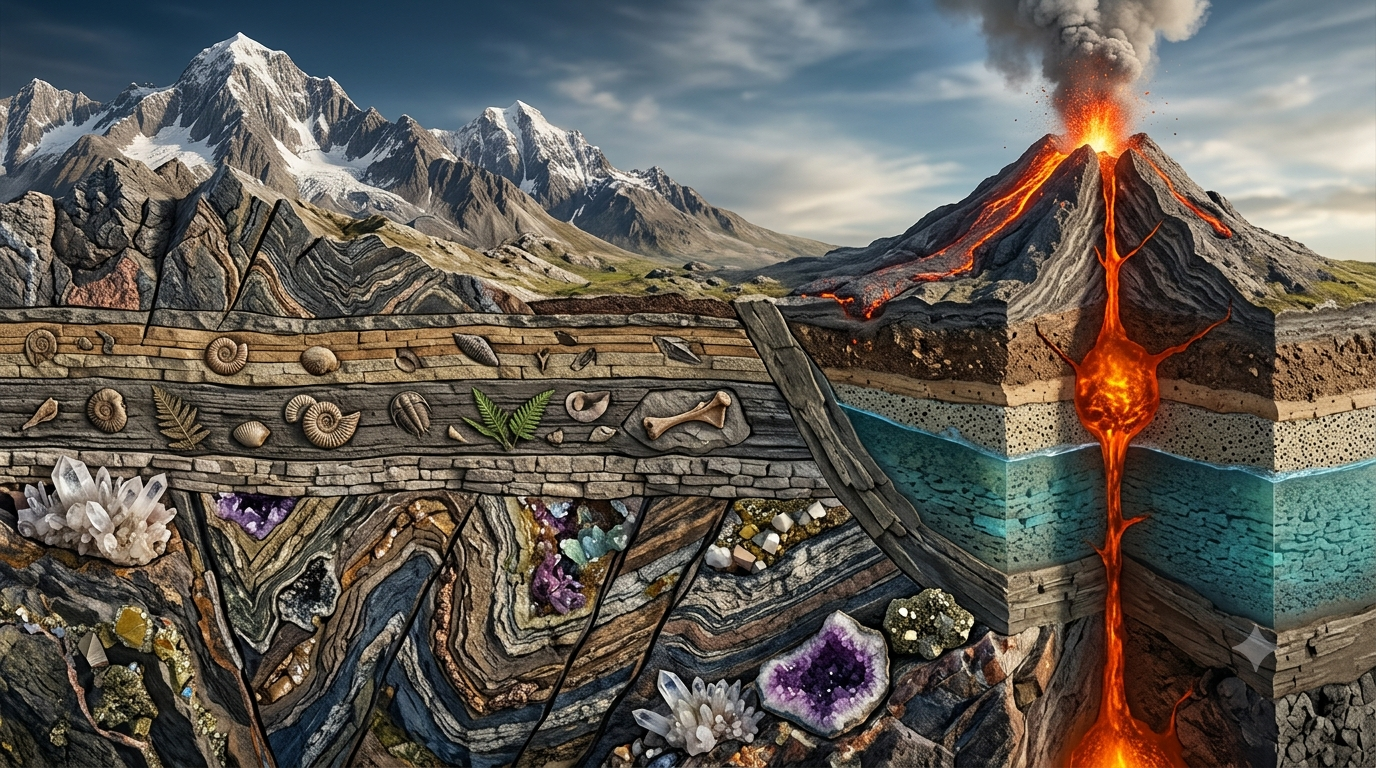
Geology is the scientific study of Earth, including its structure, materials, history, and the natural processes that have shaped it over billions of years. It helps us understand how mountains form, why earthquakes occur, how volcanoes erupt, where valuable minerals are found, and how the planet’s surface changes over time. However, geology is a broad field that covers many different subjects, so scientists divide it into several branches to study specific aspects of the Earth in greater detail. Some branches focus on rocks and minerals, while others investigate fossils, landforms, groundwater, earthquakes, or the history of our planet. Each branch provides a different perspective on how Earth works. Learning about the branches of geology makes it easier to understand the planet as a connected system and shows how geological knowledge supports natural resource management, environmental protection, construction, and disaster prevention.
What Are the Branches of Geology?
The branches of geology are specialized areas of study that focus on different components, processes, and stages of Earth’s development. Although these branches have distinct objectives, they often overlap because the natural systems of our planet are closely connected.
For example, a geologist investigating an earthquake may use structural geology to study faults, seismology to analyze seismic waves, and geophysics to examine the physical properties of rocks beneath the surface. Similarly, a scientist studying an ancient fossil may combine paleontology, stratigraphy, and sedimentology to understand the organism’s environment and the age of the surrounding rocks.
Geology is commonly divided into physical geology and historical geology. Physical geology examines Earth’s materials and the processes operating on and beneath its surface. Historical geology focuses on how Earth and life have changed throughout geological time. Numerous specialized branches fall within or connect these two broad areas.
1. Physical Geology
Physical geology studies the materials that make up Earth and the physical and chemical processes that continuously change the planet. These processes include weathering, erosion, volcanic activity, earthquakes, mountain building, and the movement of tectonic plates.
Physical geologists investigate rocks, minerals, soil, landforms, and Earth’s internal structure. They also examine how natural forces interact to shape the environment.
For example, when a mountain gradually breaks down due to rain, wind, temperature changes, and flowing water, physical geology helps explain the processes responsible for that change.
This branch is important for understanding natural hazards, identifying geological resources, and evaluating the stability of land used for construction. It provides a foundation for many other branches of geology.
2. Historical Geology
Historical geology studies the origin and development of Earth over geological time. It investigates how continents moved, oceans formed, climates changed, and living organisms evolved throughout the planet’s history.
Historical geologists use rock layers, fossils, mineral evidence, and radioactive dating techniques to reconstruct past environments and geological events.
For example, sedimentary rocks may contain fossils of marine organisms in areas that are now far from the sea. Such evidence can help scientists determine that the region was once covered by an ocean.
Historical geology also helps explain major events, including the formation of ancient supercontinents, periods of widespread volcanic activity, changes in Earth’s atmosphere, and mass extinction events.
By studying the past, scientists can better understand the long-term processes that continue to influence the planet today.
3. Mineralogy
Mineralogy is the branch of geology that studies minerals, including their chemical composition, crystal structure, physical properties, formation, and classification.
Minerals are naturally occurring substances with characteristic chemical compositions and ordered internal structures. Quartz, feldspar, mica, calcite, and olivine are common examples.
Mineralogists examine properties such as hardness, color, luster, cleavage, density, and crystal shape to identify minerals. They may also use laboratory instruments, including microscopes and X-ray diffraction equipment, to investigate mineral composition and structure.
Mineralogy is useful in mining, manufacturing, electronics, construction, and scientific research. Many minerals provide essential materials for cement, glass, fertilizers, batteries, and electronic devices.
Understanding minerals also helps geologists determine the conditions under which rocks formed and identify valuable mineral deposits.
4. Petrology
Petrology is the study of rocks, including their origin, composition, texture, classification, and transformation. It helps scientists understand how rocks form and how they change under different temperature, pressure, and environmental conditions.
Rocks are generally classified into three major groups.
Igneous rocks: Form when molten rock cools and solidifies. Granite and basalt are examples.
Sedimentary rocks: Form through the accumulation, compaction, and cementation of sediments or through other sedimentary processes. Sandstone and limestone are examples.
Metamorphic rocks: Develop when existing rocks are altered by heat, pressure, or chemically active fluids without completely melting. Marble and gneiss are examples.
Petrologists study these rocks to understand the geological history of an area. For instance, the presence of certain metamorphic minerals can indicate the temperatures and pressures experienced deep within Earth’s crust.
Petrology is important in mineral exploration, engineering, and understanding the rock cycle.
5. Structural Geology
Structural geology examines the arrangement, deformation, and movement of rocks within Earth’s crust. It focuses on geological structures such as folds, faults, fractures, joints, and tilted rock layers.
These structures develop when rocks experience forces caused by tectonic plate movements, gravitational effects, or changes in pressure.
A fold forms when rock layers bend, while a fault develops when rocks break and move relative to one another. Faults are particularly important because movement along them can produce earthquakes.
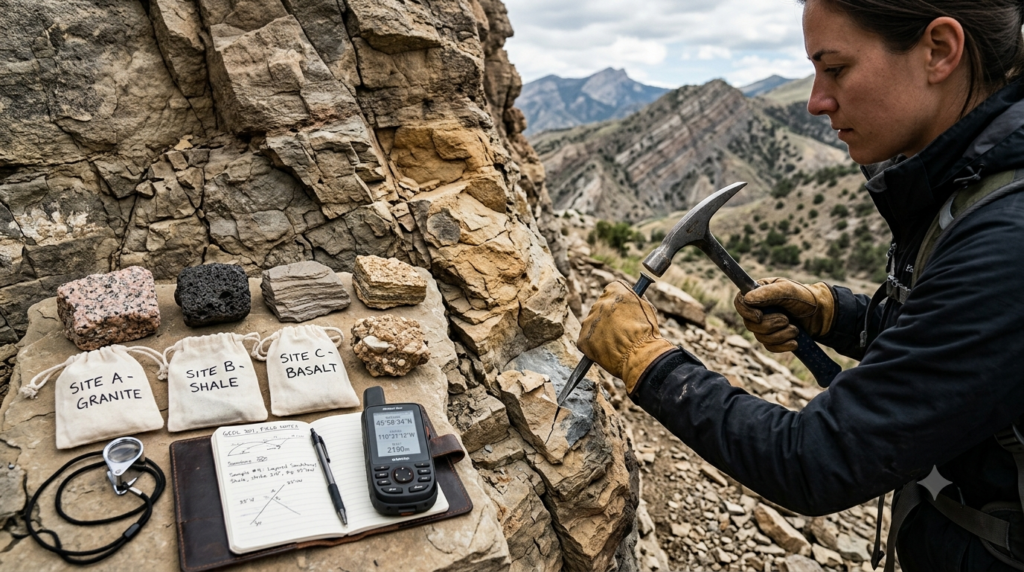
Structural geologists study rock formations in the field and use geological maps, satellite images, and three-dimensional models to understand underground structures.
This branch has practical applications in earthquake hazard assessment, tunnel construction, mining, and petroleum exploration. It helps engineers evaluate geological conditions before building dams, roads, bridges, and other major structures.
6. Stratigraphy
Stratigraphy is the branch of geology that studies rock layers, known as strata, and their distribution, sequence, age relationships, and geological significance.
Many sedimentary rocks form in layers as sediments accumulate over time. These layers can preserve evidence of ancient rivers, deserts, lakes, oceans, and changes in climate.
Stratigraphers examine the characteristics and relationships of these layers to reconstruct geological history. They use principles such as superposition, which generally states that in an undisturbed sequence of sedimentary rocks, older layers lie below younger layers.
However, folding, faulting, erosion, and other geological events can disturb the original sequence, so geologists must carefully interpret the evidence.
Stratigraphy is also essential for correlating rock layers across different locations and establishing the relative ages of geological events. It supports fossil research, petroleum exploration, and the reconstruction of ancient environments.
7. Paleontology
Paleontology studies ancient life through fossils preserved in rocks and other geological materials. Fossils may include bones, teeth, shells, leaves, footprints, and traces of ancient organisms.
Paleontologists use fossil evidence to investigate the evolution of life, the appearance and extinction of species, and the environmental conditions in which organisms lived.
For example, dinosaur fossils reveal information about prehistoric animals, while fossilized marine organisms can help scientists reconstruct ancient oceans.
Paleontology also contributes to geology by helping identify and compare the ages of rock layers. Certain fossils, known as index fossils, are particularly useful because they belong to organisms that were geographically widespread but existed for relatively limited periods.
The branch connects geology with biology and evolutionary science. It provides valuable evidence about how life has responded to environmental changes over millions of years.
8. Geomorphology
Geomorphology is the study of landforms and the processes responsible for creating and modifying them. It examines mountains, valleys, plains, river channels, coastlines, deserts, glaciers, and other features of Earth’s surface.
Geomorphologists investigate the effects of weathering, erosion, deposition, tectonic movements, flowing water, wind, ice, and gravity.
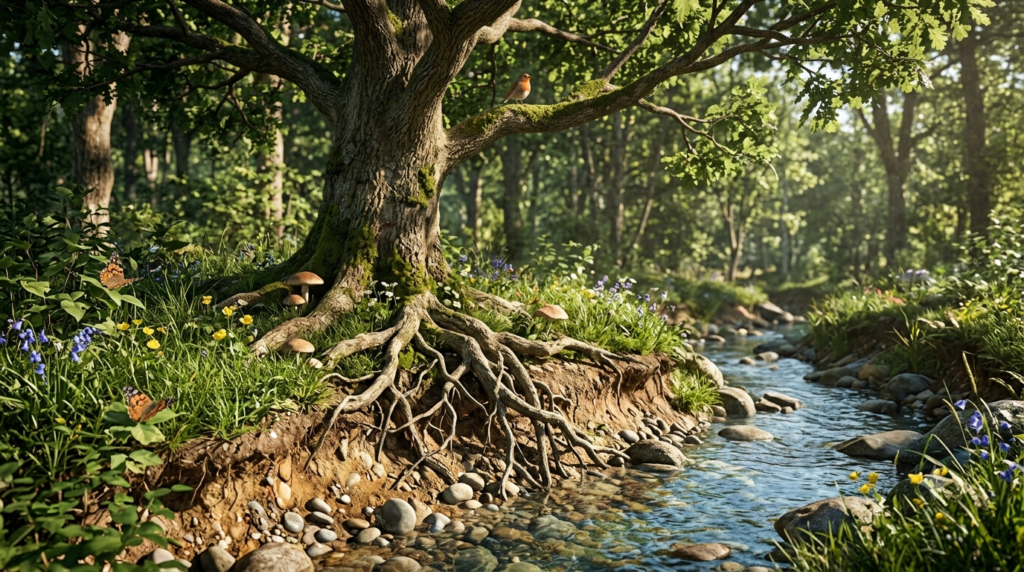
For example, rivers gradually cut valleys into rock, glaciers carve broad valleys through mountain regions, and wind transports sand to create dunes in deserts.
By examining landforms, scientists can reconstruct past environmental conditions and understand how landscapes may change in the future.
Geomorphology is important for flood risk assessment, coastal management, soil conservation, urban planning, and evaluating landslide hazards. It helps explain why certain landscapes are more vulnerable to erosion or rapid change than others.
9. Geophysics
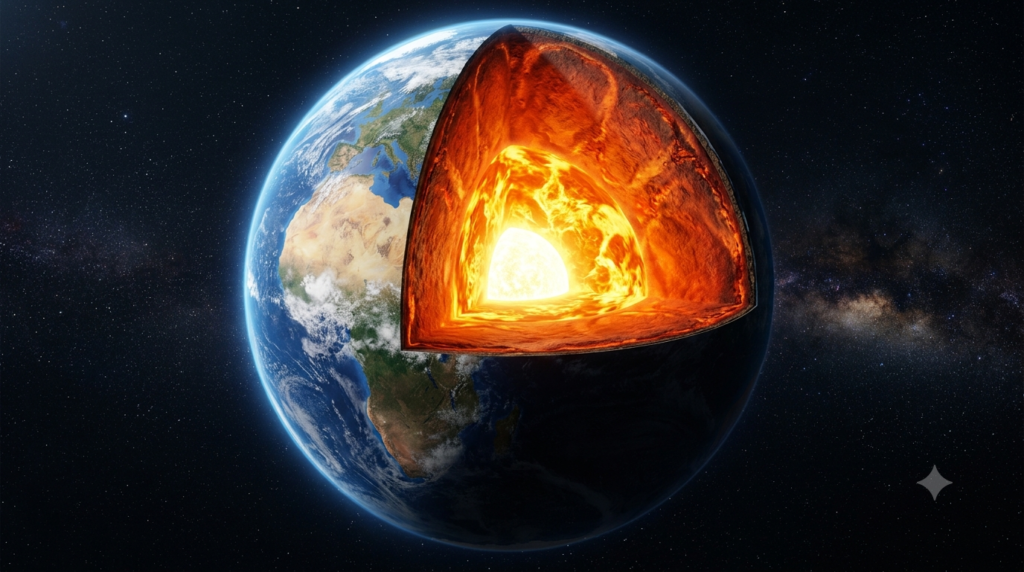
Geophysics applies the principles of physics to investigate Earth and its internal structure. Because scientists cannot directly observe most of the planet’s interior, they use measurements of physical properties to understand what lies beneath the surface.
Geophysicists study seismic waves, gravity, magnetic fields, electrical properties, heat flow, and other physical signals.
Seismic waves generated by earthquakes, for example, travel through Earth and change speed or direction depending on the materials they encounter. By analyzing these changes, scientists can investigate the structure of the crust, mantle, and core.
Geophysical techniques are also used to locate mineral deposits, investigate groundwater, assess geological conditions before construction, and monitor volcanic activity.
This branch is closely connected to seismology and plays an important role in understanding earthquakes and the physical processes operating deep inside Earth.
10. Geochemistry
Geochemistry studies the chemical composition of Earth and the chemical processes that influence rocks, minerals, water, soil, and the atmosphere.
Geochemists examine how chemical elements are distributed, how minerals form, and how substances move through geological systems. They may analyze rock samples, groundwater, sediments, or volcanic gases to identify chemical patterns.
For example, the chemical composition of volcanic rocks can provide clues about the origin and evolution of magma. Similarly, the chemical signatures of ancient rocks can reveal information about past oceans and atmospheric conditions.
Geochemistry is important in mineral exploration because certain chemical elements can indicate the presence of valuable deposits. It also supports environmental investigations by helping scientists identify contamination and understand how pollutants move through soil and groundwater.
This branch connects geology with chemistry and contributes to research on Earth’s origin, evolution, and changing environment.
11. Volcanology
Volcanology is the scientific study of volcanoes, magma, lava, volcanic gases, and eruptions. It investigates how volcanoes develop, why eruptions occur, and how volcanic activity changes the surrounding landscape.
Volcanologists monitor earthquakes near volcanoes, ground deformation, gas emissions, temperature changes, and other warning signals that may indicate changes in volcanic activity.
They also study different types of eruptions and the materials produced, including lava flows, ash, and fragments of volcanic rock.
Volcanic activity can create serious hazards, including ashfall, lava flows, pyroclastic flows, and volcanic mudflows known as lahars. However, volcanoes can also contribute to the formation of fertile soils, new land, and valuable mineral deposits.
Volcanology helps scientists assess volcanic hazards, improve monitoring systems, and support emergency planning in regions where active volcanoes threaten communities.
12. Seismology
Seismology studies earthquakes, seismic waves, and the energy released by sudden movements within Earth.
Most earthquakes occur when stress accumulates in rocks and is released through movement along a fault. Seismologists use sensitive instruments called seismometers to record ground motion and analyze the resulting seismic waves.
By studying the arrival times, amplitudes, and characteristics of these waves, scientists can estimate an earthquake’s location, depth, and magnitude. Seismic data also reveal important information about Earth’s internal structure.
Seismology is closely related to tectonic processes because many earthquakes occur near the boundaries of moving plates. However, earthquakes can also occur within plates and in association with volcanic activity or human activities.
This branch supports seismic hazard assessment, earthquake monitoring, and the development of safer building practices. Although scientists cannot reliably predict the exact time and location of every future earthquake, seismological research improves our understanding of earthquake behavior and risk.
13. Plate Tectonics
Plate tectonics studies the movement and interactions of Earth’s large, relatively rigid lithospheric plates. These plates include portions of the crust and the uppermost mantle and move slowly over the underlying mantle.
Plate boundaries are commonly classified into three types.
Divergent boundaries: Plates move apart, allowing new crust to form in many locations.
Convergent boundaries: Plates move toward one another, sometimes producing mountain ranges, deep ocean trenches, and volcanic arcs.
Transform boundaries: Plates slide horizontally past one another, often producing earthquakes.
Plate tectonics explains the broad distribution of earthquakes, volcanoes, mountain belts, and ocean basins. It also helps explain how continents have changed position throughout geological history.
Although plate tectonics overlaps with structural geology and geophysics, it provides a unifying framework for understanding many large-scale processes that shape Earth.
14. Hydrogeology
Hydrogeology studies groundwater, including its occurrence, movement, storage, distribution, and interaction with rocks and soil.
Groundwater exists in pores, fractures, and other openings within geological materials. It is an important source of drinking water and is widely used for agriculture, industry, and domestic needs.
Hydrogeologists investigate aquifers, which are geological formations capable of storing and transmitting usable quantities of groundwater. They study how water enters the ground through infiltration, moves underground, and eventually emerges at springs or flows into rivers and other water bodies.
This branch also examines groundwater contamination, excessive extraction, and the effects of drought on underground water supplies.
Hydrogeology is particularly important in regions that depend heavily on wells. Its findings help communities manage groundwater sustainably and protect water resources from pollutants such as agricultural chemicals, industrial waste, and improperly managed sewage.
15. Economic Geology
Economic geology studies geological materials that have economic value and the processes responsible for forming their deposits.
These resources include metallic minerals such as copper, iron, gold, and aluminium-bearing ores, as well as industrial minerals, building materials, and certain energy resources.
Economic geologists investigate where deposits occur, how they formed, how extensive they may be, and whether they can be extracted economically.
For example, the concentration of copper in particular rock formations can provide evidence of geological processes that created a potentially valuable mineral deposit.
Economic geology supports mining, resource assessment, and industrial development. However, exploration and extraction must also consider environmental impacts, worker safety, land disturbance, and the long-term management of mining waste.
The branch helps society understand the availability of natural resources while encouraging more informed decisions about their responsible use.
16. Environmental Geology
Environmental geology examines the relationship between geological processes, Earth’s materials, and human activities. It applies geological knowledge to environmental problems and the sustainable management of land and natural resources.
Environmental geologists investigate soil erosion, groundwater contamination, land degradation, waste disposal, coastal change, and geological hazards.
For example, when a landfill is proposed near a residential area, environmental geologists can assess whether the underlying rocks and soils may allow pollutants to reach groundwater.
They also study how natural hazards affect communities and how human activities can increase geological risks.
Environmental geology is important for environmental impact assessments, land-use planning, pollution control, and the restoration of damaged landscapes. It helps governments, industries, and communities make decisions that reduce environmental harm while protecting public health and natural systems.
17. Engineering Geology
Engineering geology applies geological principles to the planning, design, construction, and maintenance of infrastructure.
Buildings, bridges, highways, tunnels, dams, and railway lines all depend on the physical characteristics of the ground beneath them. Weak rock, unstable slopes, groundwater movement, and active faults can create serious engineering challenges.
Engineering geologists investigate soil and rock conditions, identify geological hazards, and evaluate how the ground may respond to construction activities.
For example, before a dam is built, specialists may examine the strength and permeability of the underlying rocks to determine whether the foundation can safely support the structure and resist water leakage.
Engineering geology helps reduce construction risks, prevent structural damage, and improve the long-term safety of infrastructure. It is especially important in mountainous regions, earthquake-prone areas, and locations with complex ground conditions.
18. Glaciology
Glaciology is the study of glaciers, ice sheets, and other forms of natural ice, including their movement, formation, structure, and effects on the landscape.
Although glaciology is also considered a branch of Earth science and climate science, it has strong connections with geology because moving ice can reshape landforms and leave behind distinctive deposits.
Glaciers erode rocks, transport sediment, carve valleys, and deposit materials as they advance or retreat. These deposits provide evidence of past glaciations and help scientists reconstruct ancient climate conditions.
Glaciologists also investigate how glaciers respond to changes in temperature and precipitation. Their research contributes to understanding sea-level rise, water availability, and the changing stability of ice-covered regions.
Studying ancient glacial deposits can reveal that regions now experiencing warm climates were once affected by extensive ice cover.
19. Planetary Geology
Planetary geology, also called planetary geoscience, studies the geological features and processes of planets, moons, asteroids, and other solid bodies in the Solar System.
It examines planetary surfaces, impact craters, volcanoes, mountains, valleys, minerals, and evidence of past water activity.
Scientists use spacecraft observations, satellite images, robotic missions, and samples from meteorites or returned space missions to investigate the geological histories of other worlds.
For example, studying impact craters on the Moon helps scientists understand the history of collisions in the early Solar System. Investigations of Mars provide evidence about ancient rivers, lakes, volcanic activity, and the planet’s changing environment.
Planetary geology allows researchers to compare Earth with other worlds and understand which geological processes are common throughout the Solar System. It also contributes to planning future robotic and human exploration missions.
20. Sedimentology
Sedimentology focuses on sediments, the processes that transport and deposit them, and the sedimentary rocks that develop from them.
Sediments may consist of mineral grains, rock fragments, shells, organic material, or chemical precipitates. They can be transported by rivers, wind, glaciers, waves, and ocean currents before accumulating in different environments.
Sedimentologists study grain size, shape, composition, layering, and sedimentary structures to determine how and where sediments were deposited.
For example, rounded pebbles in a river deposit may indicate transport by flowing water, while fine layers of mud may record deposition in a quiet lake or marine environment.
Sedimentology helps reconstruct ancient landscapes and climates. It also supports groundwater research, petroleum exploration, and the assessment of sediment movement in rivers, reservoirs, and coastal areas.
Why Are the Branches of Geology Important?
Each branch of geology answers different questions about Earth, but their combined knowledge is particularly valuable.
Understanding natural hazards: Seismology, volcanology, structural geology, and geomorphology help scientists investigate earthquakes, volcanic eruptions, landslides, and other hazards.
Managing natural resources: Mineralogy, petrology, economic geology, and geochemistry help identify and evaluate mineral deposits and other geological resources.
Protecting water supplies: Hydrogeology explains groundwater movement and helps prevent the contamination and excessive depletion of aquifers.
Supporting construction: Engineering geology provides information about rock strength, ground stability, groundwater, and geological risks before infrastructure is built.
Reconstructing Earth’s history: Historical geology, stratigraphy, paleontology, and sedimentology reveal how the planet and its life have changed over time.
Addressing environmental problems: Environmental geology helps assess pollution, erosion, land degradation, and the geological effects of human activities.
Exploring other worlds: Planetary geology expands our understanding of geological processes beyond Earth and helps guide space exploration.
Together, these branches demonstrate that geology is not limited to studying rocks. It is an essential science for understanding the natural world and making informed decisions about resources, infrastructure, and environmental protection.
Conclusion
The branches of geology provide specialized ways to investigate Earth’s materials, structure, history, and natural processes. Mineralogy examines minerals, petrology studies rocks, structural geology investigates deformation, and stratigraphy explores the relationships between rock layers. Other branches, including paleontology, geophysics, geochemistry, volcanology, and seismology, reveal how life, chemical processes, and geological forces have shaped the planet. Applied fields such as hydrogeology, engineering geology, economic geology, and environmental geology use this knowledge to address practical challenges. Planetary geology extends these investigations to other worlds in the Solar System. Although each branch has its own focus, they work together to create a more complete understanding of Earth. By studying these fields, scientists can investigate the planet’s past, explain its present behavior, and help society prepare for future geological and environmental challenges.
FAQs
1. What are the main branches of geology?
The main branches of geology include physical geology, historical geology, mineralogy, petrology, structural geology, stratigraphy, paleontology, geophysics, and geochemistry. Other important branches include volcanology, seismology, geomorphology, hydrogeology, economic geology, environmental geology, and engineering geology. Each branch focuses on a particular aspect of Earth, such as its materials, structure, history, or natural processes. Some branches study geological events, while others focus on practical applications, including groundwater management, mineral exploration, construction, and environmental protection. Together, these fields help scientists understand how Earth formed, how it changes, and how its resources can be managed responsibly.
2. What is the difference between physical geology and historical geology?
Physical geology studies Earth’s materials and the processes that shape the planet today. It examines rocks, minerals, earthquakes, volcanoes, erosion, weathering, and tectonic movements. Historical geology, in contrast, investigates Earth’s development over geological time. It uses fossils, rock layers, and dating techniques to reconstruct ancient environments, climate changes, continental movements, and the evolution of life. For example, physical geology explains how a mountain forms, while historical geology investigates when that mountain formed and how it changed over millions of years. Both branches complement each other and provide a broader understanding of Earth’s structure, processes, and geological history.
3. Which branch of geology studies rocks and minerals?
Petrology studies rocks, including their composition, origin, classification, and formation. Mineralogy focuses specifically on minerals and examines their chemical composition, crystal structures, and physical properties. These branches are closely related because rocks consist of one or more minerals or other geological materials. For example, a petrologist may study granite to understand how it formed from cooling magma, while a mineralogist may identify its quartz, feldspar, and mica components. Both fields are important in geological research, mining, construction, and resource exploration. Their findings help scientists understand Earth’s composition and identify materials useful for industrial and technological applications.
4. Which branch of geology studies earthquakes and volcanoes?
Seismology is the branch of Earth science that studies earthquakes and seismic waves, helping scientists investigate ground motion and Earth’s internal structure. Volcanology focuses on volcanoes, magma, lava, volcanic gases, and eruptions. Although these fields have different primary objectives, they are closely connected because volcanic activity can produce earthquakes, and both processes are influenced by geological forces. Scientists monitor seismic activity, ground deformation, and gas emissions to evaluate potential hazards. Their research helps improve monitoring systems, hazard assessments, and emergency planning. However, predicting the exact time and location of every earthquake or volcanic eruption remains a significant scientific challenge.
5. What is the importance of structural geology?
Structural geology helps scientists understand how rocks deform, fracture, bend, and move under geological forces. It studies structures such as folds, faults, joints, and fractures that develop through tectonic movements and other processes. This knowledge is important because geological structures influence earthquake activity, mountain formation, and the movement of underground fluids. Engineers also use structural geological information when planning tunnels, dams, bridges, and other infrastructure. In mineral and energy exploration, understanding underground rock structures can help identify promising locations for natural resources. Structural geology therefore connects scientific research with practical applications in construction, geological hazard assessment, and resource management.
6. Which branch of geology studies fossils and ancient life?
Paleontology studies fossils and the evidence they provide about organisms that lived in the geological past. Fossils include preserved bones, teeth, shells, leaves, footprints, and other traces of ancient life. Paleontologists use these remains to investigate evolution, extinction, biodiversity, and past environments. Their research also contributes to geological dating because certain fossils help identify and correlate rock layers of similar ages. For example, marine fossils found in inland regions may indicate that those areas were once covered by the sea. Paleontology connects geology with biology and helps scientists understand how life developed and responded to environmental changes throughout Earth’s history.
7. What is the difference between geophysics and geochemistry?
Geophysics applies the principles of physics to study Earth’s physical properties and internal structure. It uses measurements of seismic waves, gravity, magnetic fields, and electrical properties to investigate geological features. Geochemistry, on the other hand, examines Earth’s chemical composition and the chemical processes affecting rocks, minerals, soil, water, and gases. For example, geophysicists may use seismic surveys to investigate underground rock formations, while geochemists analyze rock samples to identify their chemical elements. Both branches contribute to mineral exploration, environmental investigations, and geological research. When combined, their methods provide complementary information about the composition, structure, and evolution of Earth.
8. Which branch of geology studies groundwater?
Hydrogeology is the branch of geology that studies groundwater, including its storage, movement, distribution, and interaction with geological materials. Hydrogeologists investigate aquifers, underground fractures, groundwater recharge, and the movement of water through soil and rock. They also study contamination caused by agricultural chemicals, industrial waste, and other pollutants. This knowledge is particularly important for communities that depend on wells for drinking water, agriculture, and industrial activities. Hydrogeological investigations help identify suitable groundwater sources, assess water availability, and develop sustainable extraction practices. By understanding underground water systems, scientists can support water conservation and protect essential freshwater resources.
9. How does environmental geology help protect the environment?
Environmental geology applies geological knowledge to environmental challenges, including soil erosion, groundwater contamination, land degradation, waste disposal, and natural hazards. Environmental geologists investigate how geological conditions interact with human activities and determine how pollutants may move through soil, rock, and water. They also help evaluate potential environmental impacts before construction, mining, or waste disposal projects begin. Their findings support land-use planning, pollution prevention, groundwater protection, and the restoration of damaged environments. By identifying geological risks and understanding natural processes, environmental geology helps communities and organizations make better decisions about resource use and reduce the environmental consequences of development.
10. Which branch of geology is best for studying Earth’s history?
Historical geology is the main branch concerned with reconstructing Earth’s history, including the formation of continents, changes in oceans, ancient climates, and the evolution of life. However, several specialized branches contribute to this work. Stratigraphy examines the sequence and relationships of rock layers, while paleontology studies fossils preserved within them. Geochronology investigates the ages of rocks and geological events using relative and numerical dating methods. Sedimentology helps reconstruct ancient environments by examining sediments and sedimentary rocks. By combining evidence from these fields, scientists develop a more detailed understanding of Earth’s past. This integrated approach reveals how geological processes and living organisms have changed over billions of years.