
Equations vs Formulas What Is the Difference?

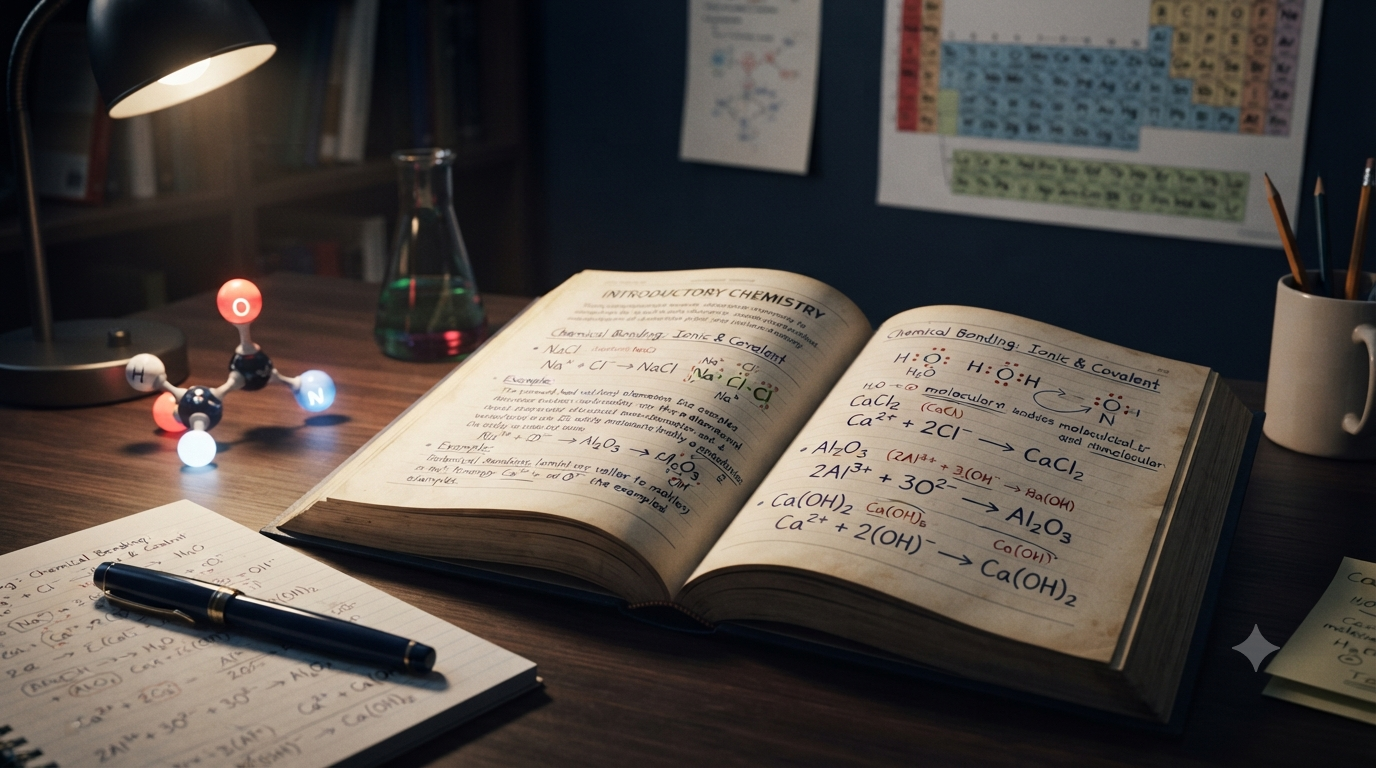
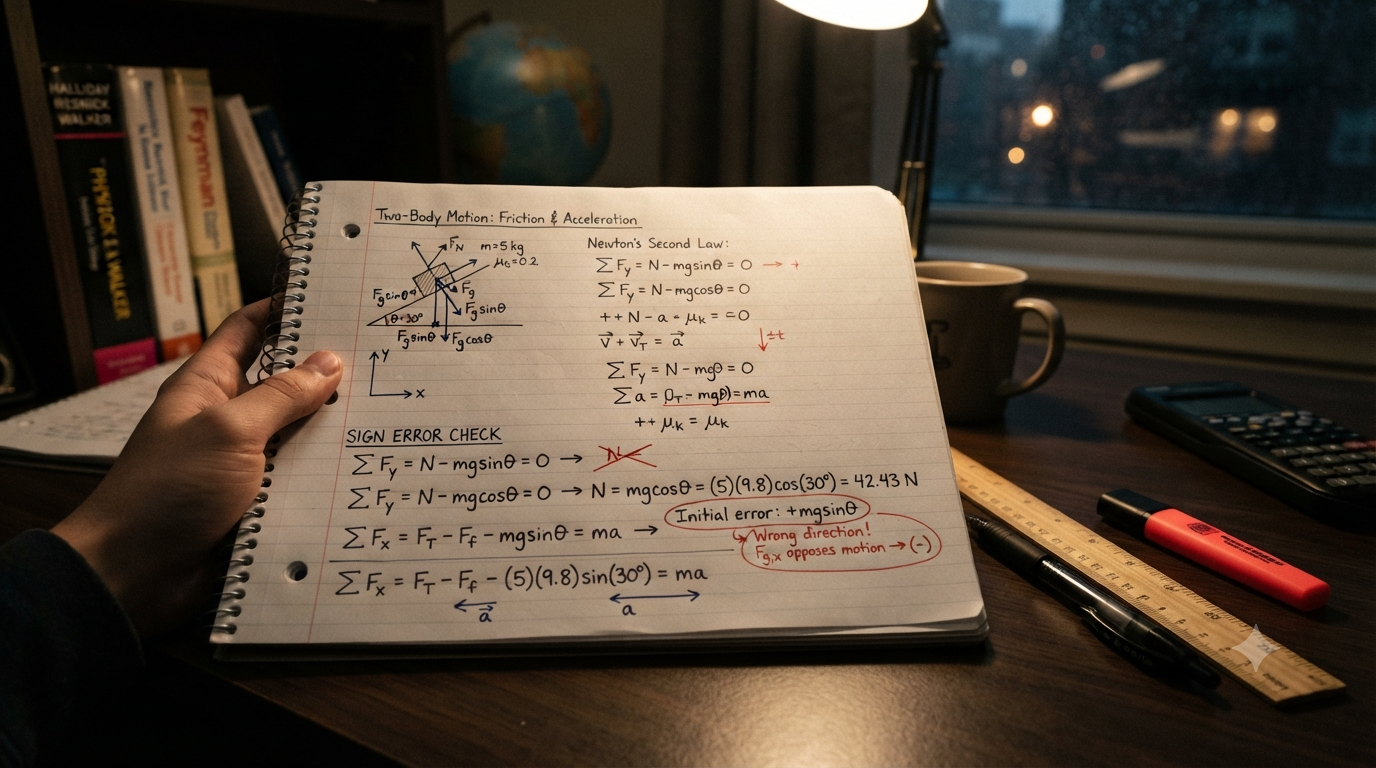
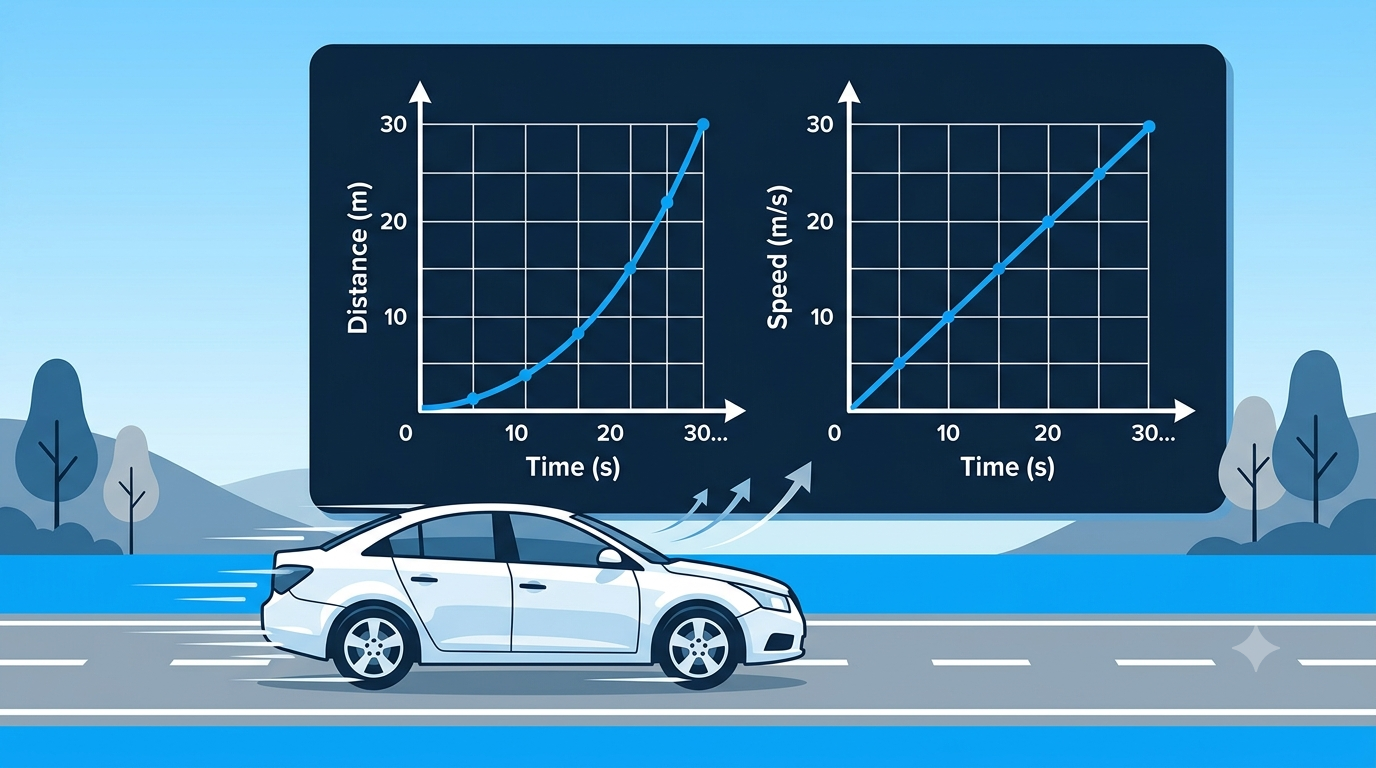
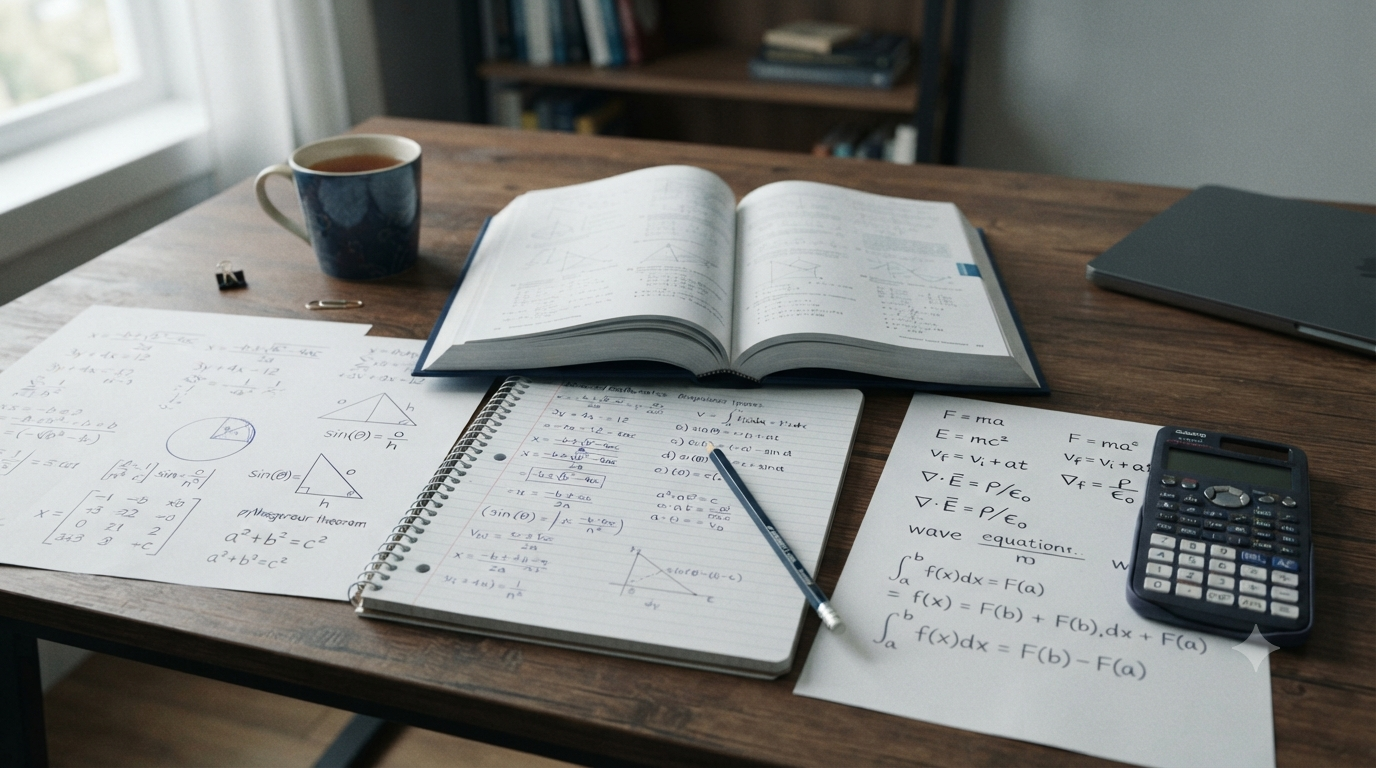
Equations and formulas shown together to explain their difference in mathematics

When learning mathematics and science, you often come across the words equation and formula. They may look similar because both use numbers, symbols, variables, and mathematical operations. In many situations, people even use the two words as if they mean the same thing. However, an equation and a formula have different purposes.

An equation is mainly used to show that two mathematical expressions are equal. It can often be solved to find an unknown value. A formula, on the other hand, is a general mathematical relationship used to calculate a quantity from known values. Formulas are especially common in science, mathematics, engineering, and everyday calculations.

Understanding the difference between equations and formulas makes mathematical notation easier to read and use. It also helps you understand what a mathematical expression is trying to communicate rather than simply memorizing symbols.

What Is an Equation?

An equation is a mathematical statement that says two expressions are equal. The equality sign = connects the two sides.

For example:

2x + 5 = 15

This equation states that the expression 2x + 5 has the same value as 15.

An equation may contain one or more unknown quantities. The goal is often to determine the value or values that make the equation true.

For the equation:

2x + 5 = 15

subtracting 5 from both sides gives:

2x = 10

Dividing both sides by 2 gives:

x = 5

Therefore, x = 5 is the solution of the equation.

Main Purpose of an Equation

The main purpose of an equation is to represent a relationship between quantities or find unknown values.

Equations can describe mathematical relationships, physical laws, chemical processes, geometric conditions, and many other situations.

For example:

F = ma

is an equation expressing the relationship between force, mass, and acceleration.

Similarly:

x + 7 = 12

is an equation that can be solved to find the unknown value of x.

What Is a Formula?

A formula is a mathematical rule or relationship that shows how one quantity can be calculated from other known quantities.

For example, the area of a rectangle is given by:

A = l × w

where:

  • A is the area

  • l is the length

  • w is the width

This formula tells us how to calculate the area when the length and width are known.

Suppose a rectangle has a length of 8 cm and a width of 5 cm.

Using the formula:

A = l × w

we get:

A = 8 × 5

A = 40 cm²

The formula provides a general method that can be used for any rectangle.

Main Purpose of a Formula

The main purpose of a formula is usually to calculate a particular quantity using a known relationship between variables.

Formulas are therefore commonly used in practical calculations.

For example, the formula for speed is:

v = d/t

where:

  • v is speed

  • d is distance

  • t is time

If an object travels 100 m in 20 s:

v = 100/20

v = 5 m/s

The formula provides a direct way to calculate speed.

Equation vs Formula

Although equations and formulas are closely related, their usual purposes are different.

EquationFormula
Shows that two expressions are equalShows a general relationship between quantities
Often used to find unknown valuesUsually used to calculate a quantity
Can describe a specific conditionUsually represents a general rule
May contain one or more unknownsCommonly contains variables representing quantities
Can be solved to obtain solutionsIs generally applied to known values
Example: 2x + 5 = 15Example: A = l × w

The distinction is not always absolute. A formula can also be viewed as an equation because it contains an equality sign. The important difference is the role and purpose of the mathematical statement.

Why Do Equations and Formulas Look Similar?

Equations and formulas often look almost identical because both can contain variables, mathematical operations, and an equality sign.

Consider:

x + 5 = 12

and:

A = l × w

Both are equations in the broad mathematical sense because both use an equality sign.

However, their purposes are different.

In x + 5 = 12, we usually want to find the unknown value of x.

In A = l × w, we are given a general relationship that allows us to calculate the area of a rectangle.

This is why the context in which a mathematical statement is used is important.

An Equation Can Be Used to Find an Unknown

One of the most common uses of equations is solving for an unknown quantity.

Consider:

3x + 4 = 19

Here, x is unknown.

Subtract 4 from both sides:

3x = 15

Divide by 3:

x = 5

The equation gives us a condition that the unknown value must satisfy.

Equations can become much more complex. For example:

x² - 5x + 6 = 0

This quadratic equation has two solutions:

x = 2 and x = 3

The purpose here is to find values of x that make the equation true.

A Formula Can Be Used to Calculate a Quantity

A formula usually provides a reusable calculation method.

Consider the formula for the area of a circle:

A = πr²

If the radius is 4 cm:

A = π(4)²

A = 16π cm²

The same formula can be used for circles of different sizes. Only the value of the radius changes.

This makes formulas particularly useful in science and engineering, where the same mathematical relationship may be applied repeatedly.

Equations Can Describe Relationships

Not every equation is created simply to solve for an unknown.

Equations can also describe relationships between physical quantities.

For example, Newton’s second law can be written as:

F = ma

This relates force, mass, and acceleration.

If the mass and acceleration are known, the equation can be used to calculate force. If force and mass are known, it can be rearranged to calculate acceleration.

From:

F = ma

we can obtain:

a = F/m

or:

m = F/a

The same relationship can therefore be rearranged depending on which quantity is unknown.

Formulas Can Be Rearranged Like Equations

Because formulas are mathematical relationships, they can also be rearranged.

Consider the formula:

v = d/t

If we want to find distance, multiply both sides by t:

d = vt

If we want to find time:

t = d/v

The original formula and its rearranged forms describe the same relationship.

This is an important skill in physics and mathematics because the required quantity is not always on the left side of the original formula.

Examples From Mathematics

Mathematics contains many formulas that are commonly used for calculations.

For the area of a triangle:

A = ½bh

For the perimeter of a rectangle:

P = 2(l + w)

For the circumference of a circle:

C = 2πr

For the Pythagorean relationship:

a² + b² = c²

These statements can all be described as formulas when they are being used as standard relationships for calculations.

At the same time, they are also equations in the broader sense because they state equality.

This shows why the distinction between an equation and a formula depends partly on how the mathematical statement is being used.

Examples From Physics

Physics uses both equations and formulas extensively.

For example, the equation for Newton’s second law is:

F = ma

The kinetic energy formula is:

KE = ½mv²

The gravitational potential energy formula near Earth’s surface is:

PE = mgh

The equation for the wave relationship is:

v = fλ

These relationships allow physical quantities to be calculated from other known quantities.

Physics often involves rearranging these relationships to solve for a required variable.

For example, from:

KE = ½mv²

we can rearrange the relationship to find mass:

m = 2KE/v²

or velocity:

v = √(2KE/m)

The mathematical relationship remains the same even though its form changes.

Can Every Formula Be Called an Equation?

In a broad mathematical sense, a formula containing an equality sign is an equation because it states that two expressions are equal.

For example:

A = πr²

is an equation.

However, calling it a formula emphasizes its role as a standard rule for calculating area.

This difference is mainly about terminology and purpose rather than completely separate mathematical structures.

A useful way to think about it is:

An equation tells us that two expressions are equal, while a formula gives us a useful mathematical relationship for calculating or representing quantities.

Can Every Equation Be Called a Formula?

Not necessarily.

Consider:

2x + 7 = 17

This is naturally described as an equation because it is a specific statement involving an unknown value that can be solved.

It would not normally be called a formula.

A formula generally represents a broader relationship that can be reused with different values.

For example:

A = πr²

can be used for every circle, regardless of its radius.

Therefore, while formulas are a type of mathematical equality, not every equation is normally treated as a formula.

Equation, Formula, Expression, and Identity

It is also useful to distinguish equations and formulas from other mathematical terms.

Mathematical Expression

An expression is a combination of numbers, variables, and mathematical operations without an equality statement.

Examples include:

3x + 5

and:

a² + b²

These are expressions, not equations, because they do not state that one quantity is equal to another.

Equation

An equation states that two expressions are equal.

Example:

3x + 5 = 20

Formula

A formula is a general relationship used to represent or calculate quantities.

Example:

A = πr²

Identity

An identity is an equality that is true for all allowed values of its variables.

For example:

(a + b)² = a² + 2ab + b²

This relationship remains true for all values of a and b for which the expressions are defined.

Understanding these terms helps prevent confusion when reading mathematics.

Why the Difference Matters in Science

Knowing whether you are dealing with an equation or a formula helps you understand what you are expected to do.

If you see:

x + 8 = 20

you will probably need to solve for x.

If you see:

A = πr²

you will usually substitute a known radius to calculate area.

In physics, chemistry, and engineering, this distinction can help you understand whether a mathematical relationship is being used as a calculation tool, a model, or a condition that must be solved.

It also helps when rearranging relationships.

For example, if a physics problem asks for time and provides:

v = d/t

you need to recognize that the relationship can be rearranged:

t = d/v

The ability to interpret the mathematical statement is often more important than simply memorizing it.

Common Confusion About Equations and Formulas

A common misconception is that equations and formulas are completely different types of mathematical statements.

They are not completely separate.

A formula is generally written as an equation because it uses an equality sign. The difference is mainly related to purpose, context, and usage.

For example:

C = 2πr

can be called the circumference formula because it provides a standard method for calculating circumference.

But mathematically, it is also an equation because the expression on the left is equal to the expression on the right.

Therefore, it is better to think of formulas as useful mathematical relationships rather than treating formulas and equations as completely unrelated concepts.

A Simple Way to Remember the Difference

You can remember the distinction using two questions.

Equation: “What value or values make this statement true?”

Formula: “How can I calculate this quantity from the quantities I know?”

For example:

2x + 3 = 11

asks you to determine the value of x.

Meanwhile:

A = l × w

tells you how to calculate area when length and width are known.

This simple distinction works well for most basic mathematics and science situations.

Conclusion

Equations and formulas are closely connected, but they are usually used for different purposes. An equation states that two mathematical expressions are equal and is often used to find unknown values. A formula represents a general relationship that can be used to calculate one quantity from others.

The important point is that a formula can also be an equation. The terms are not mutually exclusive. The word equation emphasizes equality, while the word formula emphasizes a reusable mathematical relationship or calculation rule.

Once you understand this difference, mathematical notation becomes easier to interpret. Whether you are studying algebra, geometry, physics, chemistry, or engineering, recognizing the purpose of a mathematical relationship helps you know whether you should solve it, substitute values into it, or rearrange it to find the quantity you need.

FAQs

1. What is the main difference between an equation and a formula?

An equation is a mathematical statement showing that two expressions are equal. It is often used to find an unknown value or values that make the statement true. A formula is a general mathematical relationship used to calculate one quantity from other known quantities. For example, 2x + 5 = 15 is an equation that can be solved to find x. In contrast, A = l × w is the formula for the area of a rectangle. The two terms are closely related because a formula is generally written as an equation, but the purpose and context of using the mathematical statement are different.

2. Is a formula also an equation?

Yes, a formula can also be considered an equation because it usually contains an equality sign and states that two mathematical expressions are equal. For example, A = πr² is the formula for the area of a circle. Mathematically, it is an equation because the two sides are equal. However, the word “formula” emphasizes that the relationship is a general rule used for calculation. The term “equation” emphasizes the equality between the two expressions. Therefore, formulas and equations are not completely separate concepts. A formula is often an equation that has a specific practical or mathematical purpose.

3. Can every equation be called a formula?

No, not every equation is normally called a formula. An equation can represent a specific condition that must be satisfied by an unknown value. For example, 3x + 4 = 19 is an equation that can be solved to find x. It is not generally described as a formula. A formula usually represents a general relationship that can be reused for different values. For example, A = πr² works for every circle and provides a standard method for calculating its area. Therefore, while formulas are equations in a broad sense, the word “formula” is normally used for reusable mathematical relationships.

4. Why are formulas important in mathematics and science?

Formulas provide convenient ways to represent relationships between quantities and perform calculations. Instead of deriving the same relationship every time, you can use an established formula with known values. For example, the speed formula v = d/t allows you to calculate speed when distance and time are known. Formulas are widely used in mathematics, physics, chemistry, engineering, astronomy, and many other fields. They also help express complex relationships in a compact form. Understanding what each variable represents and knowing how to substitute values correctly allows formulas to turn mathematical relationships into practical calculations.

5. Why are equations important in mathematics?

Equations are important because they allow mathematical relationships and unknown quantities to be represented precisely. Many mathematical problems involve finding a value that satisfies a particular condition. For example, in 2x + 5 = 15, solving the equation determines the value of x that makes both sides equal. Equations are also used to model real-world situations. In science, equations can describe relationships between physical quantities, while in economics they can represent relationships between variables. Learning to solve equations develops logical reasoning and provides a foundation for more advanced mathematics, including algebra, calculus, and mathematical modeling.

6. What is an example of a formula in physics?

One common example is the kinetic energy formula:

KE = ½mv²

Here, KE represents kinetic energy, m represents mass, and v represents velocity. The formula allows kinetic energy to be calculated when the mass and velocity of an object are known. For example, if an object’s mass and velocity are provided, those values can be substituted into the formula. Physics contains many similar relationships, such as F = ma for force, v = d/t for speed, and PE = mgh for gravitational potential energy near Earth’s surface. These formulas help describe and calculate measurable physical quantities.

7. What is the difference between an equation and an expression?

An expression is a mathematical combination of numbers, variables, and operations without an equality statement. Examples include 3x + 5 and a² + b². An equation contains an equality sign and states that two expressions have the same value. For example, 3x + 5 = 20 is an equation. An expression can become part of an equation when it is connected to another expression using =. Understanding this difference is important because expressions are generally simplified or evaluated, while equations are often solved to find unknown values.

8. Can formulas be rearranged like equations?

Yes, formulas can be rearranged because they represent mathematical relationships between quantities. For example, consider the speed formula:

v = d/t

If you need to calculate distance, you can rearrange it to:

d = vt

If you need to calculate time, it can be rearranged to:

t = d/v

The relationship has not changed; only the variable being calculated has changed its position. Rearranging formulas is an important skill, especially in physics and engineering. It allows you to use the same relationship to find different quantities depending on the information provided in a problem.

9. How can I remember the difference between equations and formulas?

A simple way to remember the difference is to focus on their usual purpose. An equation often asks, “What value makes this statement true?” For example, x + 7 = 12 requires you to find x. A formula usually answers, “How can I calculate this quantity?” For example, A = l × w tells you how to calculate the area of a rectangle. Remember that these categories can overlap because a formula is also an equation in the mathematical sense. The key difference is the context and purpose for which the mathematical relationship is being used.

10. Are equations and formulas the same thing?

Equations and formulas are closely related, but they are not always used in exactly the same way. An equation states that two expressions are equal and is often used to solve for unknown quantities. A formula is generally a reusable mathematical relationship used to calculate a particular quantity. For example, 2x + 3 = 11 is an equation, while A = πr² is commonly called a formula. However, the formula is also an equation because it states an equality. Therefore, the best distinction is based on purpose and context rather than treating equations and formulas as completely separate mathematical concepts.

Related Posts

Leave a Comment

Your email address will not be published. Required fields are marked *

Scroll to Top