Electric current is one of the most important physical quantities in electricity and magnetism. Whenever electric charge moves through a conductor, an electric current is produced. From the tiny current flowing through an electronic circuit to the large currents used in power systems, measuring current accurately is essential for understanding and controlling electrical phenomena.
The SI unit of electric current is the ampere, represented by the symbol A. It is one of the seven SI base units and provides a standard way to express the amount of electric current flowing through a circuit. Understanding the ampere helps us connect electric charge, time, voltage, resistance, and electrical power in a meaningful way.
What Is Electric Current?
Electric current describes the rate at which electric charge flows through a given point in a circuit. In simple terms, it tells us how much charge passes through a conductor in a certain amount of time.
The relationship between electric current, charge, and time is:
I = Q/t
where:
I = electric current
Q = electric charge
t = time
Electric current is measured in amperes. If one coulomb of electric charge passes through a point in a circuit in one second, the current is one ampere.
Therefore:
1 A = 1 C/s
This relationship gives a simple physical meaning to the ampere.
What Is the Ampere?
The ampere is the SI base unit of electric current. Its symbol is A.
The ampere is different from many other SI units because electric current is treated as a base quantity rather than a derived quantity. This means that the ampere is defined directly within the SI system, while many other electrical units can be expressed using it.
For example, electric charge is measured in coulombs, and:
1 C = 1 A·s
This means that a coulomb can be understood as the amount of electric charge transferred by a current of one ampere in one second.
Why Is Ampere an SI Base Unit?
The International System of Units contains seven SI base units. These units form the foundation from which many other units are derived.
The seven SI base units are:
Second for time
Metre for length
Kilogram for mass
Ampere for electric current
Kelvin for thermodynamic temperature
Mole for amount of substance
Candela for luminous intensity
The ampere is included because electric current is fundamental to many areas of physics and electrical engineering. Units such as the volt, ohm, watt, and coulomb are connected to the ampere through relationships involving other SI units.
Modern Definition of the Ampere
The modern SI definition of the ampere is based on the elementary charge, represented by e.
The elementary charge has an exact fixed value:
e = 1.602 176 634 × 10⁻¹⁹ C
The coulomb is defined in relation to the ampere and the second, and the ampere can be understood through the flow of elementary charges.
One ampere corresponds to the flow of approximately:
6.24 × 10¹⁸ elementary charges per second
This gives an interesting microscopic interpretation of electric current. A current of one ampere represents an enormous number of individual charge carriers passing a point every second.
How Many Electrons Make One Ampere?
In a metal wire, electric current is mainly associated with the movement of electrons. Since the charge of one electron has a magnitude of approximately:
1.602 × 10⁻¹⁹ C
we can estimate the number of electrons required to transfer one coulomb of charge.
The number is approximately:
1 C ≈ 6.24 × 10¹⁸ electrons
Since one ampere means one coulomb per second:
1 A ≈ 6.24 × 10¹⁸ electrons per second
This does not mean that every electrical current consists of electrons moving in exactly the same way. In different materials and physical systems, different charge carriers can be responsible for current.
Ampere and Electric Charge
Electric charge and electric current are closely related, but they describe different physical quantities.
Charge tells us the quantity of electricity transferred, while current tells us how quickly that charge is flowing.
The relationship is:
I = Q/t
Rearranging the equation gives:
Q = It
For example, if a current of 2 A flows through a circuit for 5 seconds:
Q = 2 × 5 = 10 C
Therefore, 10 coulombs of charge pass through the circuit during those five seconds.
Ampere in Electrical Circuits
The ampere is commonly used to describe the current flowing through electrical circuits.
For example, a small electronic device may operate with a current of a few milliamperes, while household appliances can draw several amperes. Large electrical systems can involve currents measured in tens, hundreds, or even thousands of amperes.
Smaller units are often used when the current is very small:
1 milliampere (mA) = 10⁻³ A
1 microampere (µA) = 10⁻⁶ A
For example:
500 mA = 0.5 A
Using appropriate units makes electrical measurements easier to read and compare.
How Is Electric Current Measured?
Electric current is measured using an instrument called an ammeter.
An ammeter is connected in series with the part of a circuit through which the current is being measured. This allows the current flowing through the circuit path to pass through the measuring instrument.
Modern digital multimeters can also measure current, along with quantities such as voltage and resistance.
When measuring current, the correct measurement range and connection method are important. Incorrectly connecting an ammeter can cause excessive current to flow through the instrument and may damage the meter or circuit.
Ampere and Other Electrical Units
The ampere is closely connected with several important electrical units.
Using Ohm’s law:
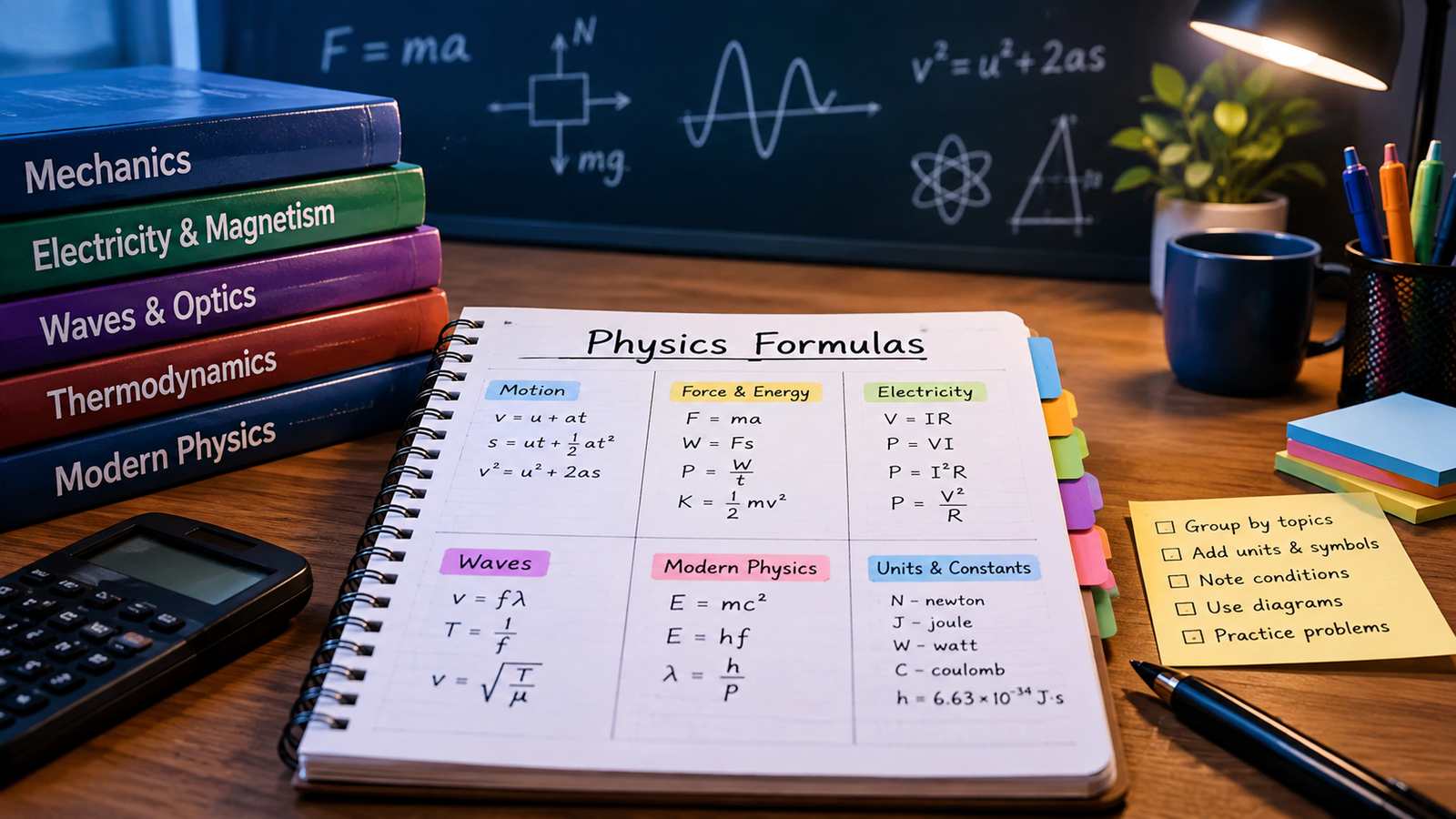
V = IR
where V is voltage, I is current, and R is resistance.
From this relationship:
I = V/R
This shows that the current through a resistance depends on the applied voltage and the resistance of the circuit.
Electric power is also related to current:
P = VI
where P is electrical power measured in watts.
These relationships show why the ampere is important in understanding electrical circuits. Current is not an isolated quantity; it is connected to voltage, resistance, charge, energy, and power.
Why Is the Ampere Important?
The ampere is essential for both scientific measurements and practical electrical systems. Engineers use current measurements when designing electrical circuits, motors, generators, power supplies, batteries, communication systems, and electronic devices.
Knowing the current in a circuit also helps determine whether components are operating safely. Excessive current can produce unwanted heating and may damage electrical components.
In everyday life, electrical ratings often include current values. Chargers, power supplies, circuit breakers, cables, and electrical appliances are commonly designed with specific current limits.
Ampere and Electrical Safety
Current is also important when discussing electrical safety. The effect of an electric current on the human body depends on factors such as the current magnitude, duration, path through the body, and other conditions.
This is why electrical systems use protective devices such as fuses, circuit breakers, and residual-current protection devices. These systems are designed to detect or limit abnormal electrical conditions and reduce the risk of damage or injury.
The ampere therefore represents more than a measurement used in physics equations. It is also an important quantity in the safe design and operation of electrical systems.
Conclusion
The ampere (A) is the SI base unit of electric current. It describes the rate at which electric charge flows through a circuit and is related to charge and time by I = Q/t. One ampere corresponds to the transfer of one coulomb of charge per second, or approximately 6.24 × 10¹⁸ elementary charges per second. The ampere is fundamental to electrical science because it connects current with voltage, resistance, power, and charge. From simple circuits to advanced electrical technologies, accurate measurement of current is essential for understanding, designing, and safely operating electrical systems.