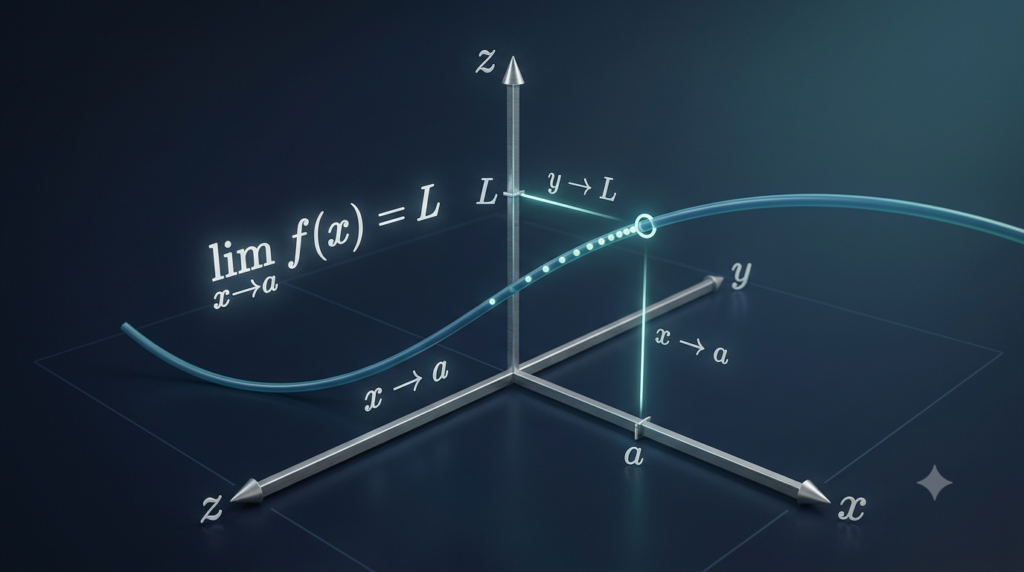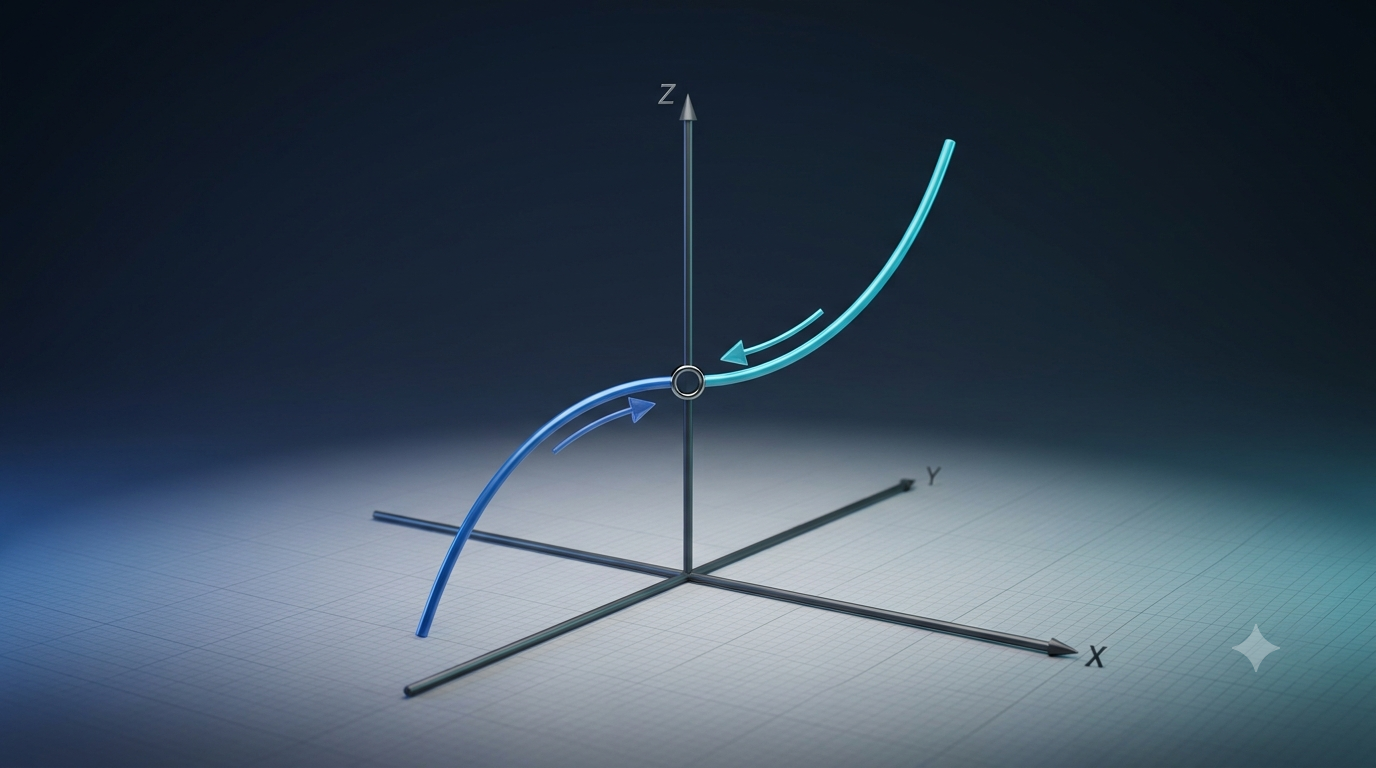
Limits are one of the most important concepts in calculus because they help us understand how a function behaves as its input approaches a particular value. Sometimes, a function approaches the same output from both sides of a point. In other situations, its behavior differs depending on the direction from which the input approaches that point. To understand these situations clearly, mathematicians use two important concepts: left-hand limits and right-hand limits.
Left-hand limits describe the behavior of a function as the input approaches a specific value from smaller numbers, while right-hand limits describe its behavior as the input approaches that value from larger numbers. These ideas are essential for determining whether a limit exists, studying discontinuities, analyzing graphs, and understanding derivatives. In this article, we will explore left-hand and right-hand limits, their notation, practical examples, differences, and applications in calculus.
What Are Left-Hand and Right-Hand Limits?
A limit describes the value that a function approaches when its input gets closer to a particular number. The input does not necessarily have to equal that number. Instead, we focus on what happens as the input moves closer to it.
When studying limits, we can approach a number from two directions: from the left or from the right. These directions help us examine the behavior of a function more precisely.
What Is a Left-Hand Limit?
A left-hand limit is the value that a function approaches when the input approaches a particular number from values smaller than that number.
For example, suppose the input approaches 3 from the left. We might consider values such as 2.9, 2.99, 2.999, and 2.9999. These values become increasingly close to 3 without reaching it.
The left-hand limit is written using the notation:
limₓ→ₐ⁻ f(x) = L
In this notation:
x represents the input variable.
a is the number that x approaches.
f(x) represents the function.
L is the value that the function approaches.
The minus sign indicates that x approaches a from the left.
For example:
limₓ→₃⁻ (x + 2) = 5
As x approaches 3 from smaller values, the function x + 2 approaches 5.
The left-hand limit helps us understand the behavior of a function immediately before the input reaches a particular point.
What Is a Right-Hand Limit?
A right-hand limit is the value that a function approaches when the input approaches a particular number from values greater than that number.
Suppose x approaches 3 from the right. We can consider values such as 3.1, 3.01, 3.001, and 3.0001. These values get closer to 3 from above.
The right-hand limit is written as:
limₓ→ₐ⁺ f(x) = L
The plus sign indicates that x approaches a from the right, using values greater than a.
For example:
limₓ→₃⁺ (x + 2) = 5
As x approaches 3 from larger values, the function x + 2 also approaches 5.
The right-hand limit helps us understand how a function behaves immediately after the input passes a particular point.
Understanding the Difference Between Left and Right
The main difference between left-hand and right-hand limits is the direction from which the input approaches the specified number.
A left-hand limit considers input values smaller than the target number. A right-hand limit considers input values larger than the target number.
Consider the function:
f(x) = x²
Suppose we want to examine the function as x approaches 2.
For the left-hand limit, we can use input values such as 1.9, 1.99, and 1.999. Their corresponding function values are:
When x = 1.9, f(x) = 3.61.
When x = 1.99, f(x) = 3.9601.
When x = 1.999, f(x) = 3.996001.
These outputs approach 4.
For the right-hand limit, we can use input values such as 2.1, 2.01, and 2.001.
When x = 2.1, f(x) = 4.41.
When x = 2.01, f(x) = 4.0401.
When x = 2.001, f(x) = 4.004001.
These outputs also approach 4.
Therefore, both one-sided limits equal 4.
limₓ→₂⁻ x² = 4
limₓ→₂⁺ x² = 4
This example shows that a function can approach the same value from both directions.
How to Calculate a Left-Hand Limit
Calculating a left-hand limit involves examining the function as the input approaches a target value from smaller numbers. The appropriate method depends on the type of function.
Method 1: Direct Substitution
For many polynomial functions, direct substitution provides the limit.
Consider:
f(x) = 2x + 1
Find the left-hand limit as x approaches 4.
Substitute x = 4 into the function:
f(4) = 2 × 4 + 1
f(4) = 9
Therefore:
limₓ→₄⁻ (2x + 1) = 9
The function is continuous at 4, so its output approaches 9 from the left.
Method 2: Using a Table of Values
A table can help us understand how a function behaves near a particular number.
Consider:
f(x) = x² + 1
Find the left-hand limit as x approaches 2.
| x | f(x) = x² + 1 |
|---|---|
| 1.9 | 4.61 |
| 1.99 | 4.9601 |
| 1.999 | 4.996001 |
As x approaches 2 from the left, the function values approach 5.
Therefore:
limₓ→₂⁻ (x² + 1) = 5
Tables are especially useful when a function is complicated or when we want to estimate a limit numerically.
Method 3: Using a Graph
A graph provides a visual way to understand a left-hand limit.
To find a left-hand limit from a graph:
Locate the input value being approached on the horizontal axis.
Follow the curve from the left side toward that input value.
Observe the output values on the vertical axis.
Identify the output that the curve approaches.
The graph does not necessarily need to contain a filled point at the target input. A limit depends on the behavior of the function near the point, not simply on the value assigned at that point.
How to Calculate a Right-Hand Limit
The procedure for finding a right-hand limit is similar, but we examine the function from input values greater than the target number.
Method 1: Direct Substitution
Consider the function:
f(x) = 3x − 2
Find the right-hand limit as x approaches 5.
Substitute x = 5:
f(5) = 3 × 5 − 2
f(5) = 13
Therefore:
limₓ→₅⁺ (3x − 2) = 13
Because the function is continuous, its output approaches 13 from the right.
Method 2: Using a Table of Values
Consider:
f(x) = x + 4
Find the right-hand limit as x approaches 2.
| x | f(x) = x + 4 |
|---|---|
| 2.1 | 6.1 |
| 2.01 | 6.01 |
| 2.001 | 6.001 |
As x approaches 2 from the right, the function values approach 6.
Therefore:
limₓ→₂⁺ (x + 4) = 6
Method 3: Using a Graph
To find a right-hand limit from a graph, begin at input values greater than the target number and move toward it from the right.
Observe the output values approached by the curve. If those outputs move toward a particular number, that number is the right-hand limit.
If the graph approaches different heights from the left and right, the two one-sided limits are different.
The Relationship Between One-Sided Limits and Two-Sided Limits
Left-hand and right-hand limits are important because they determine whether an ordinary, two-sided limit exists.
A two-sided limit exists at a point when the left-hand limit and right-hand limit both exist as finite numbers and are equal.
The condition can be written as:
limₓ→ₐ⁻ f(x) = limₓ→ₐ⁺ f(x) = L
When this condition holds:
limₓ→ₐ f(x) = L
This means that the function approaches the same output from both directions.
Example 1: When Both Limits Are Equal
Consider:
f(x) = x + 3
Find the limit as x approaches 2.
From the left:
limₓ→₂⁻ (x + 3) = 5
From the right:
limₓ→₂⁺ (x + 3) = 5
Since both one-sided limits equal 5, the two-sided limit exists.
Therefore:
limₓ→₂ (x + 3) = 5
Example 2: When Both Limits Are Different
Consider the piecewise function:
f(x) = x + 1, when x < 2
f(x) = x + 4, when x ≥ 2
We want to find the left-hand and right-hand limits as x approaches 2.
From the left, use the rule f(x) = x + 1:
limₓ→₂⁻ f(x) = 2 + 1 = 3
From the right, use the rule f(x) = x + 4:
limₓ→₂⁺ f(x) = 2 + 4 = 6
The left-hand limit is 3, while the right-hand limit is 6.
Since these values are different, the two-sided limit does not exist.
This example demonstrates why checking only one side of a function can lead to an incomplete conclusion.
Understanding Limits Through Piecewise Functions
A piecewise function uses different rules for different parts of its domain. Such functions are especially useful for studying one-sided limits because the rule may change at a particular input value.
Consider:
f(x) = 2x + 1, when x < 3
f(x) = x + 5, when x ≥ 3
Find the left-hand and right-hand limits at x = 3.
Left-Hand Limit
For values smaller than 3, use the rule 2x + 1.
limₓ→₃⁻ f(x) = 2 × 3 + 1
limₓ→₃⁻ f(x) = 7
Right-Hand Limit
For values greater than 3, use the rule x + 5.
limₓ→₃⁺ f(x) = 3 + 5
limₓ→₃⁺ f(x) = 8
Since the left-hand limit is 7 and the right-hand limit is 8, the two-sided limit does not exist at x = 3.
Notice that the actual value of the function at x = 3 is determined by the second rule, so f(3) = 8. However, the existence of the two-sided limit depends on the two one-sided limits, not just on f(3).
Left-Hand and Right-Hand Limits at Discontinuities
A discontinuity occurs when a function fails to be continuous at a particular point. One-sided limits help us identify and understand different types of discontinuities.
Jump Discontinuity
A jump discontinuity occurs when the left-hand and right-hand limits exist but have different finite values.
For example, a graph may approach 2 from the left and 5 from the right. The function appears to jump between these output levels.
Because the two one-sided limits are unequal, the two-sided limit does not exist.
Removable Discontinuity
A removable discontinuity occurs when the two-sided limit exists, but the function’s value at that point is either undefined or different from the limit.
For example, consider:
f(x) = (x² − 1) / (x − 1), for x ≠ 1
Factor the numerator:
f(x) = ((x − 1) × (x + 1)) / (x − 1)
For x ≠ 1, this simplifies to:
f(x) = x + 1
As x approaches 1 from either side, the function approaches 2.
limₓ→₁⁻ f(x) = 2
limₓ→₁⁺ f(x) = 2
Therefore, the two-sided limit exists and equals 2, even though the original function is undefined at x = 1.
Infinite Behavior
Sometimes, a function’s values increase or decrease without bound as the input approaches a particular point.
Consider:
f(x) = 1 / x²
As x approaches 0 from either side, the function values become increasingly large and positive.
limₓ→₀⁻ (1 / x²) = +∞
limₓ→₀⁺ (1 / x²) = +∞
These expressions describe unbounded behavior. They do not represent finite real-valued limits; the function grows without bound near zero.
Common Mistakes to Avoid
Understanding one-sided limits becomes easier when you recognize some common mistakes.
Confusing the Direction of Approach
The minus sign in left-hand limit notation means that the input approaches the target from smaller values. It does not mean that the limit itself must be negative.
Similarly, the plus sign in right-hand limit notation indicates the direction of approach, not that the output must be positive.
Assuming the Function Value Equals the Limit
The value of a function at a point does not always equal its limit at that point.
A function may be undefined at the target input while still approaching a definite value from both directions.
Always distinguish between f(a) and the limit as x approaches a.
Checking Only One Side
Finding the left-hand limit alone is not enough to establish that a two-sided limit exists. You must also check the right-hand limit.
If the two values differ, the two-sided limit does not exist.
Relying Only on a Few Table Values
A numerical table can suggest what a limit might be, but a small number of values does not always prove the result. Use algebraic reasoning, graphical analysis, or appropriate limit laws to support your conclusion.
Applications of Left-Hand and Right-Hand Limits
One-sided limits are useful in many areas of mathematics and applied science.
Studying Continuity
A function is continuous at a point when its limit exists, equals the function’s value there, and the function is defined at that point.
Left-hand and right-hand limits help verify whether the function approaches the same value from both sides.
Understanding Derivatives
Derivatives describe how quickly a function changes. In some cases, the rate of change from the left differs from the rate of change from the right.
This can happen at a sharp corner or cusp. Comparing one-sided behavior helps determine whether a derivative exists at a particular point.
Analyzing Real-World Changes
In economics, engineering, and physics, mathematical models sometimes use different rules before and after a threshold.
For example, a pricing model might charge one rate below a usage limit and another rate above it. One-sided limits help examine the behavior of the model near the threshold and determine whether a sudden change occurs.
Interpreting Graphs
When a graph contains gaps, jumps, or vertical asymptotes, one-sided limits help explain what the function does on each side of a particular input.
This makes limits an essential tool for understanding graphs beyond simply reading individual plotted points.
Conclusion
Left-hand limits and right-hand limits help us understand how a function behaves as its input approaches a particular number from two different directions. A left-hand limit examines values smaller than the target, while a right-hand limit examines values larger than it. Both can be calculated using algebra, numerical tables, and graphs.
The most important rule is that a two-sided limit exists as a finite real number only when both one-sided limits exist as finite real numbers and are equal. When they differ, the two-sided limit does not exist. These concepts are fundamental to understanding continuity, discontinuities, derivatives, and the behavior of mathematical models. By practicing one-sided limits with simple functions and piecewise examples, you can build a strong foundation for more advanced topics in calculus.
FAQs
1. What Is a Left-Hand Limit?
A left-hand limit describes the value that a function approaches when its input approaches a particular number from smaller values. It helps us understand the behavior of a function immediately before the input reaches the specified point. The notation uses a minus sign to indicate the direction of approach. For example, as x approaches 3 from the left, we consider values such as 2.9, 2.99, and 2.999. If the function values approach 5, the left-hand limit is 5. Left-hand limits are useful for analyzing graphs, studying continuity, and identifying discontinuities in mathematical functions.
2. What Is a Right-Hand Limit?
A right-hand limit describes the value that a function approaches when its input approaches a particular number from larger values. It examines the behavior of a function immediately after the input passes the specified point. The notation uses a plus sign to indicate that the input approaches from the right. For example, when x approaches 3 from the right, we consider values such as 3.1, 3.01, and 3.001. If the corresponding function values approach 5, the right-hand limit is 5. This concept helps mathematicians analyze functions, understand graph behavior, and determine whether a two-sided limit exists.
3. What Is the Difference Between Left-Hand and Right-Hand Limits?
The main difference between left-hand and right-hand limits is the direction from which the input approaches a particular number. A left-hand limit considers values smaller than the target number, while a right-hand limit considers values greater than it. Both limits examine how the function behaves near the point rather than simply evaluating the function at that point. For example, when x approaches 2, the left-hand limit considers values such as 1.9 and 1.99, whereas the right-hand limit considers 2.1 and 2.01. Comparing these limits helps determine whether the two-sided limit exists.
4. When Does a Two-Sided Limit Exist?
A two-sided limit exists as a finite real number when the left-hand limit and right-hand limit both exist as finite real numbers and have the same value. If both approaches lead to the same output, the function approaches that output regardless of the direction. For example, if the left-hand limit and right-hand limit as x approaches 2 are both equal to 4, the two-sided limit exists and equals 4. However, if the left-hand limit is 3 and the right-hand limit is 5, the two-sided limit does not exist. Comparing both one-sided limits is therefore essential in calculus.
5. Can Left-Hand and Right-Hand Limits Be Different?
Yes, left-hand and right-hand limits can be different. This situation commonly occurs in piecewise functions, where different mathematical rules apply on different sides of a particular input value. For example, a function might approach 2 from the left and 6 from the right as x approaches 3. Since these values are unequal, the two-sided limit does not exist at that point. Such behavior can produce a jump discontinuity in a graph. Comparing the two one-sided limits helps identify these differences and explains why examining only one side of a function may lead to an incomplete conclusion.
6. How Do You Calculate a Left-Hand Limit?
To calculate a left-hand limit, first identify the input value being approached and examine the function for values smaller than that number. For simple polynomial functions, direct substitution often gives the answer. For example, consider f(x) = x² + 1 as x approaches 2 from the left. Substituting 2 gives 2² + 1 = 5. Therefore, the left-hand limit is 5. You can also use a table of values or a graph to observe the function’s behavior near the target point. For piecewise functions, use the rule that applies to inputs smaller than the specified number.
7. How Do You Calculate a Right-Hand Limit?
To calculate a right-hand limit, examine how the function behaves when its input approaches the target number from larger values. Direct substitution works for many continuous functions. For example, consider f(x) = 2x + 3 as x approaches 4 from the right. Substituting 4 gives 2 × 4 + 3 = 11. Therefore, the right-hand limit is 11. When direct substitution is not sufficient, use algebraic simplification, numerical tables, or graphical analysis. If the function is piecewise, select the rule that applies to values greater than the target number to determine the right-hand limit correctly.
8. Can a Limit Exist When a Function Is Undefined at a Point?
Yes, a limit can exist even when a function is undefined at the point being approached. A limit depends on the behavior of the function near that point, not necessarily on its actual value there. For example, consider f(x) = (x² − 1) / (x − 1), where x is not equal to 1. The expression simplifies to x + 1 for all allowed inputs. As x approaches 1 from either direction, the function approaches 2. Therefore, the two-sided limit exists and equals 2, even though the original function is undefined at x = 1.
9. How Are One-Sided Limits Related to Continuity?
One-sided limits help determine whether a function is continuous at a particular point. For continuity, the left-hand and right-hand limits must exist, be equal, and match the actual function value at that point. If the one-sided limits are different, the function cannot be continuous there. If they are equal but the function is undefined at the point, continuity also fails. Similarly, if the function’s value differs from the common limit, the function is discontinuous at that point. Checking one-sided limits is especially useful for piecewise functions and graphs containing gaps, jumps, or other unusual behavior.
10. Why Are Left-Hand and Right-Hand Limits Important in Calculus?
Left-hand and right-hand limits are important because they provide a detailed understanding of how functions behave near specific input values. They help determine whether two-sided limits exist and identify discontinuities in mathematical graphs. These concepts are also essential for studying derivatives, particularly when checking whether the rate of change differs on either side of a point. In physics, engineering, and economics, one-sided limits can help analyze mathematical models with sudden changes or thresholds. Learning these limits builds a strong foundation for more advanced calculus topics, including continuity, differentiation, and the analysis of piecewise functions.