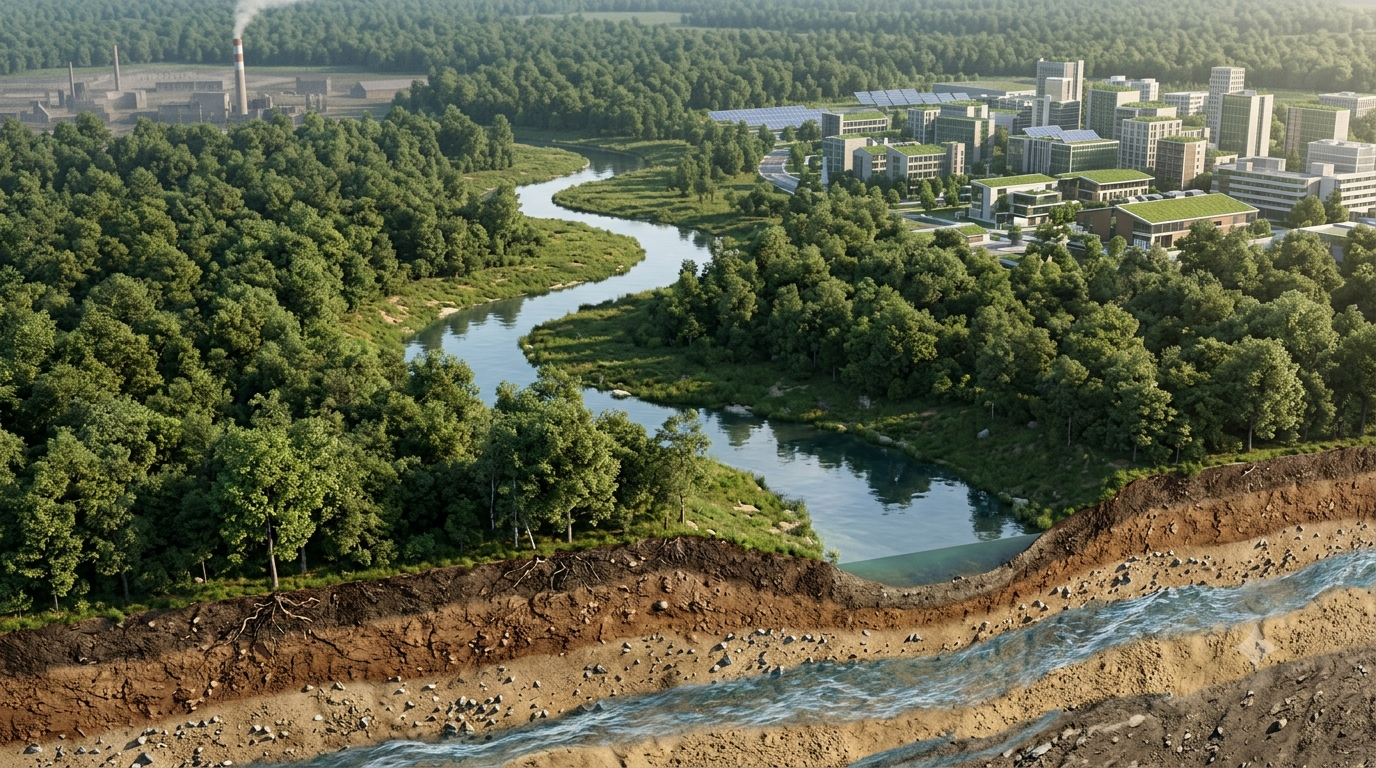
The environment includes everything around us, from the air we breathe and the water we drink to the soil beneath our feet and the plants and animals that share our planet. These natural systems support life and provide essential resources for human survival. However, pollution, deforestation, climate change, population growth, and the excessive use of natural resources are putting increasing pressure on the environment. Understanding these challenges is important for protecting the planet and maintaining a healthy quality of life.
Environmental science helps us understand how the natural world works and how human activities affect it. It combines knowledge from different scientific fields to study environmental problems and develop practical solutions. From conserving forests to improving air quality, environmental science plays an important role in building a healthier and more sustainable future. Learning about this subject helps us make informed decisions about the environment and our responsibilities toward it.
What Is Environmental Science?
Environmental science is the scientific study of the environment and the relationships between living organisms, their surroundings, and human activities. It examines how natural processes operate, how ecosystems function, and how human actions influence the quality and balance of the natural world.
This subject focuses on both natural systems and environmental challenges. For example, environmental scientists study how rainfall affects rivers, how plants absorb carbon dioxide, how pollutants enter groundwater, and how industrial activities contribute to air pollution.
Environmental science is an interdisciplinary field, meaning that it combines knowledge from several scientific disciplines. These include biology, chemistry, physics, geology, geography, ecology, and atmospheric science. Social sciences, economics, and environmental policy are also important because environmental problems are closely connected to human behavior, industries, and government decisions.
The main goal of environmental science is to understand environmental processes, identify the causes of environmental problems, evaluate their effects, and find ways to protect natural resources and human health.
In simple terms, environmental science helps us understand how the environment works, how people affect it, and what we can do to reduce environmental damage.
What Does the Environment Include?
The environment consists of natural and human-influenced surroundings that affect living organisms. Scientists often divide the natural environment into several major components.
1. Atmosphere
The atmosphere is the layer of gases surrounding Earth. It contains nitrogen, oxygen, carbon dioxide, water vapor, and other gases that are essential to many natural processes.
The atmosphere provides the oxygen needed by many living organisms and helps regulate Earth’s temperature. It also influences weather patterns, rainfall, and climate.
Environmental science studies air pollution, greenhouse gases, ozone depletion, and changes in atmospheric conditions. These studies help scientists understand problems such as smog, global warming, and respiratory diseases associated with polluted air.
2. Hydrosphere
The hydrosphere includes Earth’s water in oceans, seas, rivers, lakes, glaciers, groundwater, and the atmosphere. Water is essential for drinking, agriculture, industry, sanitation, and the survival of plants and animals.
Environmental scientists examine the water cycle, water quality, aquatic ecosystems, and the effects of pollution on freshwater and marine environments.
For example, agricultural chemicals, untreated sewage, and industrial waste can contaminate water bodies. Studying these pollutants helps scientists identify their sources and develop methods to protect water resources.
3. Lithosphere
The lithosphere is Earth’s rigid outer layer, which includes the crust and the uppermost part of the mantle. It provides land, rocks, and minerals and supports the formation of soil.
Soil is particularly important because it supplies nutrients to plants, stores water, and supports agriculture and natural vegetation.
Environmental science investigates soil erosion, land degradation, mining impacts, waste disposal, and contamination caused by chemicals. These studies help protect productive land and maintain the natural functions of soil.
4. Biosphere
The biosphere includes all regions of Earth where life exists. It contains plants, animals, microorganisms, and other living organisms interacting with their surroundings.
Forests, grasslands, deserts, oceans, wetlands, and freshwater habitats are all parts of the biosphere.
Environmental science studies biodiversity, food chains, ecosystems, habitat destruction, and the effects of human activities on living organisms. This knowledge is essential for conserving species and maintaining ecological balance.
Why Is Environmental Science Important?
Environmental science matters because human survival and well-being depend on a healthy environment. It helps us understand the consequences of environmental damage and identify ways to prevent or reduce harmful effects.
1. It Helps Control Environmental Pollution
Pollution occurs when harmful substances or forms of energy enter the environment and cause damage to living organisms or natural systems.
Air pollution can result from vehicle emissions, industrial activities, construction dust, and the burning of fuels. Water pollution may be caused by sewage, plastic waste, pesticides, and industrial chemicals. Soil pollution can develop when hazardous substances accumulate in the ground.
Environmental science helps identify the sources of these pollutants, understand how they spread, and evaluate their effects.
Scientists use environmental monitoring, laboratory analysis, and field investigations to measure pollution levels. Their findings support measures such as wastewater treatment, cleaner industrial processes, improved waste management, and stricter pollution controls.
Reducing pollution protects ecosystems and helps improve human health.
2. It Helps Address Climate Change
Climate change refers to long-term changes in temperatures and weather patterns. Although Earth’s climate has changed naturally throughout its history, current global warming is primarily driven by human activities that increase greenhouse gas concentrations in the atmosphere.
Burning coal, oil, and natural gas releases carbon dioxide. Agriculture, waste management, and certain industrial activities also release greenhouse gases such as methane and nitrous oxide.
Environmental science helps researchers understand these emissions, examine changes in the climate system, and assess their consequences.
Climate change can contribute to rising sea levels, more frequent or intense heat extremes, changing rainfall patterns, and risks to ecosystems and agriculture.
Environmental scientists study ways to reduce greenhouse gas emissions and help communities adapt to changing conditions. These efforts include improving energy efficiency, expanding renewable energy, restoring forests, and developing climate-resilient infrastructure.
3. It Supports the Conservation of Natural Resources
Natural resources include water, soil, forests, minerals, sunlight, wind, and fossil fuels. They provide the materials and energy needed for daily life and economic development.
However, some resources are limited, and even renewable resources can become depleted when they are used faster than they can recover.
Environmental science examines how resources are distributed, how they are used, and how human activities affect their availability.
For example, groundwater levels may decline when water is extracted faster than rainfall can replenish underground supplies. Forests may disappear when trees are cut down faster than new vegetation can grow.
Scientific knowledge helps governments, industries, and communities manage resources more responsibly. Water conservation, sustainable forestry, soil protection, and renewable energy development are examples of approaches that support long-term resource availability.
4. It Protects Biodiversity
Biodiversity refers to the variety of life on Earth, including differences among species, genetic variations within species, and the ecosystems in which organisms live.
Every species has a role in its ecosystem. Bees and other pollinators help many plants reproduce, decomposers recycle nutrients, and predators help regulate prey populations.
However, habitat destruction, pollution, invasive species, overexploitation, and climate change threaten biodiversity in many parts of the world.
Environmental science helps researchers understand why species decline and how ecosystems respond to environmental changes. Scientists use this knowledge to identify important habitats, monitor threatened species, restore damaged ecosystems, and develop conservation strategies.
Protecting biodiversity is important because healthy ecosystems provide food, clean water, fertile soil, pollination, and other benefits that support human life.
5. It Protects Human Health
Human health is closely connected to environmental conditions. Clean air, safe drinking water, nutritious food, and proper sanitation are essential for a healthy life.
Exposure to polluted air can worsen respiratory and cardiovascular conditions. Contaminated water can spread infectious diseases or expose people to harmful chemicals. Poor waste management can create conditions that encourage pests and disease transmission.
Environmental science helps identify environmental health risks and determine how exposure to pollutants affects people.
For example, monitoring drinking water can reveal contamination before it causes widespread harm. Measuring air quality can help authorities identify pollution hotspots and introduce appropriate control measures.
The subject also examines environmental factors such as excessive heat, workplace exposure to hazardous materials, and the health effects of poor sanitation.
By identifying risks and supporting preventive action, environmental science contributes to healthier communities.
6. It Promotes Sustainable Development
Sustainable development means meeting the needs of the present without compromising the ability of future generations to meet their own needs.
Economic growth and improved living standards are important, but development can create serious environmental problems when natural resources are used carelessly.
Environmental science helps planners and decision-makers evaluate the possible effects of roads, buildings, factories, dams, mining projects, and other developments.
Environmental impact assessments, for example, examine how a proposed project may affect water resources, air quality, wildlife, nearby communities, and land use.
This information can help decision-makers reduce environmental damage while meeting social and economic needs.
Sustainable development also encourages energy efficiency, responsible consumption, pollution prevention, and the protection of ecosystems.
Major Branches of Environmental Science
Environmental science includes several connected branches, each focusing on a particular part of the environment or a specific type of environmental problem.
1. Ecology
Ecology is the study of relationships among organisms and between organisms and their surroundings.
Ecologists investigate populations, communities, ecosystems, food webs, energy flow, and nutrient cycles. Their work helps explain how environmental changes influence plants, animals, and microorganisms.
Ecology is especially important for understanding biodiversity loss, habitat restoration, and ecosystem conservation.
2. Environmental Chemistry
Environmental chemistry studies the chemical substances and reactions that occur in air, water, soil, and living organisms.
It examines how pollutants behave, how they move through the environment, and how they may affect ecosystems and human health.
For example, environmental chemists may analyze pesticides in groundwater, heavy metals in soil, or chemical reactions that contribute to air pollution.
Their findings help develop methods for pollution detection, prevention, and treatment.
3. Environmental Biology
Environmental biology examines how living organisms respond to environmental conditions and changes.
It includes the study of species distribution, adaptation, population changes, habitat requirements, and the biological effects of pollution.
This branch helps explain how organisms survive in different environments and why some species are more vulnerable to environmental disturbance than others.
4. Environmental Geology
Environmental geology studies the relationships between geological processes and environmental conditions.
It examines groundwater systems, soil and rock properties, natural hazards, land stability, mineral extraction, and geological contributions to pollution.
Environmental geologists help assess risks associated with landslides, erosion, contaminated land, and groundwater depletion.
Their work is useful in land-use planning, construction, waste disposal, and the sustainable management of geological resources.
5. Atmospheric Science
Atmospheric science focuses on the physical and chemical properties of Earth’s atmosphere.
It includes the study of weather, climate, atmospheric circulation, clouds, and air pollution.
Scientists in this field use observations, measurements, and computer models to understand atmospheric processes and predict changes.
Their work contributes to weather forecasting, climate research, and efforts to improve air quality.
6. Environmental Engineering
Environmental engineering applies engineering principles and scientific knowledge to prevent or reduce environmental problems.
Environmental engineers design systems for water treatment, wastewater management, solid waste disposal, air pollution control, and environmental restoration.
They may also develop technologies that improve industrial efficiency and reduce the release of harmful substances.
This branch connects scientific understanding with practical solutions that protect people and natural systems.
7. Environmental Management and Policy
Environmental management and policy focus on planning, regulations, and decisions that influence how people use and protect natural resources.
This branch considers scientific evidence alongside social needs, economic conditions, laws, and public participation.
It includes environmental impact assessments, conservation planning, waste management strategies, and policies designed to reduce pollution.
Effective environmental management requires cooperation among scientists, governments, businesses, and local communities.
Major Environmental Problems Studied by Environmental Science
Environmental science addresses a wide range of problems that affect natural systems and human societies.
1. Air Pollution
Air pollution occurs when harmful gases, particles, or other substances enter the atmosphere in concentrations that can damage health or the environment.
Common sources include vehicle exhaust, industrial emissions, construction activities, and the burning of fuels or waste.
Environmental scientists monitor pollutants, identify emission sources, and evaluate control technologies that can improve air quality.
2. Water Pollution
Water pollution occurs when harmful substances or organisms contaminate rivers, lakes, groundwater, or oceans.
Untreated sewage, industrial discharge, agricultural runoff, and plastic waste are important sources of contamination.
Environmental science helps determine the quality of water, trace pollution sources, and develop treatment and prevention methods.
3. Deforestation
Deforestation is the removal of forests for purposes such as agriculture, construction, mining, and timber production.
The loss of forests can destroy wildlife habitats, reduce biodiversity, increase soil erosion, and affect the movement of water through ecosystems.
Because forests also store carbon, large-scale deforestation can contribute to climate change.
Environmental scientists study forest ecosystems and support approaches such as forest conservation, sustainable land management, and restoration of degraded areas.
4. Waste and Plastic Pollution
Modern societies produce large amounts of household, commercial, agricultural, and industrial waste.
When waste is poorly managed, it can contaminate land and water, harm wildlife, and create health risks. Plastic pollution is particularly challenging because many plastic products persist in the environment for long periods and can break into smaller particles.
Environmental science evaluates waste generation, disposal methods, recycling systems, and the environmental effects of different materials.
Reducing unnecessary consumption, reusing products, improving recycling, and safely treating hazardous waste can help limit environmental damage.
5. Land Degradation
Land degradation occurs when the condition or productivity of land declines because of natural processes or human activities.
Causes include soil erosion, excessive grazing, deforestation, unsuitable farming practices, mining, and salinization.
Degraded land may lose nutrients, retain less water, and support less vegetation.
Environmental scientists investigate these changes and recommend methods such as soil conservation, vegetation restoration, improved irrigation, and sustainable farming practices.
How Do Environmental Scientists Study the Environment?
Environmental scientists use a combination of fieldwork, laboratory experiments, monitoring systems, and computer-based analysis.
Field Observations
Scientists visit forests, rivers, cities, farms, wetlands, and other locations to observe environmental conditions directly.
They may collect soil and water samples, record the presence of species, measure temperature, or document changes in land use.
Field observations help researchers understand real environmental conditions rather than relying only on theoretical explanations.
Laboratory Analysis
Environmental samples are often analyzed in laboratories to determine their physical, chemical, or biological properties.
For example, scientists may measure the concentration of dissolved chemicals in water, identify pollutants in soil, or examine microorganisms in contaminated samples.
Laboratory testing provides detailed information that can help identify environmental risks and evaluate treatment methods.
Remote Sensing and Geographic Information Systems
Remote sensing uses information collected by satellites, aircraft, and other instruments to study Earth’s surface and atmosphere.
It allows scientists to monitor forest loss, changes in vegetation, urban expansion, land degradation, and certain effects of natural disasters over large areas.
Geographic Information Systems, or GIS, help organize, analyze, and display geographical information on maps.
These technologies are valuable for environmental monitoring, conservation planning, and disaster risk assessment.
Environmental Monitoring and Computer Models
Environmental monitoring involves collecting measurements over time to identify patterns and changes.
Scientists may monitor air pollution, rainfall, river levels, wildlife populations, or greenhouse gas concentrations.
Computer models can then help researchers examine possible future conditions, test scientific explanations, and compare different management strategies.
Models depend on assumptions and available data, so their results must be interpreted carefully. When combined with observations, however, they can provide valuable guidance for environmental decisions.
Everyday Applications of Environmental Science
Environmental science is not limited to laboratories, research centers, or government offices. Its principles can be applied in daily life.
Responsible Water Use
Turning off taps when water is not needed, repairing leaks, collecting rainwater where suitable, and using water-efficient equipment can reduce unnecessary water consumption.
Understanding the local availability and quality of water helps households make better decisions about its use.
Proper Waste Management
Separating waste, composting suitable organic materials, reusing products, and recycling accepted materials can reduce the amount of waste sent to disposal sites.
Hazardous waste, electronic waste, and batteries should be handled through appropriate collection and disposal systems rather than mixed carelessly with ordinary household waste.
Energy Conservation
Using energy-efficient appliances, switching off unused equipment, improving building insulation, and choosing lower-emission transport options where practical can help reduce energy demand.
When electricity comes from fossil fuels, reducing consumption can also reduce greenhouse gas emissions and air pollution.
Protecting Local Ecosystems
Planting suitable native species, protecting trees, avoiding littering, and respecting wildlife habitats can support local biodiversity.
Community cleanups and conservation activities can also improve awareness of environmental issues and encourage collective action.
Individual actions are useful, but lasting progress also requires effective infrastructure, responsible business practices, supportive policies, and cooperation across society.
Environmental Science and the Future
The importance of environmental science is likely to grow as societies face increasing demands for energy, food, water, land, and materials.
Growing cities require reliable water supplies, effective waste systems, clean transport, and careful land-use planning. Agriculture must produce food while protecting soil, water, and biodiversity. Industries need methods that reduce pollution and use resources more efficiently.
Environmental science contributes to these challenges by providing evidence for better decisions.
It also supports the development of renewable energy systems, ecosystem restoration, sustainable agriculture, pollution-control technologies, and strategies for adapting to climate change.
Emerging tools such as satellite monitoring, artificial intelligence, advanced sensors, and improved environmental models can help researchers collect and analyze information more efficiently. However, these technologies are most useful when combined with reliable data, scientific expertise, and responsible decision-making.
The future of the environment will depend on choices made by individuals, communities, businesses, and governments. Environmental science provides the knowledge needed to understand the consequences of those choices and identify more sustainable ways forward.
Conclusion
Environmental science is the study of the natural environment, the relationships between living organisms and their surroundings, and the effects of human activities on Earth’s systems. By combining knowledge from biology, chemistry, physics, geology, ecology, and other disciplines, it helps us understand environmental problems and develop practical solutions.
Its importance extends to pollution control, climate change, biodiversity conservation, public health, natural resource management, and sustainable development. Environmental science also helps people understand how everyday activities influence the environment and how informed decisions can reduce unnecessary damage.
Protecting the environment requires more than scientific knowledge alone. It also demands responsible behavior, effective policies, technological improvements, and cooperation across society. Learning environmental science is an important step toward understanding these responsibilities and helping create a cleaner, healthier, and more sustainable planet for present and future generations.
FAQs
1. What is environmental science?
Environmental science is the scientific study of the environment and the relationships between living organisms, natural systems, and human activities. It combines knowledge from biology, chemistry, physics, geology, ecology, and other disciplines to understand how the environment works. This subject examines air, water, soil, ecosystems, natural resources, and environmental changes. It also investigates problems such as pollution, deforestation, climate change, and biodiversity loss. The main purpose of environmental science is to identify environmental challenges, understand their causes and effects, and develop practical solutions that protect nature, support human health, and promote the sustainable use of Earth’s resources.
2. Why is environmental science important?
Environmental science is important because human survival depends on healthy natural systems. It helps us understand environmental problems and find ways to reduce their harmful effects. Scientists use environmental knowledge to control pollution, conserve water, protect forests, preserve biodiversity, and address climate change. The subject also supports public health by identifying risks associated with contaminated water, polluted air, and hazardous chemicals. Environmental science helps governments and communities make informed decisions about development and resource management. By understanding environmental processes, people can adopt more responsible habits and support practices that maintain ecological balance and protect natural resources for future generations.
3. What are the main branches of environmental science?
The main branches of environmental science include ecology, environmental chemistry, environmental biology, environmental geology, atmospheric science, environmental engineering, and environmental management. Ecology examines relationships between organisms and their surroundings. Environmental chemistry studies chemical substances and pollutants in natural systems. Environmental biology investigates how living organisms respond to environmental conditions. Environmental geology focuses on geological processes, groundwater, soil, and land-related problems. Atmospheric science studies weather, climate, and air quality. Environmental engineering develops practical solutions for pollution control, water treatment, and waste management. Environmental management and policy focus on planning, regulations, and decisions that help protect natural resources and ecosystems.
4. What is the difference between environmental science and ecology?
Environmental science and ecology are closely related, but they do not have exactly the same focus. Ecology is a branch of biology that studies relationships among organisms and between organisms and their environment. It examines populations, communities, ecosystems, food webs, and the movement of energy and nutrients. Environmental science is broader because it combines ecology with chemistry, physics, geology, atmospheric science, and social sciences. It investigates environmental problems such as pollution, climate change, soil degradation, and resource depletion. In simple terms, ecology focuses mainly on interactions within natural systems, while environmental science also examines environmental changes and practical solutions to human-caused problems.
5. What environmental problems does environmental science study?
Environmental science studies many problems that threaten natural systems and human well-being. Major examples include air pollution, water contamination, soil degradation, deforestation, climate change, biodiversity loss, plastic pollution, and the overuse of natural resources. Scientists investigate the causes of these problems, measure their effects, and identify ways to prevent or reduce environmental damage. For example, they analyze pollutants in rivers, monitor changes in forest cover, and study how greenhouse gases affect Earth’s climate. Their findings support pollution-control measures, conservation programs, sustainable farming, improved waste management, and environmental policies that help protect ecosystems and maintain a healthier environment.
6. How does environmental science help protect human health?
Environmental science helps protect human health by identifying environmental conditions that can cause illness or increase health risks. Air pollution can worsen respiratory and cardiovascular problems, while contaminated drinking water may spread infectious diseases or expose people to harmful chemicals. Poor waste management can also create unhealthy surroundings. Environmental scientists monitor air and water quality, analyze pollutants, and investigate how environmental exposures affect people. Their research supports cleaner drinking water, safer waste disposal, pollution-control measures, and healthier living conditions. By identifying environmental hazards and helping prevent exposure, environmental science contributes to public health protection and improves the quality of life in communities.
7. How does environmental science help control climate change?
Environmental science helps address climate change by investigating the causes, effects, and possible solutions to global warming. Scientists measure greenhouse gases, study temperature changes, examine weather patterns, and assess how climate change affects ecosystems and communities. Their research helps identify major emission sources, including fossil fuel use, deforestation, agriculture, and industrial activities. Environmental science also supports solutions such as renewable energy, energy efficiency, forest conservation, and sustainable transportation. In addition, it helps communities prepare for climate-related risks, including heat extremes, changing rainfall patterns, and rising sea levels. Scientific evidence guides decisions aimed at reducing emissions and improving climate resilience.
8. What methods do environmental scientists use in their research?
Environmental scientists use several methods to investigate natural systems and environmental problems. Fieldwork allows them to observe ecosystems, collect samples, and measure environmental conditions. Laboratory analysis helps identify pollutants and determine the chemical, physical, or biological properties of air, water, and soil. Remote sensing uses satellite and aircraft observations to monitor changes in forests, land use, and vegetation. Geographic Information Systems help scientists analyze environmental information using maps. Researchers also use environmental monitoring equipment, statistical analysis, and computer models to identify trends and evaluate possible future conditions. Combining these methods provides reliable evidence for environmental protection and resource management.
9. How can individuals apply environmental science in everyday life?
Individuals can apply environmental science by making informed choices that reduce environmental damage. Saving water, switching off unused electrical equipment, avoiding unnecessary consumption, and using public transportation where practical can help conserve resources and reduce emissions. People can also separate household waste, recycle suitable materials, compost organic waste, and dispose of batteries and electronic products through appropriate collection systems. Avoiding littering, reducing single-use plastics, and protecting local plants and wildlife can support healthier ecosystems. Although individual actions alone cannot solve every environmental problem, widespread participation can make a meaningful difference when supported by responsible businesses, effective public services, and appropriate government policies.
10. What career opportunities are available in environmental science?
Environmental science offers career opportunities in research, conservation, pollution control, environmental management, education, and sustainability. Environmental scientists may work for government agencies, research institutions, private companies, environmental organizations, or consulting firms. Related roles include environmental analyst, conservation officer, environmental consultant, water quality specialist, environmental educator, sustainability specialist, and environmental monitoring technician. Some professionals focus on climate research, biodiversity conservation, waste management, or environmental impact assessments. Career requirements vary depending on the position, and specialized roles may require additional education or professional training. Studying environmental science can provide a foundation for understanding environmental challenges and developing practical solutions that support sustainable development.