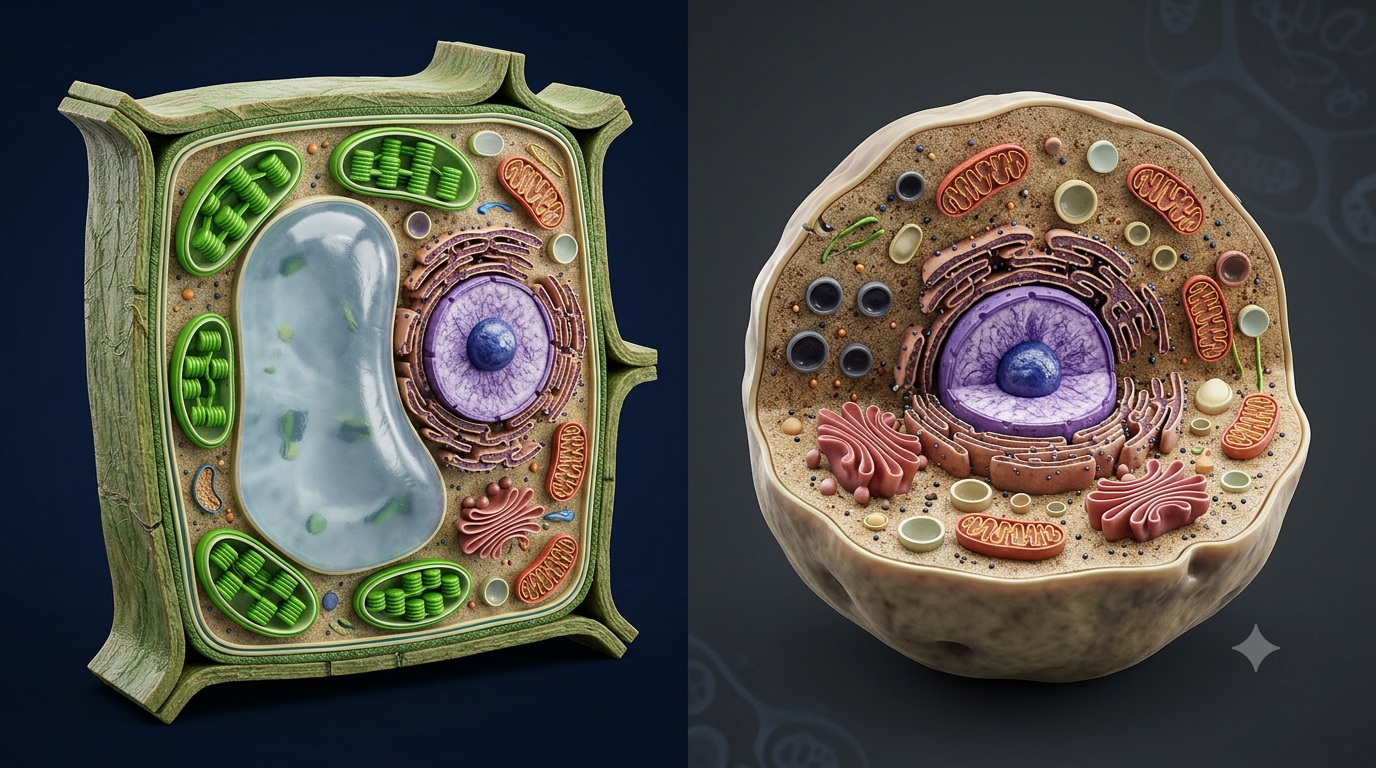
All living organisms are made of cells, the basic structural and functional units of life. Cells perform essential activities such as obtaining nutrients, producing energy, removing waste, growing, and reproducing. Although plants and animals are very different organisms, their cells share several important features because both belong to the group of eukaryotes. Eukaryotic cells contain a nucleus and specialized structures called organelles that perform specific functions.
However, plant cells and animal cells also have several structural differences. Plant cells typically possess a rigid cell wall, chloroplasts, and a large central vacuole, while animal cells lack a cell wall and chloroplasts and usually contain smaller vacuoles. These differences are closely related to how plants and animals obtain food, maintain their shapes, store materials, and interact with their surroundings. Understanding plant cells vs animal cells helps explain the fundamental differences between plant and animal life.
What Is a Plant Cell?
A plant cell is the basic structural and functional unit of a plant. It is a eukaryotic cell containing a nucleus, cytoplasm, a cell membrane, mitochondria, ribosomes, and other organelles. Most plant cells also contain a rigid cell wall outside the cell membrane, a large central vacuole, and plastids. In green plant cells, chloroplasts are responsible for photosynthesis.
Plant cells are adapted to support the growth and survival of plants. The cell wall provides strength and protection, while the central vacuole helps maintain internal pressure and stores water and dissolved substances. Chloroplasts allow suitable plant cells to capture light energy and use it to produce sugars.
Not every plant cell contains chloroplasts. For example, many root cells do not photosynthesize because they receive little or no light. Nevertheless, these cells still contain the structures required for their specialized functions.
What Is an Animal Cell?
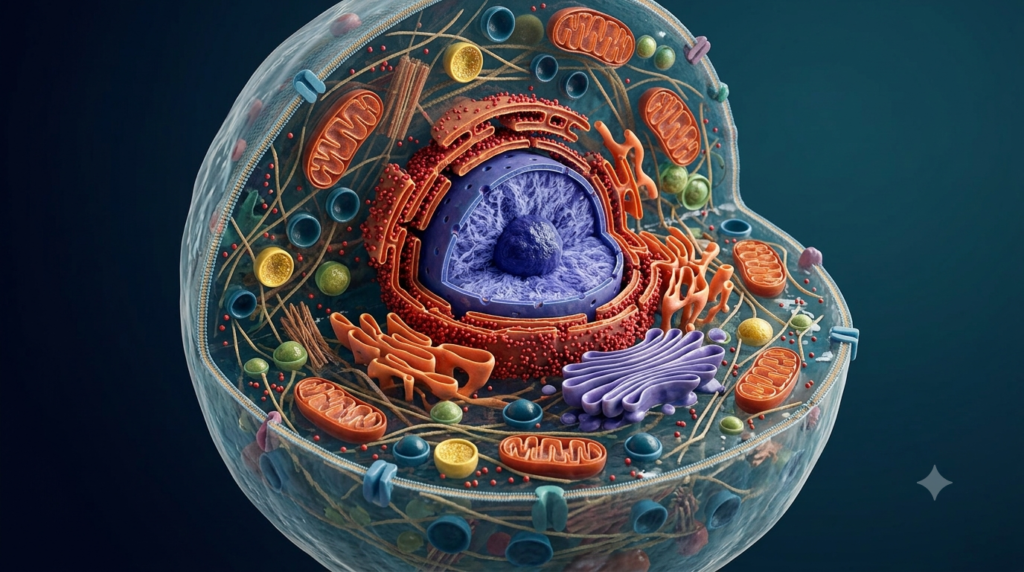
An animal cell is the basic structural and functional unit of an animal. Like a plant cell, it is a eukaryotic cell with a nucleus, cytoplasm, cell membrane, mitochondria, ribosomes, endoplasmic reticulum, and Golgi apparatus.
Animal cells do not have a rigid cell wall. Instead, their cell membranes and internal structural networks help maintain their shape while allowing flexibility. This flexibility is useful because animal cells perform many different functions, including movement, communication, digestion, and the transport of substances.
Animal cells also contain lysosomes in many cell types, which help break down waste materials and unwanted substances. Small vacuoles or vesicles may store and transport materials within the cell. Centrioles are commonly present in animal cells and play an important role in organizing structures involved in cell division.
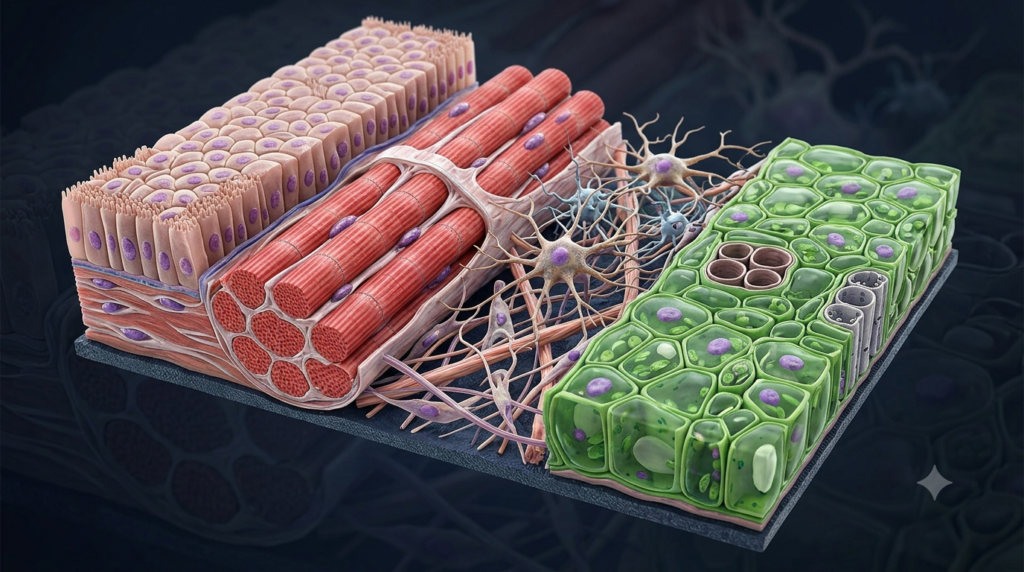
Animal cells vary considerably in shape and size. Red blood cells, nerve cells, muscle cells, and skin cells have different structures because each is adapted to perform a particular function.
Key Structural Differences Between Plant Cells and Animal Cells
Plant and animal cells share many organelles, but several important differences distinguish them.
Cell Wall
One of the most noticeable differences is the presence of a cell wall in plant cells. The cell wall is a strong outer layer located outside the cell membrane. It is composed mainly of cellulose, a complex carbohydrate that provides structural support.
The cell wall helps plant cells maintain their shape, protects them from mechanical damage, and resists excessive expansion when water enters the cell. It also contributes to the overall strength of plant tissues, allowing plants to remain upright.
Animal cells do not have a cell wall. Their outer boundary is the cell membrane, which is flexible and regulates the movement of substances into and out of the cell. This flexibility allows animal cells to change shape when necessary.
Cell Shape
Plant cells often appear rectangular, box-shaped, or polygonal when viewed under a microscope. Their rigid cell walls help maintain a relatively stable shape and keep neighboring cells organized within plant tissues.
Animal cells commonly have rounded, irregular, or varied shapes because they lack a rigid cell wall. Their shapes can change according to their functions and surrounding conditions.
For example, nerve cells have long extensions that help transmit signals, while muscle cells are elongated to support contraction. These variations demonstrate how animal cell structures are adapted to specialized activities.
Chloroplasts
Chloroplasts are organelles found in many plant cells, particularly those exposed to light. They contain chlorophyll, a green pigment that absorbs light energy for photosynthesis.
During photosynthesis, plants use light energy to convert carbon dioxide and water into sugars, releasing oxygen as a by-product. The sugars provide energy and building materials needed for growth and other cellular activities.
Animal cells do not contain chloroplasts and cannot perform photosynthesis. Animals obtain organic nutrients by consuming food or other organisms rather than producing sugars through photosynthesis.
It is important to remember that chloroplasts are not present in every plant cell. For example, most mature root cells lack chloroplasts because they usually function underground, where sunlight is unavailable.
Vacuoles
A vacuole is a membrane-bound compartment that stores water and other substances. Mature plant cells generally contain a large central vacuole surrounded by a membrane called the tonoplast.
The central vacuole stores water, ions, pigments, nutrients, and certain waste products. It also helps maintain turgor pressure, which is the pressure of the cell contents against the cell wall. Turgor pressure supports the firmness of leaves and young stems.
Animal cells may contain small vacuoles and vesicles, but they generally do not possess the large, permanent central vacuole typical of mature plant cells. Their storage and transport functions are distributed among different cellular compartments.
Centrioles and Cell Division
Centrioles are cylindrical structures commonly found in animal cells as part of the centrosome, which helps organize microtubules. During cell division, the centrosome contributes to the organization of the spindle apparatus that separates chromosomes.
Most higher plant cells do not have typical centrioles, yet they can still organize microtubules and form the structures required for cell division. Their mechanisms differ from those commonly described in animal cells.
Therefore, centrioles are a useful point of comparison, but their absence does not prevent plant cells from dividing successfully.
Lysosomes
Lysosomes are membrane-bound organelles containing enzymes that break down proteins, lipids, carbohydrates, and other materials. They are commonly associated with animal cells and help digest cellular waste, worn-out components, and substances taken into the cell.
Plant cells also perform these breakdown and recycling functions. In many plant cells, the central vacuole and other compartments carry out roles similar to those of lysosomes. Consequently, it is not accurate to say that plant cells cannot digest or recycle cellular materials simply because they usually lack typical animal-type lysosomes.
Storage of Carbohydrates
Plants commonly store excess carbohydrates as starch. Starch can accumulate in structures called amyloplasts and in other storage tissues, including roots, seeds, and tubers.
Animals primarily store excess glucose as glycogen, especially in the liver and skeletal muscles. Glycogen can be broken down when the body needs glucose for energy or other metabolic activities.
This difference reflects the distinct nutritional and metabolic strategies of plants and animals.
Cell Connections
Plant cells are connected through microscopic channels called plasmodesmata. These channels pass through the cell walls and allow substances and signaling molecules to move between neighboring cells.
Animal cells use different types of cell junctions. Tight junctions help seal spaces between certain cells, desmosomes provide strong attachment, and gap junctions allow selected molecules and ions to pass between neighboring cells.
These structures help plant and animal tissues coordinate their activities despite differences in their cellular organization.
Similarities Between Plant Cells and Animal Cells
Although plant and animal cells have important structural differences, they share many features. Both are eukaryotic cells and contain several common organelles that perform essential life processes.
Cell Membrane
Both plant and animal cells have a cell membrane made mainly of a phospholipid bilayer with embedded proteins. It controls the movement of substances between the cell and its surroundings and participates in cell signaling.
In plant cells, the cell membrane lies just inside the cell wall. In animal cells, it forms the outer boundary of the cell.
Nucleus
Both cell types generally contain a nucleus that stores most of the cell’s genetic information in DNA. The nucleus helps regulate gene expression and coordinates many cellular activities.
The nucleus is surrounded by a nuclear envelope containing pores that control the movement of materials between the nucleus and cytoplasm.
Cytoplasm
The cytoplasm consists of the material inside the cell membrane, including the cytosol and various organelles. It provides an environment for numerous chemical reactions and supports the movement and organization of cellular components.
Both plant and animal cells depend on the cytoplasm for essential metabolic processes.
Mitochondria
Mitochondria are organelles involved in cellular respiration and ATP production. ATP is a molecule that supplies usable energy for many cellular activities.
Both plant and animal cells contain mitochondria. Although plants produce sugars through photosynthesis in suitable cells, they also use cellular respiration to release energy from organic molecules. Plant cells therefore require mitochondria just as animal cells do.
Ribosomes, Endoplasmic Reticulum, and Golgi Apparatus
Both cell types contain ribosomes, which build proteins from amino acids. The endoplasmic reticulum helps synthesize and process proteins and lipids, while the Golgi apparatus modifies, sorts, and packages many cellular products.
These organelles work together to support cell growth, maintenance, and communication.
Plant Cells vs Animal Cells Comparison Table
The following table summarizes the major structural and functional differences between the two cell types.
| Feature | Plant Cells | Animal Cells |
|---|---|---|
| Cell wall | Present, mainly made of cellulose | Absent |
| Cell membrane | Present | Present |
| Typical shape | Often box-shaped or polygonal | Often rounded or irregular |
| Chloroplasts | Present in many photosynthetic cells | Absent |
| Central vacuole | Usually large in mature cells | No comparable large central vacuole in typical cells |
| Centrioles | Usually absent in higher plants | Commonly present |
| Lysosomes | Similar functions often performed by vacuoles and other compartments | Commonly present |
| Carbohydrate storage | Mainly starch | Mainly glycogen |
| Cell connections | Plasmodesmata | Gap junctions and other junctions |
| Energy production | Cellular respiration in mitochondria | Cellular respiration in mitochondria |
| Photosynthesis | Occurs in suitable cells with chloroplasts | Does not occur |
| Cell division | Often forms a cell plate | Usually forms a cleavage furrow |
| Flexibility | Limited by the cell wall | Generally greater because there is no cell wall |
Differences in Cell Division
Plant and animal cells also differ in how they usually separate into two daughter cells during cell division.
In animal cells, the cell membrane commonly forms a cleavage furrow. The membrane gradually pinches inward until the original cell divides into two daughter cells.
Plant cells cannot divide in the same way because their rigid cell walls restrict this inward pinching process. Instead, a structure called the cell plate develops between the two sets of daughter chromosomes. The cell plate expands and eventually forms the new membranes and cell wall separating the daughter cells.
Both processes help distribute cellular contents and genetic material to the daughter cells, but the mechanisms are adapted to the different structures of plant and animal cells.
Why Are Plant and Animal Cells Different?
The structural differences between plant and animal cells reflect the different needs of plants and animals.
Plants are generally stationary organisms that must support their bodies while obtaining water, minerals, and light from their surroundings. Their cell walls provide strength, while large central vacuoles help maintain internal pressure. Chloroplasts in suitable cells enable plants to manufacture sugars using light energy.
Animals generally obtain nutrients by consuming organic material. Their cells often need greater flexibility to move, change shape, communicate, and form specialized tissues. The absence of a rigid cell wall supports these functions.
However, neither cell type is universally better than the other. Each is adapted to the biological requirements of the organism in which it occurs.
How to Identify Plant Cells and Animal Cells Under a Microscope
Plant and animal cells can often be distinguished by observing their structures under a microscope.
Plant cells may show a clear, rigid boundary formed by the cell wall. Many green plant cells also contain visible chloroplasts, while a large central vacuole may occupy much of the cell’s interior. These features often make plant cells appear regularly arranged.
Animal cells generally lack a rigid outer wall and may have more irregular outlines. Their nuclei can often be observed after suitable staining, but animal cells do not normally show chloroplasts.
The choice of specimen matters. A leaf cell may contain chloroplasts, but a root cell usually does not. Similarly, some animal cells are naturally flat or regularly arranged. Therefore, the absence of a single feature is not always enough to identify a cell conclusively. Observing several characteristics together provides a more reliable comparison.
Conclusion
Plant cells and animal cells are both eukaryotic cells that share essential structures, including the cell membrane, nucleus, mitochondria, cytoplasm, ribosomes, and endoplasmic reticulum. However, they differ in several important ways. Plant cells typically have a cellulose cell wall, many photosynthetic plant cells contain chloroplasts, and mature plant cells usually possess a large central vacuole. Animal cells lack a cell wall and chloroplasts, commonly contain centrioles, and generally have more flexible shapes.
These differences help each cell type perform its role within a living organism. Plant cell structures support photosynthesis, water storage, and physical strength, while animal cell structures support flexibility and diverse specialized functions. Learning these similarities and differences provides a foundation for understanding cell biology, plant physiology, animal biology, and the organization of living organisms.
FAQs
1. What is the main difference between plant cells and animal cells?
The main difference between plant cells and animal cells is that plant cells typically have a rigid cell wall, while animal cells do not. Plant cells also commonly contain a large central vacuole, and many photosynthetic plant cells contain chloroplasts. These structures help plants maintain their shape, store water, and produce food through photosynthesis. Animal cells have a flexible cell membrane that allows them to change shape more easily. Both cell types are eukaryotic and contain a nucleus, mitochondria, cytoplasm, and other organelles necessary for their survival and normal functioning.
2. Why do plant cells have a cell wall but animal cells do not?
Plant cells have a cell wall because plants need structural support and protection. The wall, which is mainly made of cellulose, helps maintain cell shape and prevents cells from expanding excessively when they absorb water. It also contributes to the strength of plant tissues, helping stems and leaves remain firm. Animal cells do not have cell walls because many animal functions require flexible cells that can move, change shape, and interact with surrounding tissues. Instead, animal cells rely on their cell membranes, internal cytoskeleton, and connections with neighboring cells to maintain their structure and perform specialized activities.
3. Do all plant cells contain chloroplasts?
No, not all plant cells contain chloroplasts. Chloroplasts are mainly present in cells that perform photosynthesis, such as many cells in green leaves and young green stems. They contain chlorophyll, which absorbs light energy used to produce sugars from carbon dioxide and water. Most mature root cells do not contain chloroplasts because they usually grow underground and receive little or no sunlight. However, these cells contain other organelles required for their functions. Therefore, although chloroplasts are a characteristic feature of many plant cells, their presence depends on the cell’s type, location, and function within the plant.
4. Why do plant cells have a large central vacuole?
The large central vacuole in a mature plant cell performs several important functions. It stores water, dissolved minerals, nutrients, pigments, and certain waste products. It also helps maintain turgor pressure, which occurs when the water-filled cell contents push against the cell wall. This pressure keeps many plant tissues firm and supports leaves and young stems. When plant cells lose too much water, their turgor pressure decreases, causing leaves to wilt. Animal cells may contain smaller vacuoles and vesicles, but they generally lack the large, permanent central vacuole commonly found in mature plant cells.
5. What are the similarities between plant cells and animal cells?
Plant cells and animal cells share several important structures because both are eukaryotic. Both generally contain a nucleus that stores genetic information, a cell membrane that regulates the movement of substances, and cytoplasm where many cellular reactions occur. They also contain mitochondria for cellular respiration, ribosomes for protein synthesis, an endoplasmic reticulum for producing and processing proteins and lipids, and a Golgi apparatus for modifying and packaging cellular materials. These common structures support growth, energy production, and cell maintenance. Despite their differences, both cell types depend on these organelles to carry out essential life processes.
6. Why do plant cells usually have a regular shape while animal cells have varied shapes?
Plant cells often appear rectangular or polygonal because their rigid cell walls help maintain a relatively stable shape. These walls also provide support and help neighboring cells form organized tissues. Animal cells lack a rigid cell wall, so their shapes can vary according to their functions and surroundings. For example, nerve cells have long extensions for transmitting signals, while muscle cells are elongated to support contraction. Some animal cells are rounded, while others are flat or irregular. These differences demonstrate that cell shape is closely related to biological function and the structural requirements of plant and animal tissues.
7. Do plant cells and animal cells both contain mitochondria?
Yes, both plant cells and animal cells contain mitochondria. These organelles are essential for cellular respiration, a process that releases usable energy from organic molecules and produces ATP. ATP supplies energy for activities such as growth, transport, repair, and the synthesis of cellular materials. Although plants produce sugars through photosynthesis in suitable cells, they still need cellular respiration to obtain usable energy from those sugars. Animal cells also depend on cellular respiration to meet their energy requirements. Therefore, mitochondria are important in both plant and animal cells, despite their different methods of obtaining nutrients.
8. What is the difference between plant and animal cell division?
Plant and animal cells use different mechanisms to divide their cytoplasm during cell division. In many animal cells, the cell membrane forms a cleavage furrow that gradually pinches inward, separating the cell into two daughter cells. Plant cells cannot generally use this method because their rigid cell walls restrict inward pinching. Instead, a cell plate forms between the daughter nuclei and gradually develops into the new separating membranes and cell wall. Both processes produce two daughter cells, but the mechanisms differ because plant cells have rigid walls while animal cells have more flexible outer boundaries.
9. Why do plant cells store starch while animal cells store glycogen?
Plants and animals store carbohydrates in different forms to meet their energy requirements. Plants commonly store excess glucose as starch, which accumulates in structures such as seeds, roots, tubers, and specialized storage organelles. When energy or glucose is needed, starch can be broken down into smaller sugar molecules. Animals primarily store glucose as glycogen, especially in the liver and skeletal muscles. Glycogen can be broken down when the body requires glucose or energy. Both starch and glycogen are polysaccharides, meaning they consist of many linked glucose units, but they serve as storage carbohydrates in different groups of organisms.
10. How can you distinguish plant cells from animal cells under a microscope?
Plant cells can often be identified by their rigid cell walls, which give them relatively regular outlines. Green plant cells may also contain visible chloroplasts, and mature cells often have a large central vacuole. Animal cells generally lack cell walls and chloroplasts and may display more varied shapes. However, the specimen must be considered carefully. Root cells usually lack chloroplasts, and some animal cells can have regular shapes when arranged in tissues. Staining may help reveal the nucleus and other structures. For reliable identification, observe several characteristics together rather than relying on only one feature.