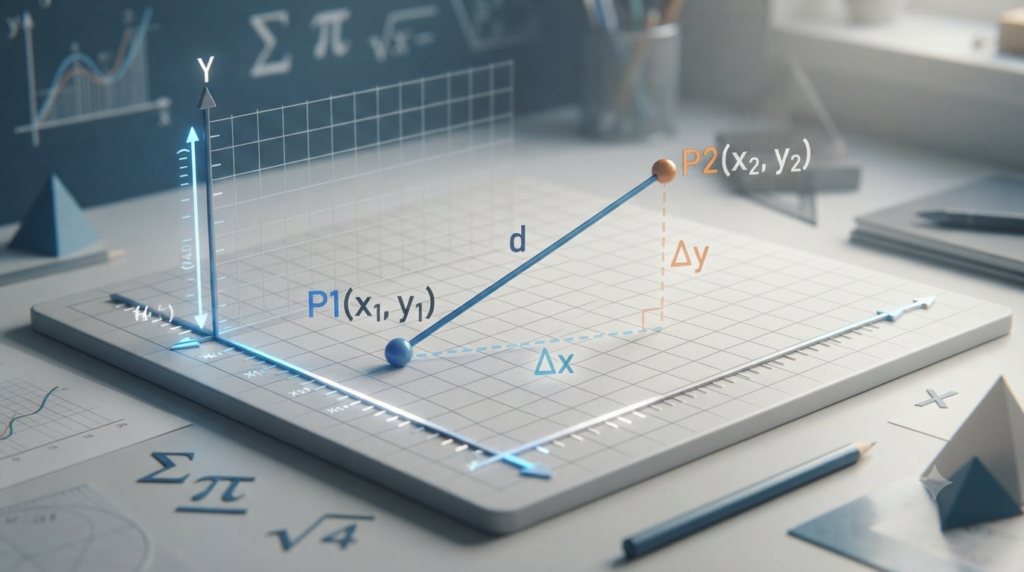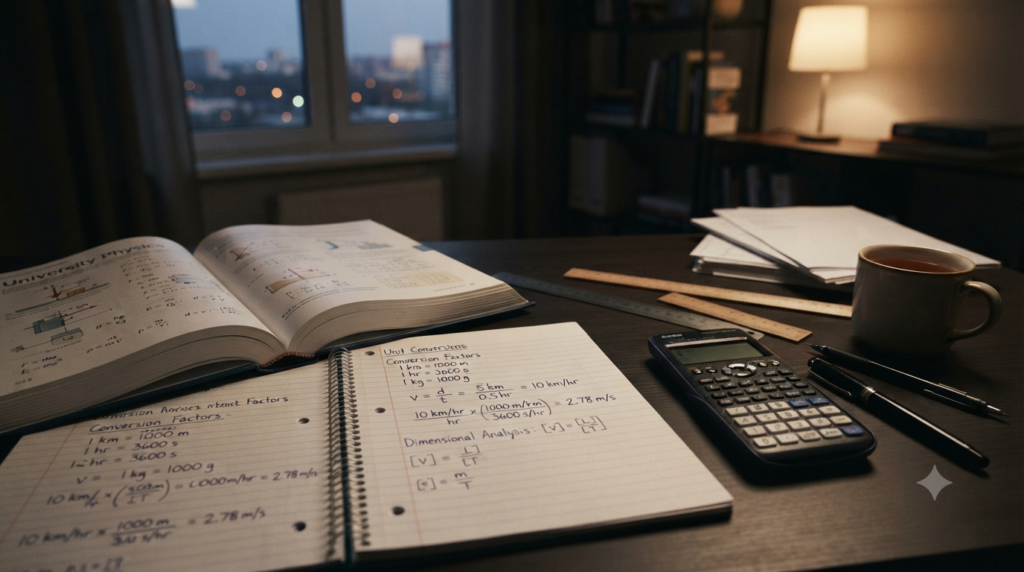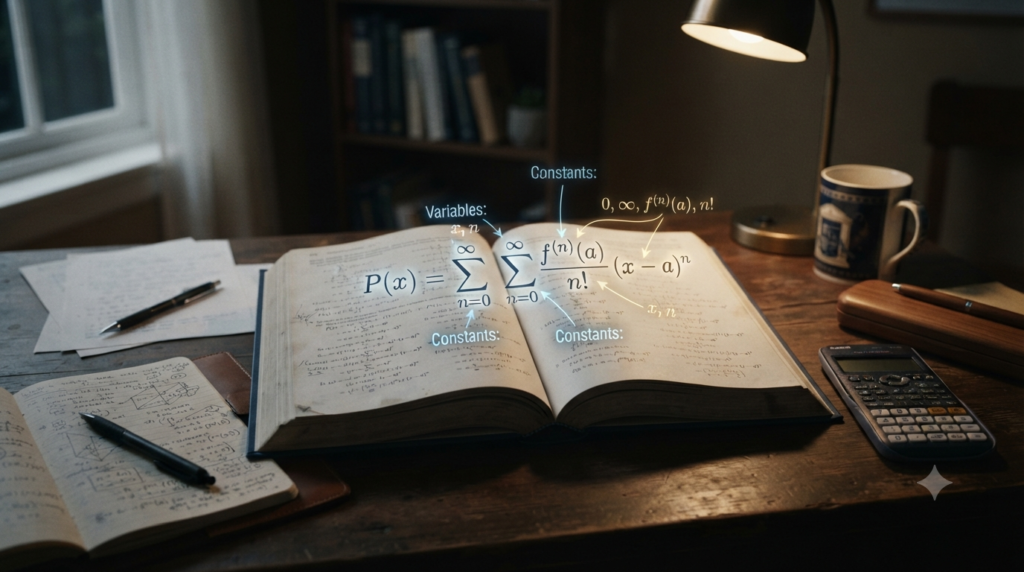
In mathematics and science, formulas are used to describe relationships between different quantities. A formula may contain several variables, but in a particular problem, the quantity we need to find is not always the variable that appears alone. This is where rearranging a formula becomes useful. Rearranging a formula means changing its form so that the variable we want to find is isolated on one side of the equation.
For example, the formula for speed is:
Speed = Distance ÷ Time
If we know the distance and time, we can find speed directly. But what if we want to find the distance instead? We need to rearrange the formula so that distance is the subject. The same original relationship can then be used in a different form.
Understanding how and why formulas are rearranged is an important mathematical skill because it allows the same formula to solve many different types of problems.
What Does Rearranging a Formula Mean?
Rearranging a formula means changing the position and arrangement of its variables and mathematical operations without changing the relationship described by the formula.
Consider the simple equation:
a = b + c
Here, a is already on its own. If we want to find b, however, we need to rearrange the equation.
Subtract c from both sides:
a − c = b
Therefore:
b = a − c
The formula has not changed in meaning. We have simply written the same relationship in a form that makes b easier to calculate.
This process is sometimes called making a variable the subject of the formula.
The variable that is isolated on one side is called the subject of the formula.
Why Is Rearranging a Formula Useful?
The main reason for rearranging a formula is that the variable we need to find may not be the subject of the original formula.
A formula is often written in a standard form that is convenient for one particular calculation. However, real problems can ask us to find any of the quantities involved.
For example, the formula for density is:
Density = Mass ÷ Volume
This can be written as:
ρ = m ÷ V
If density and volume are known, we can calculate mass by rearranging the formula:
m = ρ × V
If density and mass are known, we can calculate volume:
V = m ÷ ρ
So, one formula can provide several useful forms.
This makes rearranging formulas a powerful way to solve problems efficiently.
One Formula Can Be Used to Find Different Quantities
A major advantage of rearranging a formula is that the same relationship can be used to calculate different unknown quantities.
Consider the formula:
Distance = Speed × Time
Written using symbols:
d = v × t
If distance is unknown, the formula can be used directly:
d = v × t
But suppose speed is unknown. We can divide both sides by time:
v = d ÷ t
If time is unknown, we divide both sides by speed:
t = d ÷ v
Therefore, the same relationship gives us three useful forms:
d = v × t
v = d ÷ t
t = d ÷ v
Instead of memorizing three unrelated formulas, we can understand one relationship and rearrange it when necessary.
Rearranging a Formula Helps When the Unknown Variable Changes
In many mathematical and scientific problems, the unknown variable changes from one question to another.
For example, consider the formula:
P = F ÷ A
where:
P represents pressure
F represents force
A represents area
If pressure is unknown, we can use:
P = F ÷ A
If force is unknown, we rearrange the formula:
F = P × A
If area is unknown:
A = F ÷ P
The question determines which variable needs to become the subject.
This is particularly important in physics, where formulas commonly contain several physical quantities.
Rearranging Is Based on the Rules of Equations
Rearranging a formula is not about moving a variable randomly from one side to another. It is based on the rules of equations.
An equation remains balanced when the same mathematical operation is performed on both sides.
For example:
x + 5 = 12
To isolate x, subtract 5 from both sides:
x + 5 − 5 = 12 − 5
Therefore:
x = 7
The same principle applies to formulas containing several variables.
Suppose:
y = x + z
To make x the subject, subtract z from both sides:
y − z = x
Therefore:
x = y − z
The important idea is that both sides of the equation must remain equal.
Inverse Operations Make Rearranging Easier
Rearranging formulas becomes easier when we understand inverse operations.
An inverse operation reverses another operation.
For example:
Addition and subtraction are inverses.
Multiplication and division are inverses.
Squaring and taking a square root are inverse operations.
Suppose:
a = b + c
To remove + c from the side containing b, use subtraction:
b = a − c
Suppose:
y = 5x
To isolate x, divide both sides by 5:
x = y ÷ 5
Suppose:
A = l × w
To find w, divide both sides by l:
w = A ÷ l
Using inverse operations provides a systematic way to rearrange formulas.
Rearranging a Formula Can Prevent Unnecessary Calculations
Another benefit is that rearranging a formula can make calculations more direct.
Imagine that the formula is:
E = P × t
where E is energy, P is power, and t is time.
If energy and time are known and power is required, we can rearrange:
P = E ÷ t
We can then substitute the known values directly.
Without rearranging, we might be tempted to use the original formula incorrectly or perform unnecessary steps. Rearranging first makes the mathematical relationship clear.
Rearranging Helps With Multi-Step Problems
Some problems require more than one calculation. Rearranging the relevant formula first can make the solution much easier to organize.
For example, consider the formula for average speed:
v = d ÷ t
If we need to find time, rearrange it first:
t = d ÷ v
Now the calculation can be performed using the known distance and speed.
This is useful in practical situations where we need to determine how long something will take.
The same idea applies to formulas involving temperature, force, energy, density, pressure, area, volume, and many other quantities.
Rearranging Formulas Reduces the Need to Memorize Many Equations
Students sometimes try to memorize a separate formula for every possible unknown. This can quickly become confusing.
For example, the relationship between force, mass, and acceleration is:
F = m × a
From this one formula, we can find:
F = m × a
m = F ÷ a
a = F ÷ m
Learning how to rearrange the original formula means we do not need to treat each version as a completely different formula.
This improves understanding because we focus on the relationship between the quantities rather than memorizing isolated equations.
Rearranging Formulas Is Useful in Mathematics
Rearranging formulas is not limited to physics and science. It is also an important part of mathematics.
Consider the area of a rectangle:
A = l × w
If the length is unknown:
l = A ÷ w
If the width is unknown:
w = A ÷ l
Similarly, the area of a circle is:
A = πr²
If the radius is unknown, we first divide by π:
A ÷ π = r²
Then take the square root:
r = √(A ÷ π)
This example shows that rearranging can involve more than one mathematical operation.
Rearranging Can Reveal Relationships Between Variables
Changing the subject of a formula can also help us understand how variables are related.
For example:
v = d ÷ t
shows that speed depends on distance and time.
If we rearrange it:
d = v × t
we can see that distance increases when speed or time increases, assuming the other quantity remains constant.
Similarly:
t = d ÷ v
shows that the time required increases when the distance increases, while greater speed reduces the time needed for a fixed distance.
Therefore, rearranging formulas can help us understand relationships rather than simply calculate answers.
A Simple Method for Rearranging Formulas
A useful method is to follow these steps:
Step 1: Identify the variable you need
Read the question carefully and determine what quantity is unknown.
For example, if the question asks for mass, identify m as the variable you need to isolate.
Step 2: Write the original formula
Start with the correct formula before making any changes.
For example:
ρ = m ÷ V
Step 3: Look at the operations around the unknown
Determine what mathematical operations are being applied to the variable.
In the example, mass is divided by volume.
Step 4: Use inverse operations
Undo the operations one at a time.
To remove division by V, multiply both sides by V:
ρ × V = m
Therefore:
m = ρ × V
Step 5: Check the result
Make sure the rearranged formula makes mathematical sense.
You can also substitute simple values into both the original and rearranged forms to check that they produce the same result.
Example: Rearranging the Formula for Power
The formula for power is:
P = E ÷ t
Suppose we want to find energy instead of power.
Multiply both sides by t:
P × t = E
Therefore:
E = P × t
Now suppose we want to find time.
Starting with:
P = E ÷ t
Multiply both sides by t:
P × t = E
Then divide by P:
t = E ÷ P
We now have three forms of the same relationship:
P = E ÷ t
E = P × t
t = E ÷ P
Each form is useful depending on which quantity is unknown.
Example: Rearranging a Formula With a Square
Consider:
A = πr²
Suppose the area is known but the radius is unknown.
First divide both sides by π:
A ÷ π = r²
Then take the square root of both sides:
r = √(A ÷ π)
The order matters. We first undo the multiplication by π and then undo the square using a square root.
This demonstrates why rearranging should be done carefully, especially when powers, roots, brackets, or fractions are involved.
Common Mistakes When Rearranging Formulas
Several mistakes can occur when rearranging formulas.
Moving a Variable Without Applying the Same Operation
A variable cannot simply be moved to the other side without considering the mathematical operation involved.
For example, from:
y = x + 4
we cannot simply write:
x = y + 4
The correct rearrangement is:
x = y − 4
Changing Only One Side of an Equation
An equation must remain balanced. If an operation is performed on one side, the equivalent operation must be performed on the other side.
Forgetting Multiplication or Division
When a variable is multiplied or divided by another quantity, it is important to use the inverse operation correctly.
For example:
A = l × w
To find w, divide by l:
w = A ÷ l
Ignoring Squares and Square Roots
When a variable is squared, simply taking the square root of only part of the expression can produce an incorrect result.
Careful attention to mathematical operations is essential.
Why Rearranging Formulas Is an Important Skill
Rearranging formulas is useful because it gives us flexibility.
A formula does not have to be used only in the form in which it was originally written. Once we understand the relationship between the variables, we can change the formula to suit the problem.
This skill is especially useful when:
a different variable is unknown
a problem contains several known quantities
a formula needs to be used in a practical situation
we want to avoid memorizing many versions of the same formula
we need to solve multi-step problems
we want to understand relationships between quantities
we need to check whether a calculation is set up correctly
It also builds confidence in algebra because rearranging formulas is essentially an application of algebraic thinking.
Rearranging a Formula Is More Than Moving Symbols
It is common to hear that rearranging a formula means “moving things to the other side.” While this may be a useful informal description, it can lead to mistakes if taken too literally.
A better way to think about rearranging is undoing mathematical operations while keeping both sides of the equation balanced.
For example:
F = m × a
To find mass, we undo multiplication by acceleration:
m = F ÷ a
To find acceleration, we undo multiplication by mass:
a = F ÷ m
This approach works because it follows the rules of algebra rather than relying on memorized tricks.
Conclusion
Rearranging a formula is useful because the variable we need to find is not always the variable already isolated in the original formula. By rearranging the equation, we can make any required variable the subject and then substitute the known values directly.
This allows one formula to solve several different types of problems. It also reduces the need to memorize multiple versions of the same relationship and helps us understand how different quantities are connected.
The key idea is simple: identify the unknown variable, isolate it using inverse operations, keep the equation balanced, and then use the rearranged formula to calculate the answer.
Once this skill becomes familiar, many mathematics and science problems become easier to understand and solve.
FAQs
1. What does rearranging a formula mean?
Rearranging a formula means changing its form so that a different variable becomes the subject of the formula. The relationship between the variables remains exactly the same. For example, the formula for speed is v = d ÷ t. If distance is unknown, we can rearrange it to d = v × t. If time is unknown, it becomes t = d ÷ v. Rearranging does not create a new relationship; it simply presents the existing relationship in a form that is useful for finding a particular unknown quantity. This is an important algebraic skill used throughout mathematics and science.
2. Why is rearranging a formula useful?
Rearranging a formula is useful because the variable we need to find may not be the subject of the original formula. By rearranging the equation, we can isolate the required variable and then substitute the known values. For example, F = m × a can be rearranged to m = F ÷ a when mass is unknown. This makes calculations more direct and reduces the chance of using a formula incorrectly. Rearranging also allows one formula to be used for several different types of problems. It is especially useful in mathematics, physics, chemistry, engineering, and other subjects where formulas describe relationships between quantities.
3. What is the subject of a formula?
The subject of a formula is the variable that appears alone on one side of the equation. For example, in A = l × w, the area A is the subject because it is isolated on the left side. If we want to find the width, we can rearrange the formula to w = A ÷ l. The subject is now w. Making a different variable the subject allows us to calculate that quantity when the other variables are known. Understanding the subject of a formula is therefore an important first step when solving problems involving equations and mathematical relationships.
4. How do you know which variable to make the subject?
The variable you should make the subject is the quantity that the question asks you to find. First, read the problem carefully and identify the unknown quantity. Then look at the original formula and determine where that variable appears. For example, if a question asks for time and the formula is v = d ÷ t, then t needs to become the subject. Rearrange the formula to obtain t = d ÷ v. Once the required variable is isolated, the known values can be substituted. Always identify the unknown before starting the rearrangement to avoid solving for the wrong quantity.
5. What mathematical operations are used when rearranging formulas?
Rearranging formulas mainly involves using inverse operations. Addition is reversed by subtraction, subtraction by addition, multiplication by division, and division by multiplication. Powers can be reversed using roots. For example, if y = x + 5, subtract 5 from both sides to get x = y − 5. If y = 4x, divide both sides by 4 to get x = y ÷ 4. When a variable is squared, taking the square root can help isolate it. The important rule is that equivalent operations must be applied correctly so that the equality between both sides remains unchanged.
6. Do you need to memorize every rearranged version of a formula?
No, you generally do not need to memorize every rearranged version of a formula. It is more useful to understand the original relationship and learn how to rearrange it. For example, from d = v × t, you can derive v = d ÷ t and t = d ÷ v whenever needed. Memorizing many separate versions can increase confusion, especially when working with many formulas. Understanding inverse operations gives you a reliable method for creating the required form. However, frequently used rearrangements may become familiar naturally through practice and repeated use.
7. Is rearranging formulas the same as solving equations?
Rearranging formulas and solving equations use many of the same algebraic principles, but their purposes can differ. When solving an equation, the goal is often to find the value of an unknown variable. When rearranging a formula, the goal is usually to isolate a particular variable so that the formula can be used with different known values. For example, F = m × a can be rearranged to a = F ÷ m. This is rearranging a formula. If specific values are then substituted, such as F = 20 N and m = 5 kg, we can solve for the numerical value of acceleration.
8. What is an example of rearranging a formula in physics?
A common physics example is the relationship between density, mass, and volume: ρ = m ÷ V. If density is required, this original form can be used directly. If mass is unknown, multiply both sides by volume to obtain m = ρ × V. If volume is unknown, rearrange the formula to obtain V = m ÷ ρ. These three forms describe the same relationship. The appropriate form depends on which quantity is unknown and which quantities are already known. This type of rearrangement is frequently used in physics calculations involving physical quantities and their relationships.
9. How can you check whether a rearranged formula is correct?
You can check a rearranged formula by substituting simple values into both the original formula and the rearranged version. Both forms should describe the same relationship and produce consistent results. For example, start with d = v × t. If v = 10 and t = 5, then d = 50. Using the rearranged formula t = d ÷ v, we get t = 50 ÷ 10 = 5. You can also check whether the mathematical operations used during rearrangement were applied correctly to both sides. Checking your work is particularly important when formulas contain powers, fractions, brackets, or several variables.
10. Why is rearranging formulas important in mathematics and science?
Rearranging formulas is important because mathematical and scientific problems can ask us to find any of the quantities in a relationship. A single formula may contain several variables, and the required unknown can change from one problem to another. Rearranging allows us to isolate the variable we need without learning a completely separate formula. It is widely used in physics, chemistry, mathematics, engineering, and many practical calculations. More importantly, it develops algebraic reasoning and helps us understand how quantities are connected. Once you become comfortable with inverse operations and maintaining equality, rearranging formulas becomes a straightforward and useful problem-solving skill.