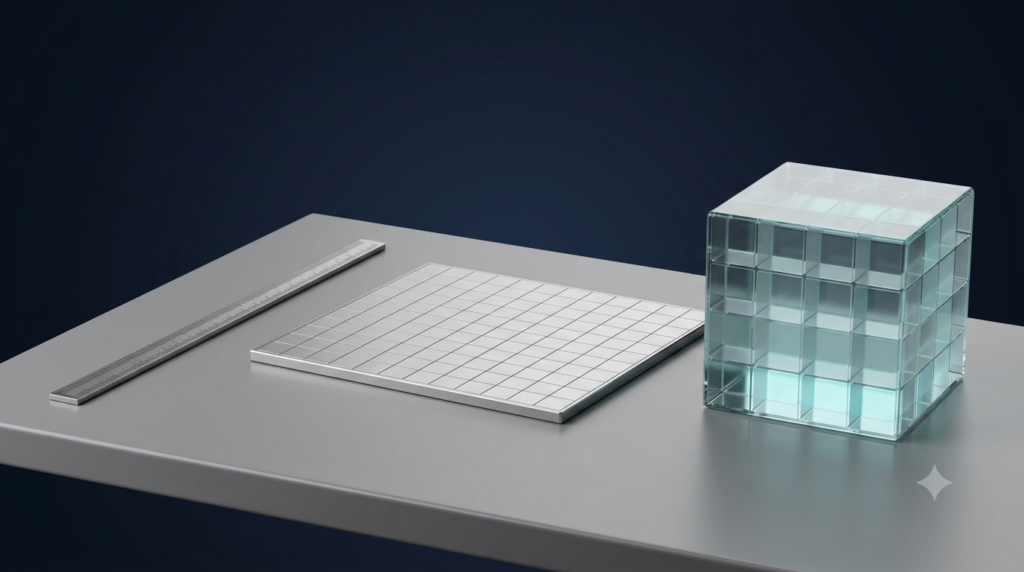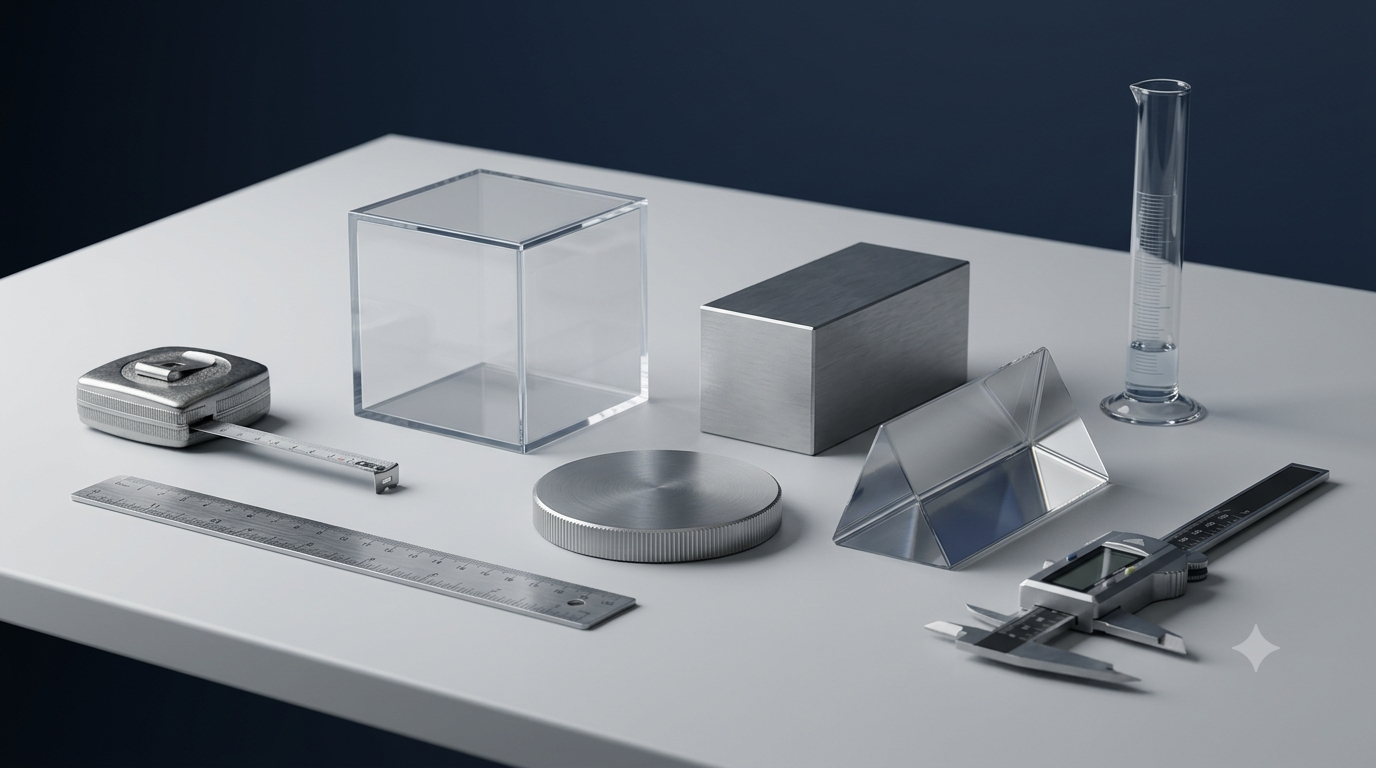
Mensuration is an important branch of mathematics that deals with measuring the length, perimeter, area, surface area, and volume of geometric shapes. It helps us understand the size of objects and calculate how much space they occupy. From measuring the dimensions of a room to finding the amount of water a tank can hold, mensuration has many practical applications in everyday life.
To solve mensuration problems correctly, we must understand metric units. These units help us express measurements clearly and consistently. For example, the length of a pencil may be measured in centimetres, the area of a floor in square metres, and the volume of a water tank in cubic metres or litres.
The metric system is widely used around the world, including in India. It is based on powers of ten, which makes converting between units relatively simple. In this beginner-friendly guide, you will learn about the main metric units used in mensuration, their relationships, common conversions, and practical examples.
What Are Metric Units?
Metric units are standard units used to measure physical quantities such as length, area, volume, and mass. The metric system is based on the decimal system, meaning that many conversions involve multiplying or dividing by powers of ten.
For example, one metre contains 100 centimetres, and one kilometre contains 1,000 metres. These relationships make the metric system easier to use than systems with less consistent conversion factors.
In mensuration, metric units are especially important because different geometric measurements require different units. Length is measured in units such as millimetres, centimetres, and metres. Area is measured in square units, while volume is measured in cubic units.
Understanding these differences helps prevent calculation errors and ensures that the final answer is expressed correctly.
Understanding Units of Length
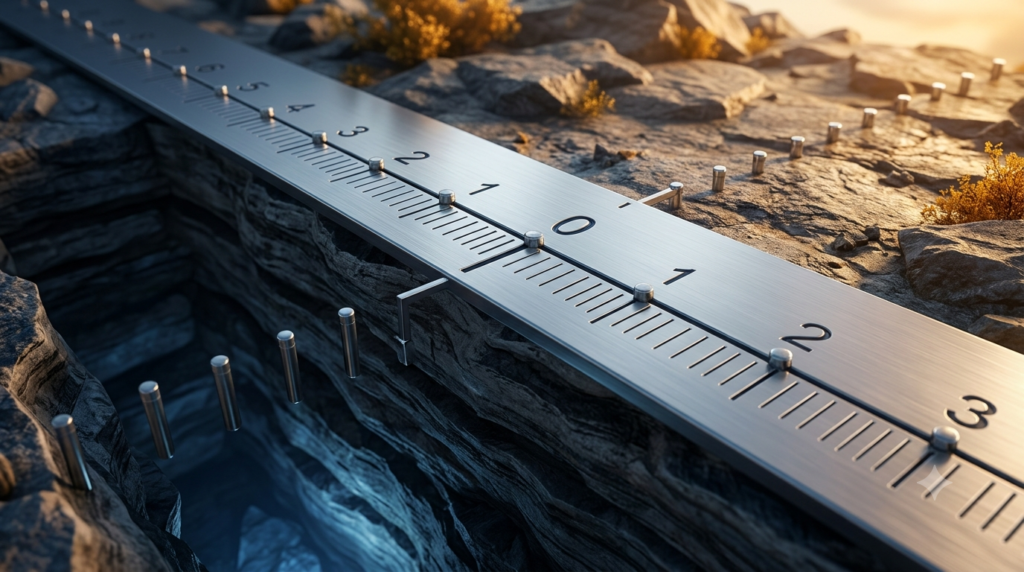
Length measures the distance between two points or the size of an object in one direction. It is one of the most fundamental measurements in mensuration because many formulas use length, width, height, radius, or diameter.
The standard SI unit of length is the metre, represented by the symbol m.
Common Metric Units of Length
The most commonly used metric units of length are:
Millimetre (mm): Suitable for very small measurements, such as the thickness of a sheet of paper or the diameter of a small component.
Centimetre (cm): Useful for measuring pencils, books, and smaller household objects.
Metre (m): Commonly used for measuring rooms, furniture, buildings, and distances within a property.
Kilometre (km): Used for longer distances, such as the distance between towns or cities.
Relationships Between Length Units
The following conversions are important for solving mensuration problems.
1 m = 10 dm
1 m = 100 cm
1 m = 1,000 mm
1 km = 1,000 m
1 cm = 10 mm
Here, dm represents a decimetre. Although decimetres are less common in everyday measurements, they are part of the metric system.
For example, if a table is 150 cm long, its length in metres is:
150 ÷ 100 = 1.5 m
Similarly, a road measuring 3 km has a length of:
3 × 1,000 = 3,000 m
Why Length Units Matter in Mensuration
Length measurements are used to calculate the perimeter of two-dimensional shapes and the surface area and volume of three-dimensional objects.
For example, the perimeter of a rectangle depends on its length and width. If the length is measured in metres, the width should also be expressed in metres before applying the formula.
Using consistent units helps ensure that the result is accurate and easy to interpret.
Understanding Units of Perimeter
Perimeter is the total distance around the boundary of a two-dimensional shape. It is calculated by adding the lengths of all its sides.
Because perimeter measures distance, it is expressed in ordinary length units rather than square or cubic units.
Common perimeter units include millimetres, centimetres, metres, and kilometres.
Example of Perimeter
Suppose a rectangular garden has a length of 8 m and a width of 5 m.
The formula for the perimeter of a rectangle is:
P = 2 × (l + w)
Here, P represents perimeter, l represents length, and w represents width.
Substituting the measurements:
P = 2 × (8 + 5)
P = 2 × 13
P = 26 m
Therefore, the perimeter of the garden is 26 metres.
If you want to build a fence around the garden, the perimeter helps you estimate the required fence length.
Important Point About Perimeter Units
Perimeter is always expressed in linear units. For example, a perimeter may be 26 m or 2600 cm, but it should not be written as 26 m².
The symbol m² represents square metres, which are used for area rather than perimeter.
Understanding Units of Area
Area measures the amount of surface covered by a two-dimensional shape. It tells us how much flat space lies within a boundary.
For example, area can describe the surface of a table, the floor of a room, a field, or a sheet of paper.
Since area involves two dimensions, it is measured in square units.
Common Metric Units of Area
The most commonly used metric area units include:
Square millimetre (mm²): Used for very small surfaces and precision measurements.
Square centimetre (cm²): Suitable for book covers, photographs, and small objects.
Square metre (m²): Used for floors, walls, rooms, and building spaces.
Hectare (ha): Commonly used for agricultural land and large plots.
Square kilometre (km²): Used for large geographical areas, such as cities and regions.
Relationships Between Area Units
Area conversions are different from length conversions because area has two dimensions.
1 m² = 10,000 cm²
1 m² = 1,000,000 mm²
1 cm² = 100 mm²
1 ha = 10,000 m²
1 km² = 1,000,000 m²
One hectare is a particularly useful unit when measuring farmland. It represents an area of 10,000 square metres.
Why Area Conversions Are Different
One metre equals 100 centimetres. However, one square metre does not equal 100 square centimetres.
Consider a square with each side measuring 1 metre. Each side is also 100 centimetres long.
The area in square metres is:
A = 1 m × 1 m = 1 m²
When measured in centimetres:
A = 100 cm × 100 cm = 10,000 cm²
Therefore:
1 m² = 10,000 cm²
This example shows why it is essential to square the conversion factor when converting between area units.
Example of Area
Suppose a rectangular room is 6 m long and 4 m wide.
The formula for the area of a rectangle is:
A = l × w
Substituting the values:
A = 6 × 4
A = 24 m²
The area of the room is 24 square metres.
If flooring material is sold by the square metre, this result helps estimate how much material may be required. Additional material may be needed to account for cutting and wastage.
Understanding Units of Volume
Volume measures the amount of three-dimensional space occupied by an object. It is used to describe the capacity of containers and the space inside or occupied by solid objects.
Examples include the volume of a box, a water tank, a swimming pool, or a storage container.
Because volume involves three dimensions, it is measured in cubic units.
Common Metric Units of Volume
The main metric units of volume include:
Cubic millimetre (mm³): Used for very small three-dimensional objects.
Cubic centimetre (cm³): Commonly used for small objects and certain scientific measurements.
Cubic metre (m³): Used for rooms, large containers, buildings, and tanks.
Cubic kilometre (km³): Used for extremely large volumes, such as the volume of a lake or a large body of water.
Litres and millilitres are also widely used to measure liquid capacity. Although they are not cubic length units, they have exact relationships with cubic metric units.
Relationships Between Volume Units
1 m³ = 1,000,000 cm³
1 cm³ = 1,000 mm³
1 m³ = 1,000 litres
1 litre = 1,000 millilitres
1 litre = 1,000 cm³
1 millilitre = 1 cm³
These relationships are especially useful when mensuration problems involve containers, tanks, or liquids.
Why Volume Conversions Are Different
Volume involves three dimensions, so the conversion factor for length must be applied three times.
Since 1 m = 100 cm:
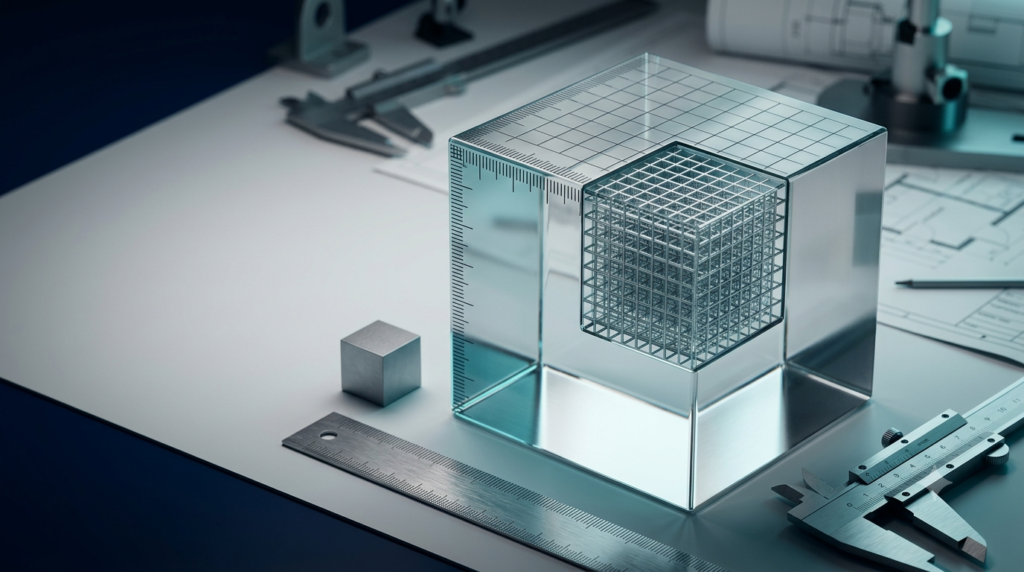
1 m³ = 100 cm × 100 cm × 100 cm
1 m³ = 1,000,000 cm³
This explains why one cubic metre contains one million cubic centimetres.
Remember that a cubic metre and a square metre measure different things. A square metre measures surface area, while a cubic metre measures three-dimensional space.
Example of Volume
Suppose a rectangular water tank is 2 m long, 1.5 m wide, and 1 m high.
The formula for the volume of a cuboid is:
V = l × w × h
Substituting the measurements:
V = 2 × 1.5 × 1
V = 3 m³
The tank has a volume of 3 cubic metres.
To express this volume in litres:
3 × 1,000 = 3,000 litres
Therefore, the tank has a capacity of 3,000 litres if it is filled to its full internal capacity.
In practical situations, the usable capacity may be lower because of wall thickness, internal fittings, or the need to leave some space at the top.
Understanding Capacity and Its Units
Capacity refers to the amount of liquid or other material a container can hold. It is commonly measured in litres and millilitres.
Although capacity and volume are closely related, they are not always used in exactly the same way. Volume describes the space occupied by a substance or object, while capacity generally describes how much a container can hold.
For example, a bottle may have a capacity of 1 litre, while a swimming pool’s capacity may be expressed in cubic metres or thousands of litres.
Common Capacity Units
The two most common metric capacity units are:
Millilitre (mL): Used for small quantities of liquids, such as medicine or cooking ingredients.
Litre (L): Used for beverages, fuel, water, and household liquids.
The main relationship is:
1 L = 1,000 mL
The connection between litres and cubic units is also important:
1 L = 1,000 cm³
1 mL = 1 cm³
1 m³ = 1,000 L
Example of Capacity
Suppose a container holds 2.5 litres of water.
To convert the capacity into millilitres:
2.5 × 1,000 = 2,500 mL
Therefore, the container holds 2,500 millilitres of water.
These conversions are helpful when comparing container sizes or solving mensuration problems involving the capacity of tanks and vessels.
Metric Units Used for Different Geometric Shapes
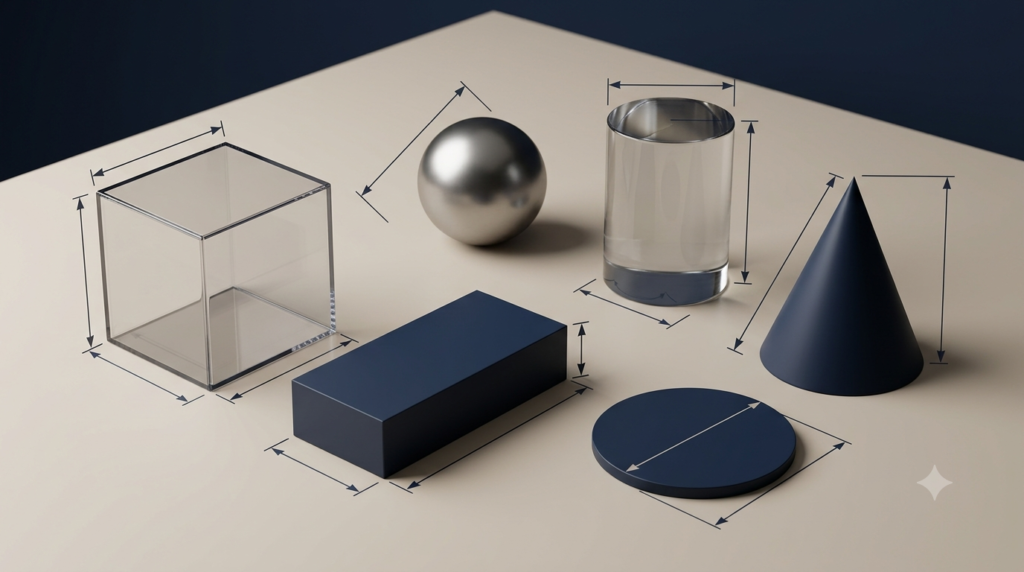
Different geometric shapes require different measurements. Understanding the correct units helps you use mensuration formulas properly.
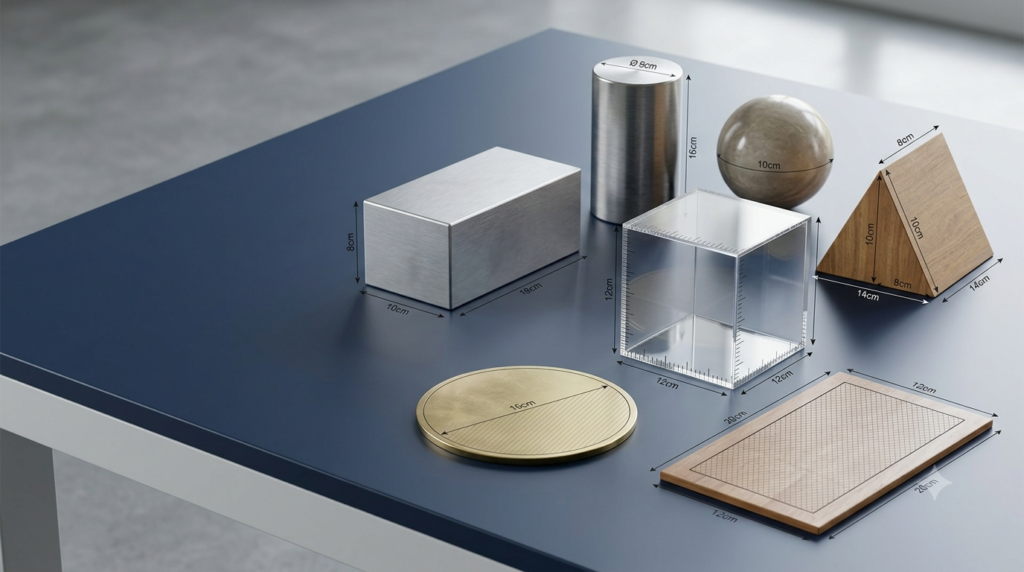
Two-Dimensional Shapes
Two-dimensional shapes have length and width but no measurable thickness in basic geometry.
Examples include squares, rectangles, triangles, circles, and parallelograms.
Their perimeters are expressed in linear units, while their areas are expressed in square units.
For example:
The perimeter of a square may be measured in centimetres.
The area of a square may be measured in square centimetres.
The area of a circular plate may be measured in square centimetres.
The area of a floor may be measured in square metres.
Three-Dimensional Shapes
Three-dimensional shapes have length, width, and height, or other dimensions such as radius and diameter.
Examples include cubes, cuboids, cylinders, cones, spheres, and pyramids.
The surface area of these objects is expressed in square units, while their volume is expressed in cubic units.
For example:
The surface area of a cube may be measured in cm².
The volume of a cube may be measured in cm³.
The volume of a cylindrical tank may be measured in m³.
The capacity of a cylindrical water container may be expressed in litres.
Choosing the correct unit is just as important as selecting the correct formula.
How to Convert Metric Units in Mensuration
Converting units is a basic skill that helps you solve mensuration problems accurately. The key is to identify whether you are converting length, area, or volume.
Converting Length Units
For length conversions, multiply when moving from a larger unit to a smaller unit, and divide when moving from a smaller unit to a larger unit.
For example, convert 4.5 m into centimetres.
Since 1 m = 100 cm:
4.5 × 100 = 450 cm
Therefore, 4.5 metres equals 450 centimetres.
Converting Area Units
For area conversions, square the length conversion factor.
For example, convert 3 m² into cm².
Since 1 m² = 10,000 cm²:
3 × 10,000 = 30,000 cm²
Therefore, 3 square metres equals 30,000 square centimetres.
Converting Volume Units
For volume conversions, cube the length conversion factor.
For example, convert 2 m³ into litres.
Since 1 m³ = 1,000 litres:
2 × 1,000 = 2,000 litres
Therefore, 2 cubic metres equals 2,000 litres.
A Simple Rule to Remember
Length uses one dimension, so use the conversion factor once.
Area uses two dimensions, so square the conversion factor.
Volume uses three dimensions, so cube the conversion factor.
This simple rule prevents many common unit-conversion mistakes.
Common Mistakes to Avoid When Using Metric Units
Beginners often make small mistakes when working with measurements. These errors can affect the final answer even when the formula is correct.
Using Different Units in the Same Calculation
Suppose a rectangle has a length of 2 m and a width of 50 cm. Before calculating its area, convert both measurements to the same unit.
Since 50 cm = 0.5 m:
A = 2 × 0.5
A = 1 m²
Alternatively, convert 2 m to 200 cm and calculate the area in square centimetres.
A = 200 × 50
A = 10,000 cm²
Both methods give the same result when the units are handled correctly.
Confusing Square Units with Cubic Units
Square units measure area, while cubic units measure volume.
For example, m² is appropriate for the area of a floor, whereas m³ is appropriate for the volume of a room.
Using the wrong unit can make an otherwise correct answer misleading.
Forgetting to Convert Every Dimension
When calculating the volume of a cuboid, length, width, and height must be expressed in compatible units.
If one dimension is in centimetres and the other two are in metres, convert the measurements before multiplying them.
Treating Area Conversions Like Length Conversions
A common mistake is assuming that 1 m² equals 100 cm². The correct relationship is 1 m² = 10,000 cm².
Similarly, 1 m³ equals 1,000,000 cm³, not 1,000 cm³.
Remembering the difference between one, two, and three dimensions helps prevent these errors.
Writing the Wrong Unit in the Final Answer
Always include the correct unit after your numerical result.
A perimeter of 20 metres should be written as 20 m, an area of 20 square metres as 20 m², and a volume of 20 cubic metres as 20 m³.
The number alone does not fully describe the measurement.
Practical Applications of Metric Units in Everyday Life
Metric units used in mensuration are not limited to classroom exercises. They are important in many practical activities.
Construction and Architecture
Builders and architects use metres and millimetres to measure walls, doors, windows, and structural components. Square metres are used to estimate flooring, painting, and tiling requirements.
Agriculture and Land Measurement
Farmers use hectares and square metres to measure agricultural land. Understanding area helps with planning crops, irrigation systems, and land use.
Packaging and Storage
Manufacturers use centimetres and millimetres to measure product dimensions. Cubic centimetres and cubic metres help determine the space required for packaging and storage.
Water Management
Litres and cubic metres are used to estimate the capacity of tanks, reservoirs, and swimming pools. These measurements help people plan water storage and consumption.
Interior Design
Interior designers use metres and centimetres to measure furniture and room dimensions. Square metres help estimate the amount of flooring, carpet, wallpaper, or paint needed for a project.
These examples demonstrate why learning metric units is useful beyond mathematics lessons.
Tips for Learning Metric Units Easily
You can improve your understanding of metric units by practising a few simple habits.
Start with familiar objects. Measure a book in centimetres, a room in metres, and a water bottle in millilitres. Real examples make measurements easier to understand.
Memorise the essential conversions. Focus first on the relationships between millimetres, centimetres, metres, kilometres, square metres, cubic metres, and litres.
Always write the unit beside the measurement. This helps you remember what each number represents and makes errors easier to identify.
Convert units before applying formulas. If the measurements use different units, make them consistent before calculating perimeter, area, surface area, or volume.
Practise all three types of measurement. Solve separate problems involving length, area, and volume. Pay special attention to square and cubic conversions.
Check whether the answer makes sense. For example, a room’s floor area is usually expressed in square metres, not cubic metres. A water tank’s capacity is often expressed in litres.
Regular practice will help you recognise the correct unit for each type of measurement.
Conclusion
Metric units are essential for understanding and solving mensuration problems. They provide a consistent way to measure length, perimeter, area, surface area, volume, and capacity. Millimetres, centimetres, and metres are commonly used for length, while square metres and hectares are useful for area. Cubic centimetres, cubic metres, litres, and millilitres help describe volume and capacity.
The most important skill is knowing how these units relate to one another. Length conversions use ordinary conversion factors, area conversions require squared factors, and volume conversions require cubed factors. Keeping units consistent and writing the correct unit in every final answer will make your calculations more reliable.
Once you understand these basic principles, you can apply metric units confidently to geometric problems and everyday situations, from measuring a room to calculating the capacity of a water tank.
FAQs
1. What are metric units in mensuration?
Metric units are standard units used to measure length, perimeter, area, surface area, volume, and capacity. They belong to the metric system, which is based on powers of ten. Common examples include millimetres, centimetres, metres, square metres, cubic metres, litres, and millilitres. These units help us describe the sizes of objects and the amount of space they occupy. In mensuration, choosing the correct metric unit is essential for obtaining accurate answers. For example, the length of a table can be measured in metres, while the area of its top can be expressed in square metres.
2. What is the standard metric unit of length?
The standard SI unit of length is the metre, represented by the symbol m. It is used to measure distances, heights, widths, and lengths of objects. Smaller units, such as centimetres and millimetres, are suitable for measuring small objects, while kilometres are used for longer distances. One metre equals 100 centimetres and 1,000 millimetres. One kilometre equals 1,000 metres. In mensuration, length measurements are used to calculate perimeter, area, surface area, and volume. Before applying a formula, ensure that all measurements are expressed in compatible units to avoid calculation errors.
3. What is the difference between linear, square, and cubic units?
Linear, square, and cubic units represent different types of measurements. Linear units measure length or distance and include millimetres, centimetres, and metres. Square units measure area, which is the surface covered by a two-dimensional shape. Examples include cm² and m². Cubic units measure volume, which describes the three-dimensional space occupied by an object. Examples include cm³ and m³. For instance, the length of a wall may be measured in metres, its surface area in square metres, and the volume of a room in cubic metres. Using the correct type of unit is essential in mensuration.
4. How many centimetres are there in one metre?
One metre contains 100 centimetres. This is an important conversion to remember when solving mensuration problems. To convert metres into centimetres, multiply the measurement by 100. For example, 3 metres equals 300 centimetres, and 2.5 metres equals 250 centimetres. To convert centimetres into metres, divide the measurement by 100. For example, 450 centimetres equals 4.5 metres. These conversions are useful when measuring furniture, rooms, walls, and other objects. Always make sure that measurements are expressed in compatible units before using them in mathematical formulas.
5. How many square centimetres are there in one square metre?
One square metre contains 10,000 square centimetres. This is because one metre equals 100 centimetres, and area involves two dimensions. Therefore, the conversion factor must be squared. A square measuring 1 metre on each side has an area of 1 square metre. When each side is expressed as 100 centimetres, its area becomes 100 × 100 = 10,000 square centimetres. This conversion is useful when calculating the areas of floors, walls, tables, and other surfaces. Remember that 1 m² equals 10,000 cm², not 100 cm².
6. What is the difference between volume and capacity?
Volume refers to the amount of three-dimensional space occupied by an object or substance. Capacity generally describes the amount a container can hold. Volume is commonly measured in cubic units, such as cubic centimetres and cubic metres. Capacity is often expressed in litres and millilitres. These measurements are closely related because one litre equals 1,000 cubic centimetres, and one cubic metre equals 1,000 litres. For example, the internal volume of a water tank can be calculated using mensuration formulas and then converted into litres to estimate its capacity. The actual usable capacity may vary depending on the tank’s design.
7. How do you convert cubic metres into litres?
One cubic metre equals 1,000 litres. Therefore, to convert cubic metres into litres, multiply the volume by 1,000. For example, a container with a volume of 2 cubic metres can hold 2,000 litres when its entire internal volume is usable. Similarly, 0.5 cubic metres equals 500 litres. To convert litres into cubic metres, divide the number of litres by 1,000. This conversion is particularly useful when calculating the capacity of water tanks, swimming pools, and storage containers. Always calculate the volume using consistent length units before converting the result into litres.
8. Why must all measurements use compatible units in mensuration?
All measurements must use compatible units because mensuration formulas involve mathematical operations such as addition, subtraction, and multiplication. Using incompatible units without converting them can produce incorrect results. For example, calculating the area of a rectangle with a length of 2 metres and a width of 50 centimetres requires converting one measurement first. Since 50 centimetres equals 0.5 metres, the area is 2 × 0.5 = 1 m². Alternatively, both measurements can be converted into centimetres. Keeping units consistent makes calculations easier to understand and helps ensure that the final answer includes the correct measurement unit.
9. What metric units are commonly used to measure land area?
Land area is commonly measured in square metres, hectares, and square kilometres. Square metres are useful for small plots, gardens, and residential properties. Hectares are frequently used for agricultural fields and larger areas of land. Square kilometres are suitable for measuring very large regions. One hectare equals 10,000 square metres, while one square kilometre equals 1,000,000 square metres. The appropriate unit depends on the size of the land being measured. Using a suitable unit makes measurements easier to communicate, compare, and calculate. These units are important in agriculture, construction, property planning, and geographical studies.
10. What are the most common mistakes when converting metric units in mensuration?
Common mistakes include confusing metres with square metres, treating area conversions like length conversions, and forgetting to convert all dimensions into compatible units. For example, one metre equals 100 centimetres, but one square metre equals 10,000 square centimetres. Similarly, one cubic metre equals 1,000,000 cubic centimetres. Another frequent error is leaving out the unit in the final answer. To avoid these problems, identify whether the measurement represents length, area, or volume before converting it. Write down the relevant conversion factor, check your calculations, and always include the correct unit with the final numerical result.