How to Write Formulas for Ionic Compounds

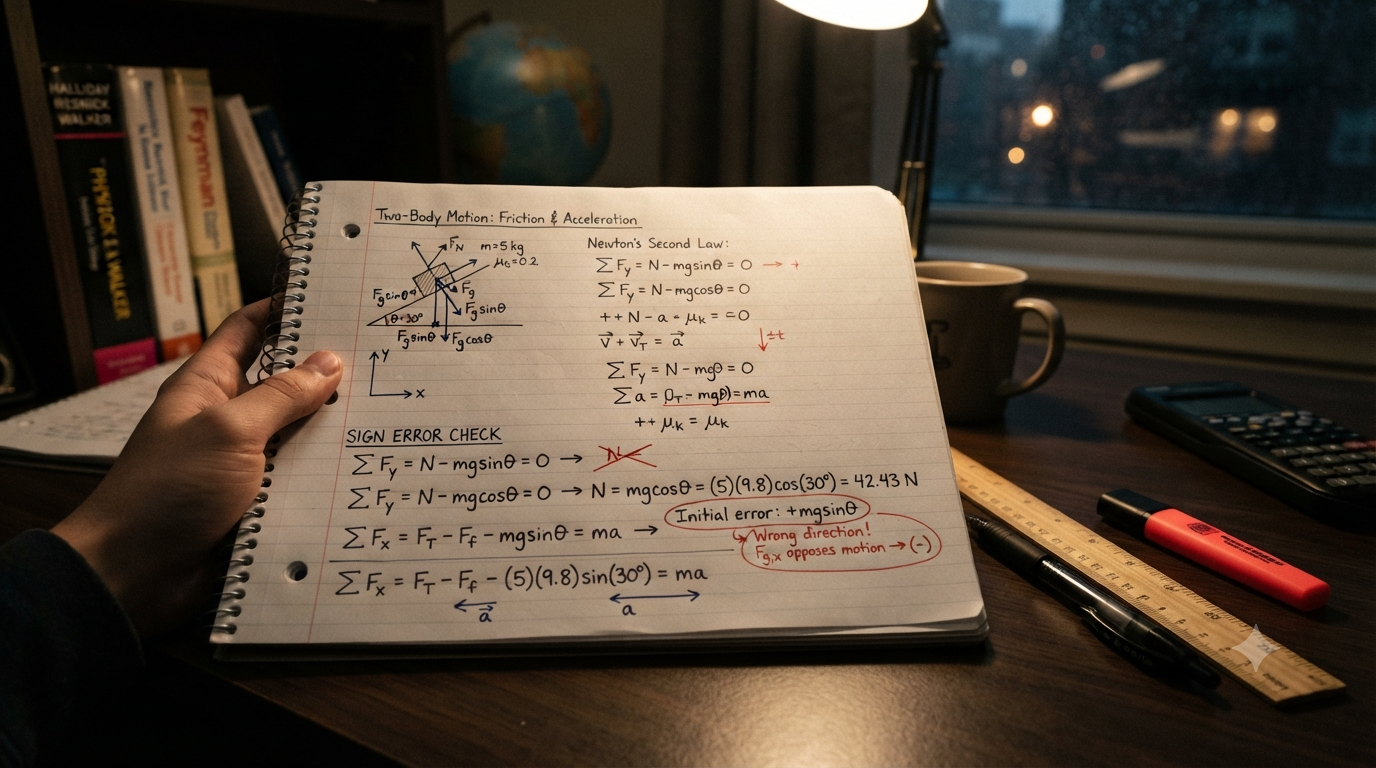
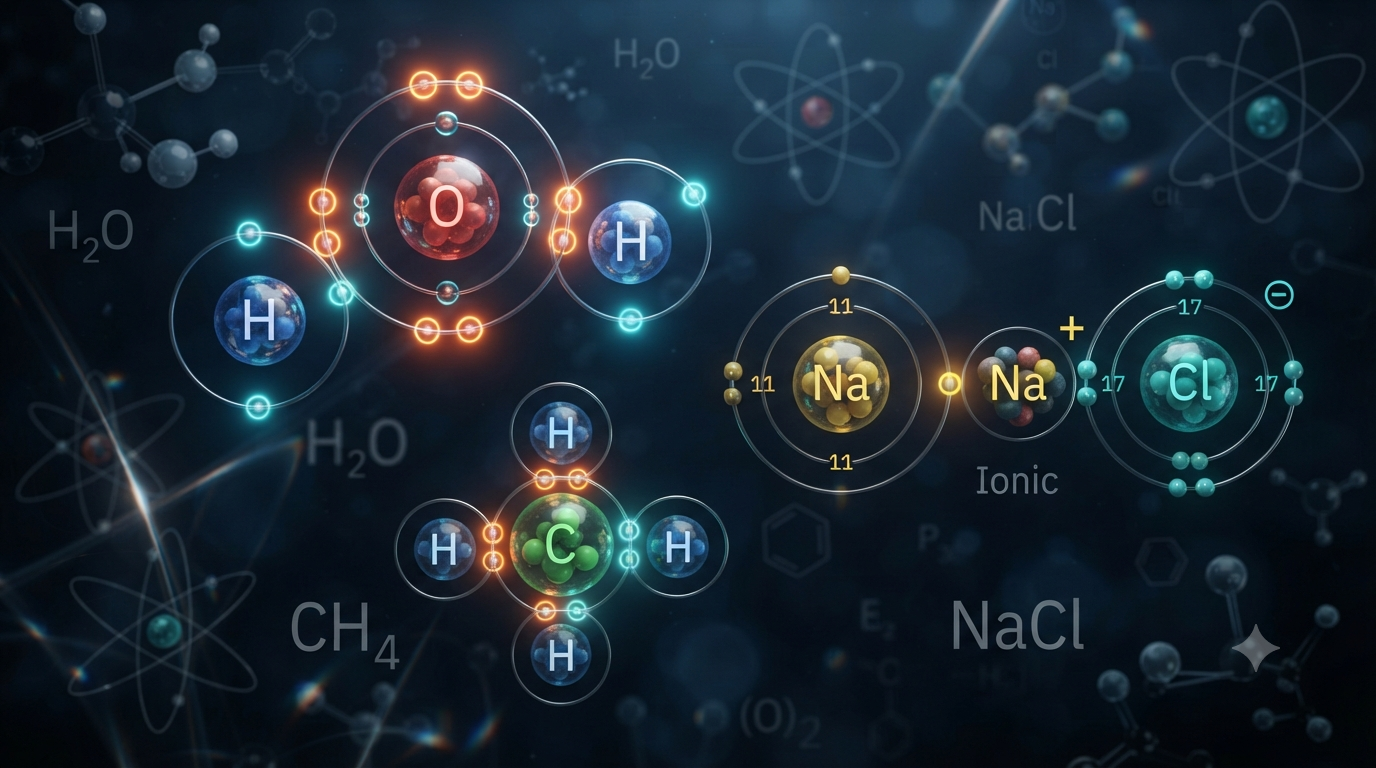
Chemistry study scene showing ionic charges and formulas for common ionic compounds such as NaCl, MgCl₂, CaO, and Al₂O₃

Writing formulas for ionic compounds is an important skill in chemistry because a chemical formula tells us which ions are present in a compound and the ratio in which they combine. Ionic compounds form when positively charged ions, called cations, combine with negatively charged ions, called anions. The overall compound is electrically neutral, so the total positive charge must balance the total negative charge.

Learning how to write ionic formulas becomes much easier when you understand the charges of common ions and follow a consistent method. Instead of memorizing every compound separately, you can use the charges of the ions to determine the correct subscripts in the formula.

What Are Ionic Compounds?

Ionic compounds are substances made of positively and negatively charged ions held together by electrostatic attraction. They commonly form when a metal reacts with a nonmetal.

For example, sodium forms a sodium ion with a +1 charge, written as Na⁺. Chlorine forms a chloride ion with a −1 charge, written as Cl⁻. When these ions combine, one sodium ion balances one chloride ion, giving the formula NaCl.

The formula does not show individual molecules in the same way that many covalent compounds do. Instead, it represents the simplest whole-number ratio of ions in the ionic compound.

Identify the Cation and Anion

The first step in writing an ionic formula is to identify the ions involved.

The positively charged ion is the cation, while the negatively charged ion is the anion. In many simple ionic compounds, the cation is a metal and the anion is a nonmetal.

For example:

  • Sodium chloride contains Na⁺ and Cl⁻.

  • Magnesium oxide contains Mg²⁺ and O²⁻.

  • Calcium fluoride contains Ca²⁺ and F⁻.

  • Aluminum oxide contains Al³⁺ and O²⁻.

When writing the formula, the cation is normally written first, followed by the anion.

Know the Charges of Common Ions

Knowing common ionic charges makes formula writing much easier. Many elements form predictable ions based on their position in the periodic table.

Some common cations include:

  • Group 1 metals: +1

  • Group 2 metals: +2

  • Aluminum: +3

Common anions include:

  • Fluoride: −1

  • Chloride: −1

  • Bromide: −1

  • Iodide: −1

  • Oxide: −2

  • Sulfide: −2

  • Nitride: −3

Some metals, especially transition metals, can form more than one type of ion. For example, iron can form Fe²⁺ and Fe³⁺. Copper can form Cu⁺ and Cu²⁺. In such cases, the charge must be determined from the name of the compound or the information given in the question.

The Main Rule of Charge Balance

The most important rule when writing an ionic formula is that the total charge of the compound must equal zero.

An ionic compound cannot have an overall positive or negative charge. The positive charges from the cations must balance the negative charges from the anions.

For example, magnesium forms Mg²⁺ and chlorine forms Cl⁻. One Mg²⁺ ion has a +2 charge, while one Cl⁻ ion has a −1 charge. Therefore, two chloride ions are needed to balance one magnesium ion.

The formula is:

MgCl₂

The total charge is:

Mg²⁺ + 2Cl⁻ = +2 − 2 = 0

Therefore, MgCl₂ is electrically neutral.

How to Write an Ionic Formula Step by Step

A simple method can be used for most ionic compounds.

Step 1 Identify the Ions

Determine the cation and anion and write their symbols with their charges.

For calcium chloride:

Ca²⁺ and Cl⁻

Step 2 Write the Cation First

The positive ion is written first.

Ca Cl

Step 3 Balance the Charges

Determine how many ions of each type are required to make the total charge zero.

One Ca²⁺ requires two Cl⁻ ions.

Step 4 Write the Subscripts

The number of each ion is shown using a subscript.

CaCl₂

The subscript 2 applies only to chlorine. It means there are two chloride ions for every calcium ion.

Step 5 Check the Total Charge

Always check whether the charges balance.

Ca²⁺ + 2Cl⁻ = 0

The formula is therefore correct.

Using the Criss-Cross Method

A commonly taught shortcut for writing ionic formulas is the criss-cross method. In this method, the numerical values of the charges are moved across and used as subscripts.

Consider aluminum oxide.

Al³⁺ and O²⁻

The charge numbers are 3 and 2. Criss-crossing them gives:

Al₂O₃

This means two aluminum ions combine with three oxide ions.

The total charge is:

2(+3) + 3(−2) = +6 − 6 = 0

Although the criss-cross method is convenient, it is important to understand that its purpose is charge balance. You should always check the final formula rather than applying the shortcut mechanically.

Reduce Subscripts When Necessary

After balancing charges, the subscripts should represent the simplest whole-number ratio of ions.

For example, calcium oxide contains Ca²⁺ and O²⁻. Criss-crossing the charge numbers might initially suggest Ca₂O₂. However, both subscripts can be divided by 2.

The simplest formula is:

CaO

One Ca²⁺ balances one O²⁻.

This is why checking and simplifying the formula is an important step.

Writing Formulas With Polyatomic Ions

Some ionic compounds contain polyatomic ions. A polyatomic ion is a group of atoms that carries an overall charge and behaves as a unit.

Common examples include:

  • Hydroxide: OH⁻

  • Nitrate: NO₃⁻

  • Sulfate: SO₄²⁻

  • Carbonate: CO₃²⁻

  • Phosphate: PO₄³⁻

  • Ammonium: NH₄⁺

When more than one polyatomic ion is needed, parentheses are used around the entire ion.

For example, calcium nitrate contains Ca²⁺ and NO₃⁻. Two nitrate ions are needed to balance one calcium ion.

The formula is:

Ca(NO₃)₂

The parentheses show that the subscript 2 applies to the entire nitrate ion.

Ionic Compounds With Transition Metals

Transition metals can have different charges, so their formulas require extra attention.

Consider iron chloride. Iron can form Fe²⁺ or Fe³⁺.

If the compound is iron(II) chloride, the ions are Fe²⁺ and Cl⁻. The formula is:

FeCl₂

If the compound is iron(III) chloride, the ions are Fe³⁺ and Cl⁻. The formula is:

FeCl₃

The Roman numeral in the name tells you the charge of the metal ion.

Common Mistakes to Avoid

Several mistakes can occur when writing ionic formulas.

One common mistake is forgetting to balance the charges. Simply writing the symbols of the elements is not enough.

Another mistake is changing the subscripts of the ions themselves. For example, the chloride ion is Cl⁻, not Cl₂⁻. Subscripts should be added to indicate how many ions are present, not to change the identity of an ion.

A third mistake is forgetting parentheses when multiple polyatomic ions are required. For example, aluminum sulfate is Al₂(SO₄)₃, not Al₂SO₄₃.

It is also important not to write unnecessary subscripts. If the charges are equal in magnitude, the simplest ratio may be 1:1, as in MgO or CaO.

Examples of Ionic Formula Writing

Here are a few examples using the charge-balance method.

Sodium Oxide

Sodium is Na⁺ and oxide is O²⁻. Two sodium ions are required for one oxide ion.

Formula: Na₂O

Magnesium Bromide

Magnesium is Mg²⁺ and bromide is Br⁻. Two bromide ions are required.

Formula: MgBr₂

Aluminum Sulfide

Aluminum is Al³⁺ and sulfide is S²⁻. Two aluminum ions and three sulfide ions balance the charges.

Formula: Al₂S₃

Potassium Sulfate

Potassium is K⁺ and sulfate is SO₄²⁻. Two potassium ions are required for one sulfate ion.

Formula: K₂SO₄

Aluminum Hydroxide

Aluminum is Al³⁺ and hydroxide is OH⁻. Three hydroxide ions are required.

Formula: Al(OH)₃

A Simple Way to Remember the Process

When writing an ionic formula, remember this sequence:

Identify → Write charges → Balance → Add subscripts → Simplify → Check

First identify the cation and anion. Then determine their charges. Balance the positive and negative charges using the smallest possible whole-number ratio. Add the appropriate subscripts, use parentheses when necessary for multiple polyatomic ions, simplify the ratio if possible, and finally check that the total charge is zero.

Conclusion

Writing formulas for ionic compounds is mainly a matter of understanding ions and balancing their charges. The cation is written first, the anion second, and subscripts are used to show the simplest ratio needed to produce an electrically neutral compound. Once common ionic charges and polyatomic ions become familiar, formula writing becomes much more straightforward. The criss-cross method can provide a useful shortcut, but understanding charge balance is more important than memorizing the shortcut. By identifying the ions, balancing their charges, simplifying the subscripts, and checking the final result, you can reliably write formulas for a wide range of ionic compounds.

FAQs

1. What is an ionic compound?

An ionic compound is a substance made from positively charged ions called cations and negatively charged ions called anions. These ions are held together by electrostatic attraction. Ionic compounds commonly form when metals react with nonmetals. For example, sodium chloride contains sodium ions (Na⁺) and chloride ions (Cl⁻). The ions combine in a ratio that makes the overall compound electrically neutral. The chemical formula shows the simplest whole-number ratio of the ions present. Understanding ionic charges is important because the formula must always have equal total positive and negative charges. Examples of ionic compounds include NaCl, MgO, CaCl₂, and Al₂O₃.

2. How do you write the formula of an ionic compound?

To write an ionic formula, first identify the cation and anion and determine their charges. Write the cation first and the anion second. Then balance the charges so that the total positive charge equals the total negative charge. Use subscripts to show how many ions are needed. For example, magnesium has a +2 charge and chloride has a −1 charge. Therefore, two chloride ions are needed for every magnesium ion, giving MgCl₂. Finally, check that the charges balance and that the subscripts represent the simplest whole-number ratio. This method works for many common ionic compounds.

3. Why must ionic compound formulas have balanced charges?

Ionic compound formulas must have balanced charges because an ionic compound is electrically neutral overall. Although individual ions carry positive or negative charges, the combination of ions in a compound must have a total charge of zero. For example, magnesium forms Mg²⁺ while chlorine forms Cl⁻. One magnesium ion has a +2 charge, so two chloride ions with −1 charges are required. The resulting formula is MgCl₂. Its total charge is +2 + (2 × −1) = 0. Balancing charges ensures that the formula represents a stable neutral ionic compound with the correct ratio of its constituent ions.

4. What is the criss-cross method for ionic formulas?

The criss-cross method is a shortcut used to determine subscripts when writing formulas for ionic compounds. First, write the ions with their charges. Then move the numerical value of each charge to the opposite ion as its subscript, ignoring the charge signs. For example, aluminum oxide contains Al³⁺ and O²⁻. Criss-crossing the numbers gives Al₂O₃. The formula can then be checked by calculating the total charge: two Al³⁺ ions give +6, while three O²⁻ ions give −6. Because the charges balance, Al₂O₃ is correct. However, understanding charge balance is more important than simply memorizing this shortcut.

5. What happens when the ionic charges are the same?

When the positive and negative ions have charges with equal numerical values, they usually combine in a one-to-one ratio. For example, magnesium forms Mg²⁺ and oxygen forms O²⁻. One magnesium ion provides a +2 charge, while one oxide ion provides a −2 charge. The charges cancel, so the formula is MgO. It would be incorrect to write Mg₂O₂ because ionic formulas are written using the simplest whole-number ratio. Similarly, calcium oxide is CaO because Ca²⁺ and O²⁻ balance in a 1:1 ratio. Always simplify the subscripts when the same factor can be removed from both.

6. How are polyatomic ions used in ionic formulas?

Polyatomic ions are groups of atoms that carry an overall charge and act as a single ion in an ionic compound. Common examples include hydroxide (OH⁻), nitrate (NO₃⁻), sulfate (SO₄²⁻), and carbonate (CO₃²⁻). When more than one polyatomic ion is required, parentheses are used. For example, calcium nitrate contains Ca²⁺ and NO₃⁻. Two nitrate ions are needed to balance one calcium ion, so the formula is Ca(NO₃)₂. The parentheses show that the subscript 2 applies to the entire nitrate ion. If only one polyatomic ion is needed, parentheses are generally unnecessary.

7. Why are parentheses used in formulas such as Ca(OH)₂?

Parentheses are used when more than one copy of a polyatomic ion is present in an ionic compound. In Ca(OH)₂, calcium is Ca²⁺ and hydroxide is OH⁻. Two hydroxide ions are required to balance the +2 charge of one calcium ion. The parentheses make it clear that the subscript 2 applies to both oxygen and hydrogen within the hydroxide ion. Without parentheses, CaOH₂ could incorrectly suggest that only hydrogen has a subscript of 2. Therefore, parentheses help accurately show the number of complete polyatomic ions present in the compound and prevent confusion when reading its chemical formula.

8. How do you write formulas for ionic compounds with transition metals?

Transition metals can form ions with different charges, so their charge must be identified before writing the formula. The Roman numeral in the compound’s name usually indicates the charge of the transition metal. For example, iron(II) chloride contains Fe²⁺ and Cl⁻. Two chloride ions are needed, giving FeCl₂. Iron(III) chloride contains Fe³⁺ and Cl⁻, so its formula is FeCl₃. The difference between these formulas comes from the different charges of the iron ions. When writing formulas involving transition metals, carefully identify the metal’s charge, balance it with the anion, and check that the final compound is neutral.

9. What are common mistakes when writing ionic formulas?

Common mistakes include failing to balance charges, reversing the order of ions, using incorrect subscripts, and forgetting parentheses around polyatomic ions. Another mistake is changing the chemical symbol of an ion instead of using a subscript to indicate the number of ions. For example, magnesium chloride is MgCl₂, not Mg₂Cl. Students may also forget to simplify formulas such as Ca₂O₂ to CaO. When transition metals are involved, using the wrong ionic charge can produce an incorrect formula. A good habit is to identify both charges, write the correct ion symbols, balance the charges, simplify the ratio, and check the final formula.

10. What is the easiest way to remember how to write ionic formulas?

A useful way to remember the process is to follow six steps: identify, write, balance, add, simplify, and check. First identify the cation and anion. Next write their symbols and charges. Balance the positive and negative charges so that the total is zero. Add subscripts to show the required number of each ion. Simplify the subscripts to the smallest whole-number ratio, and finally check the total charge. For example, Al³⁺ and O²⁻ require two aluminum ions and three oxide ions, giving Al₂O₃. With regular practice, this step-by-step process makes ionic formula writing much easier.

Related Posts

Leave a Comment

Your email address will not be published. Required fields are marked *

Scroll to Top