
Why Can Experimental Results Differ From Theoretical Values?
In science, theoretical values and experimental results are expected to agree closely. After all, theories are developed to explain observations
Science is a broad field that helps us understand the natural world through observation, experiments, evidence, and logical reasoning. This category covers essential areas of science, including Physics, Chemistry, Biology, Earth Science, Space Science, Environmental Science, and related scientific concepts. Readers can explore scientific principles, important discoveries, real-world applications, experiments, technologies, and explanations of how things work. The content is designed to make complex topics easier to understand for students, learners, and curious readers. Whether you are learning basic science concepts or exploring advanced ideas, the Science category provides clear and educational resources for building scientific knowledge.
In science, theoretical values and experimental results are expected to agree closely. After all, theories are developed to explain observations

Physics is often described as the science of discovering the rules that govern nature. These rules are expressed as physical

Motion is one of the most important ideas in physics. We see motion everywhere around us. A car travels along
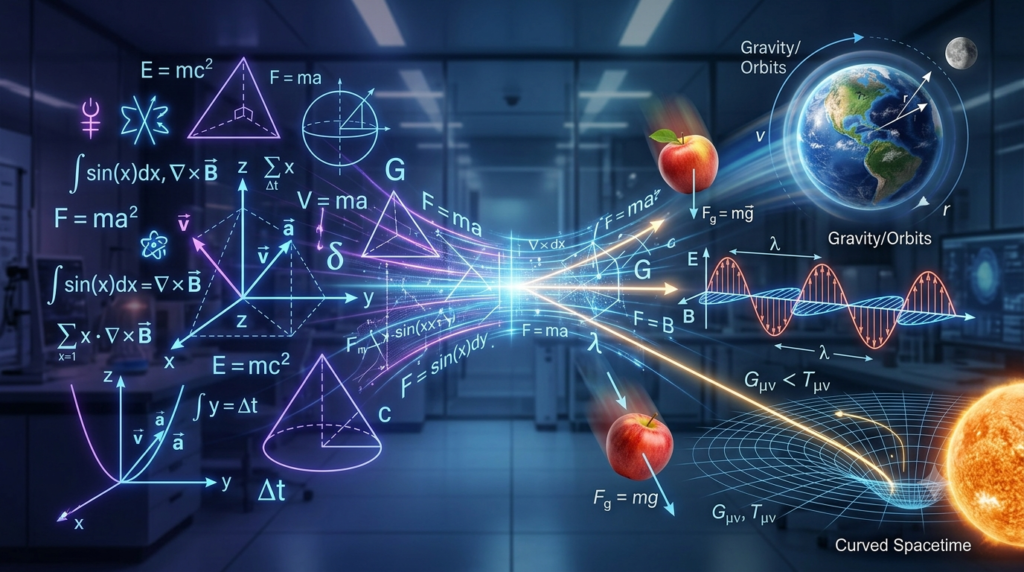
Physics is often described as the science of matter, energy, motion, space, and time. But behind almost every physical idea

Physics problems often look simple at first. You may be given a few values, asked to find an unknown quantity,

A formula can look simple on paper, but how do physicists know that it actually describes nature? After all, anyone
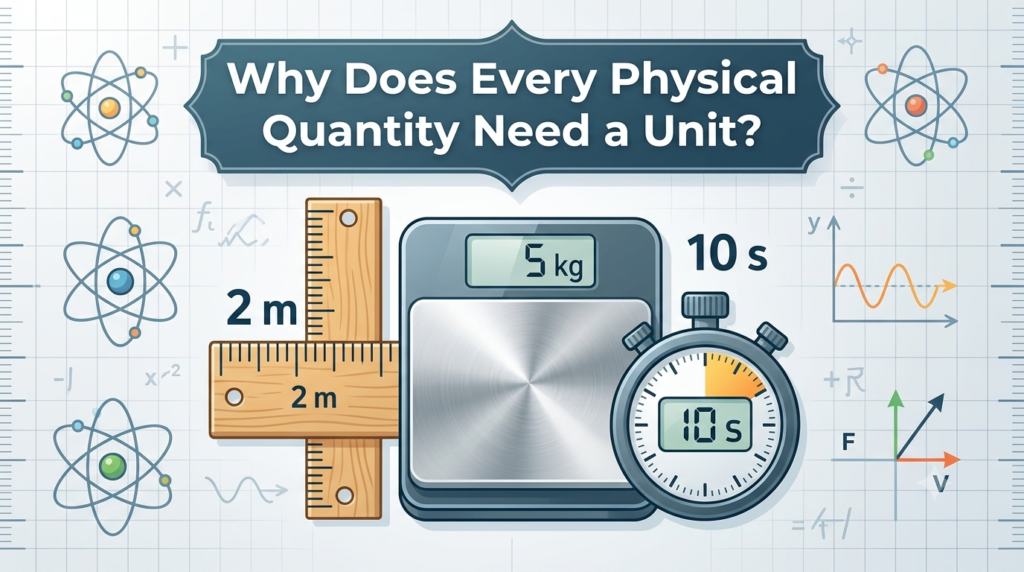
Imagine someone tells you that a table is “2” long. Does that tell you how long the table actually is?