Significant Figures Calculator
Count significant figures and round numbers accurately.
Calculation Details
Significant Figures Rules
- Non-zero digits: All non-zero digits are significant. Example: 347 has 3 significant figures.
- Leading zeros: Zeros before the first non-zero digit are not significant. Example: 0.0045 has 2 significant figures.
- Captive zeros: Zeros between non-zero digits are significant. Example: 1002 has 4 significant figures.
- Trailing decimal zeros: Zeros after a decimal point and following a non-zero digit are significant. Example: 2.300 has 4 significant figures.
- Trailing zeros in whole numbers: Without a decimal point or other notation, their significance may be ambiguous. This calculator treats them as non-significant. Use scientific notation to specify precision: 1.20 × 10³ has 3 significant figures.
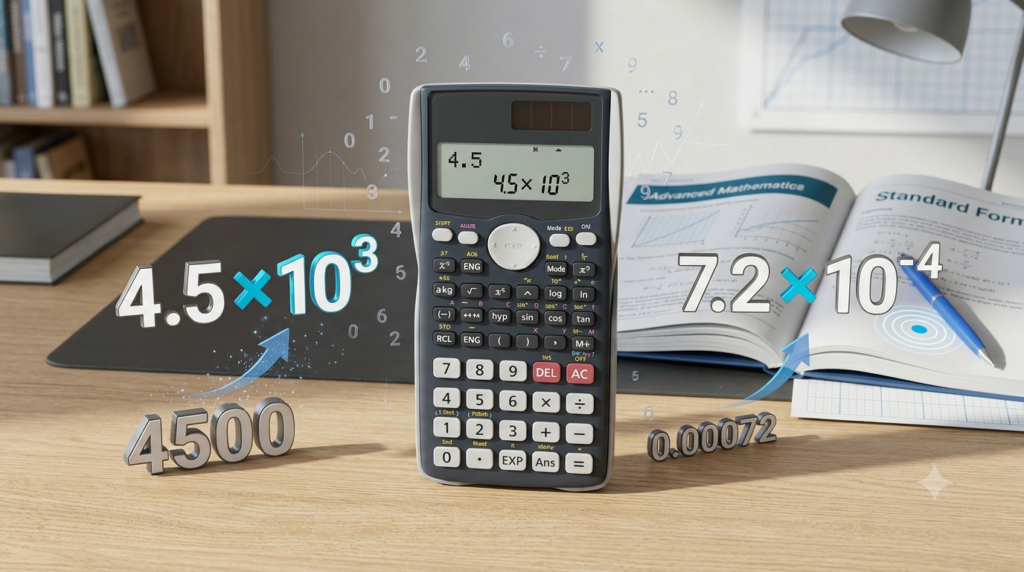
- Scientific notation: Only the digits in the coefficient determine the significant figure count. Example: 4.50 × 10⁵ has 3 significant figures.
A Significant Figures Calculator is a useful online tool that helps you count significant figures in a number and round values to a specified number of significant figures. Significant figures are important in mathematics, physics, chemistry, engineering, and other scientific fields because they indicate the precision of a measured or calculated value. Using the correct number of significant figures helps you present numerical results clearly and avoid suggesting more precision than your measurements support.
When working with decimal numbers, measurements, scientific notation, or laboratory calculations, counting significant figures manually can sometimes be confusing. Zeros are a common source of mistakes because their significance depends on their position in a number. A Significant Figures Calculator makes this process easier by providing a quick way to determine the number of significant figures and round a value when needed.
This guide explains what a Significant Figures Calculator is, how to use it, the rules for counting significant figures, and how rounding works. It also covers practical examples to help students, teachers, researchers, and anyone working with scientific calculations understand the concept.
What Is a Significant Figures Calculator?
A Significant Figures Calculator is an online calculator designed to identify the significant digits in a number. It can determine how many significant figures a number contains and round that number to a selected number of significant figures.
For example, consider the number 0.004560. The zeros before the digit 4 are leading zeros and are not significant. However, the final zero after the digit 6 is significant because it appears after the decimal point and indicates the precision of the number.
Therefore, 0.004560 contains four significant figures: 4, 5, 6, and the final 0.
A calculator can also help round a number such as 8.764 to three significant figures. The result is 8.76 because the next digit is 4, which does not require the last retained digit to increase.
The primary purpose of this tool is to simplify the process of counting and rounding significant figures. It is particularly useful when working with scientific measurements, experimental results, formulas, and numerical data.
How to Use the Significant Figures Calculator
Using a Significant Figures Calculator is straightforward. You only need to enter a number and choose the number of significant figures to which you want to round it.
Follow these steps to use the calculator effectively.
Step 1: Enter the Number
Enter the number you want to analyze in the input field. You can use whole numbers, decimal numbers, or numbers written in scientific notation.
Examples include:
245.6
0.00340
1250
4.56e3
Make sure that the number is entered correctly before calculating the result.
Step 2: Select the Desired Precision
Choose the number of significant figures for rounding. For example, you can select one, two, three, four, or more significant figures, depending on your requirements.
If you only want to count the significant figures without rounding the number, select the option to leave the original number unchanged.
Step 3: Calculate the Result
Click the Calculate Significant Figures button. The calculator analyzes the entered number and displays the significant figure count.
It also displays the original number and the rounded result when a rounding option is selected.
Step 4: Review the Result
Check the displayed result to understand how many significant figures the original number contains and how rounding changes its precision.
The calculator may also provide a short explanation of the counting rules used.
Step 5: Copy the Result
If you need the result for an assignment, laboratory report, calculation, or other document, use the copy option when available.
Always check whether the rounded value is appropriate for your particular measurement or calculation.
What Are Significant Figures?
Significant figures, also called significant digits, are the digits in a number that contribute to its stated precision. They include meaningful digits and certain zeros that indicate the precision of a value.
For example, the number 356 has three significant figures. Each digit contributes to the value of the number.
Similarly, 7.42 contains three significant figures, while 0.00742 also contains three significant figures. The leading zeros in 0.00742 only indicate the position of the decimal point; they do not increase the number of significant figures.
Significant figures are especially important when recording measurements. Every measurement has a certain level of precision, and the number of significant figures helps communicate that precision.
For example, measuring a length as 12.4 cm indicates a different level of recorded precision from measuring it as 12.40 cm. Although both values represent the same numerical quantity, the second value communicates an additional decimal place in the recorded measurement.
However, significant figures alone do not provide a complete description of measurement uncertainty. The accuracy and uncertainty of a measurement also depend on the measuring instrument, experimental method, and other factors.
Rules for Counting Significant Figures
Understanding the rules for significant figures helps you verify calculator results and solve scientific problems correctly.
1. All Non-Zero Digits Are Significant
Every non-zero digit in a number is significant.
Examples:
35 contains 2 significant figures.
482 contains 3 significant figures.
7.36 contains 3 significant figures.
126.45 contains 5 significant figures.
This is the simplest rule because every digit from 1 to 9 contributes to the significant figure count.
2. Leading Zeros Are Not Significant
Leading zeros are zeros that appear before the first non-zero digit. They are used to position the decimal point but are not counted as significant figures.
Examples:
0.5 contains 1 significant figure.
0.0072 contains 2 significant figures.
0.00450 contains 3 significant figures.
0.00083 contains 2 significant figures.
In the number 0.00450, the zeros before 4 are leading zeros. The digits 4 and 5 and the final zero are significant.
3. Zeros Between Non-Zero Digits Are Significant
Zeros located between non-zero digits are called captive zeros. They are always significant in a stated numerical value.
Examples:
101 contains 3 significant figures.
1005 contains 4 significant figures.
3.04 contains 3 significant figures.
20.07 contains 4 significant figures.
In 1005, both zeros are significant because they occur between the non-zero digits 1 and 5.
4. Trailing Zeros After a Decimal Point Are Significant
Trailing zeros are zeros that appear at the end of a number. When they follow a non-zero digit in a decimal number, they are significant.
Examples:
2.50 contains 3 significant figures.
4.700 contains 4 significant figures.
0.0800 contains 3 significant figures.
12.000 contains 5 significant figures.
The number 4.700 contains four significant figures because the zeros after 7 communicate the precision represented by the written value.
5. Trailing Zeros in Whole Numbers Can Be Ambiguous
Trailing zeros in whole numbers written without a decimal point can be difficult to interpret.
For example, the number 1500 might represent two, three, or four significant figures, depending on the precision intended by the person who recorded it.
The written number alone does not always provide enough information to determine the intended precision.
Scientific notation can remove this ambiguity:
1.5 × 10³ contains 2 significant figures.
1.50 × 10³ contains 3 significant figures.
1.500 × 10³ contains 4 significant figures.
The digits in the coefficient determine the significant figure count.
For this reason, a calculator may apply a default convention when interpreting whole numbers that end in zeros. Always check the convention used by the tool.
6. Digits in Scientific Notation
Scientific notation expresses a number as a coefficient multiplied by a power of ten. It is commonly used for very large or very small numbers.
For example:
4.56 × 10⁶
The coefficient is 4.56, which contains three significant figures. The exponent does not affect the significant figure count.
Other examples include:
3.2 × 10⁴ contains 2 significant figures.
6.020 × 10²³ contains 4 significant figures.
1.005 × 10⁻³ contains 4 significant figures.
9.80 × 10⁻⁶ contains 3 significant figures.
Scientific notation is particularly helpful when a number contains many leading or trailing zeros.
How to Round Numbers to Significant Figures
Rounding significant figures means reducing the number of meaningful digits while preserving an appropriate approximation of the original value.
The process involves identifying the last digit you want to keep and examining the digit immediately after it.
Step 1: Identify the Required Number of Significant Figures
Suppose you want to round 7.846 to three significant figures.
The first three significant digits are 7, 8, and 4.
Step 2: Examine the Next Digit
The next digit is 6. Under the usual rounding rule, if the next digit is 5 or greater, increase the last retained digit by one.
Step 3: Adjust the Number
Increasing the retained digit 4 to 5 gives the rounded result:
7.846 → 7.85
Therefore, 7.846 rounded to three significant figures is 7.85.
Consider another example:
12.342 rounded to four significant figures is 12.34 because the next digit is 2, which is less than 5.
Rounding Examples
| Original number | Required significant figures | Rounded result |
|---|---|---|
| 8.764 | 3 | 8.76 |
| 7.846 | 3 | 7.85 |
| 45.678 | 4 | 45.68 |
| 0.006783 | 3 | 0.00678 |
| 12345 | 3 | 1.23 × 10⁴ |
| 9.995 | 3 | 10.0 |
The final example illustrates how rounding can change the place value of a number. Writing 10.0 communicates three significant figures, whereas writing 10 without additional context may be ambiguous.
Different scientific contexts may use specific rounding conventions, particularly when the discarded digit is exactly 5. If your school, laboratory, or institution specifies a particular convention, follow that guidance.
Significant Figures in Mathematical Calculations
Significant figures are important not only when recording measurements but also when performing calculations.
Different mathematical operations use different rules for determining the appropriate precision of the final result.
Significant Figures in Multiplication
For multiplication, the result is generally rounded to the same number of significant figures as the measured value with the fewest significant figures.
Example:
2.5 × 3.42 = 8.55
The number 2.5 has two significant figures, while 3.42 has three.
Therefore, the final result should generally be reported to two significant figures:
8.6
This rule helps prevent a calculated result from appearing more precise than the least precise input measurement.
Significant Figures in Division
Division follows the same general rule as multiplication. The answer should usually contain the same number of significant figures as the value with the fewest significant figures.
Example:
15.0 ÷ 4.0 = 3.75
The number 15.0 has three significant figures, while 4.0 has two.
The result rounded to two significant figures is:
3.8
Significant Figures in Addition
Addition uses decimal-place precision rather than the total number of significant figures.
Example:
12.35 + 1.2 = 13.55
The first number has two decimal places, while the second has one decimal place.
Therefore, the answer is rounded to one decimal place:
13.6
Significant Figures in Subtraction
Subtraction follows the same decimal-place rule as addition.
Example:
18.76 − 2.1 = 16.66
Because 2.1 has one decimal place, the final answer should generally be reported to one decimal place:
16.7
These rules are useful when solving chemistry problems, calculating physical quantities, and analyzing experimental measurements. In more complex calculations, it is generally best to retain additional digits during intermediate steps and round the final answer appropriately to reduce rounding errors.
Why Use an Online Significant Figures Calculator?
An online Significant Figures Calculator provides several benefits for students, teachers, and professionals.
Saves Time
Counting significant figures manually can become tedious when working with long decimal numbers or repeated calculations. A calculator makes the process quicker and more convenient.
Reduces Counting Errors
Zeros can be confusing, especially in decimal numbers and scientific notation. An online tool helps apply consistent counting rules and reduces the likelihood of simple mistakes.
Makes Rounding Easier
Rounding a number to a specified precision requires careful attention to the next digit. A calculator can quickly produce a rounded result for a selected number of significant figures.
Supports Science and Mathematics Learning
Students can use the calculator to check their work while learning significant figure rules. Comparing the results with manual calculations can help them understand why certain zeros count and others do not.
Useful for Laboratory Reports
Laboratory experiments often involve measured quantities that must be reported with suitable precision. A significant figures calculator can help students and researchers prepare numerical results for laboratory records and reports.
Handles Scientific Notation
Scientific notation is commonly used for extremely large and extremely small quantities. A calculator that supports scientific notation makes it easier to analyze numbers without manually expanding powers of ten.
Common Mistakes When Counting Significant Figures
Even though the basic rules are straightforward, several mistakes occur frequently.
Counting every zero as significant: Not all zeros contribute to significant figures. Leading zeros generally do not count, while captive zeros and certain trailing zeros do.
Ignoring the decimal point: The position of the decimal point helps determine whether trailing zeros communicate precision. For example, 3.400 contains four significant figures.
Assuming every whole number has an exact precision: A number such as 2500 is ambiguous when its intended precision is not stated. Scientific notation provides a clearer representation.
Rounding too early: Rounding intermediate results repeatedly can introduce unnecessary errors. Retaining extra digits until the final step is generally preferable.
Confusing decimal places with significant figures: Decimal places count digits after the decimal point, while significant figures count meaningful digits beginning with the first non-zero digit, subject to the rules for zeros.
For example, 0.00456 has three significant figures but five decimal places.
Reporting too many digits: A calculator may display many digits, but that does not mean all of them are justified by the original measurements. The precision of the inputs should guide how the result is reported.
Practical Applications of Significant Figures
Significant figures are used in many fields where numerical values represent measurements or calculated quantities.
Chemistry
Chemistry students use significant figures when measuring mass, volume, temperature, and concentration. They are especially important in stoichiometry, solution preparation, and laboratory experiments.
Physics
Physics calculations frequently involve quantities such as distance, time, velocity, acceleration, force, and energy. Significant figures help ensure that calculated answers reflect the precision of the measured values.
Biology
Biological research involves measurements of cell size, growth rates, sample volumes, and other quantities. Appropriate numerical precision supports clear reporting of experimental findings.
Engineering
Engineers use measurements and calculations to design structures, machines, electrical systems, and other technical products. Consistent numerical precision helps communicate measurement limitations and calculation results.
Education
Teachers and students use significant figures to develop good measurement practices and improve scientific problem-solving skills. A calculator can support classroom exercises, homework, and examination preparation.
Research and Data Analysis
Researchers frequently process experimental data, compare measurements, and calculate derived quantities. Understanding significant figures helps them communicate results appropriately, although formal uncertainty analysis may be needed for more rigorous scientific work.
Significant Figures Calculator vs. Manual Calculation
Both manual calculation and an online calculator can be useful, depending on the task.
Manual calculation helps develop a deeper understanding of significant figure rules. It allows students to identify leading zeros, captive zeros, trailing zeros, and rounding positions themselves.
An online calculator is more convenient when processing multiple numbers or checking answers quickly. It can also reduce repetitive work and provide immediate results.
However, a calculator cannot always determine the intended precision of an ambiguously written number. For example, the number 5000 does not clearly indicate whether it has one, two, three, or four significant figures. Additional information is needed.
The best approach is to understand the rules and use the calculator as a supporting tool rather than relying on it without checking the meaning of the original values.
Tips for Getting Accurate Results
To use a Significant Figures Calculator effectively, follow a few simple practices.
Enter the number carefully, including its decimal point and scientific notation when applicable.
Use scientific notation when you need to communicate the intended precision of a number with trailing zeros.
Check the rounding option before calculating.
Understand the counting convention used for whole numbers ending in zeros.
Keep extra digits during intermediate calculations when appropriate.
Apply the correct operation-specific rule for addition, subtraction, multiplication, and division.
Follow any rounding and precision requirements specified by your teacher, laboratory, or organization.
Remember that significant figures communicate precision but do not replace a complete uncertainty analysis.
These practices will help you interpret calculator results and report numerical values more confidently.
Conclusion
A Significant Figures Calculator is a practical tool for counting significant digits and rounding numerical values to a specified precision. It simplifies common tasks involving decimal numbers, whole numbers, and scientific notation while helping users check their calculations.
Understanding the rules for leading zeros, captive zeros, trailing zeros, and rounding is essential for using the calculator correctly. It is equally important to recognize that whole numbers ending in zeros may have ambiguous precision unless additional notation is provided.
Whether you are studying mathematics, performing chemistry experiments, solving physics problems, or preparing laboratory reports, significant figures help you communicate numerical results more appropriately. By combining an understanding of the basic rules with an online Significant Figures Calculator, you can save time, reduce common counting errors, and improve the clarity of your scientific calculations.
FAQs
1. What is a Significant Figures Calculator?
A Significant Figures Calculator is an online tool that counts the significant digits in a number and helps round it to a specified number of significant figures. It is useful for checking numerical precision in mathematics, physics, chemistry, and other scientific subjects. You can enter whole numbers, decimal numbers, or values written in scientific notation, depending on the calculator’s supported formats. The tool provides a quick result without requiring you to count each digit manually. It is particularly helpful for students, teachers, researchers, and anyone who regularly works with measurements or scientific calculations.
2. How do you calculate significant figures in a number?
To calculate significant figures manually, identify the first non-zero digit and count the meaningful digits that follow it. All non-zero digits are significant, and zeros between non-zero digits are also significant. Leading zeros are not significant because they only indicate the position of the decimal point. Trailing zeros after a decimal point are significant when they indicate the precision of the written value. For example, 0.00450 contains three significant figures: 4, 5, and the final zero. A calculator can apply these rules automatically and provide the significant figure count quickly.
3. Are zeros counted as significant figures?
Zeros can be significant or non-significant depending on their position. Leading zeros, such as those in 0.0034, are not significant because they only locate the decimal point. Zeros between non-zero digits are significant, as demonstrated by 1005, which contains four significant figures. Trailing zeros after a decimal point can also be significant. For example, 2.500 contains four significant figures. However, trailing zeros in whole numbers such as 2500 may be ambiguous without additional information. Scientific notation is a useful way to communicate the intended precision of such numbers clearly.
4. How many significant figures does 0.004560 have?
The number 0.004560 contains four significant figures. The zeros before the digit 4 are leading zeros and do not count as significant figures. The digits 4, 5, and 6 are significant because they represent the measured value. The final zero is also significant because it follows a non-zero digit after the decimal point and communicates the precision of the written number. Therefore, the significant figures are 4, 5, 6, and 0. A Significant Figures Calculator can identify these digits automatically and help you check similar decimal numbers accurately.
5. How do you round a number to three significant figures?
To round a number to three significant figures, identify the first three significant digits and examine the next digit. If the next digit is 5 or greater, increase the third retained digit by one. If it is less than 5, leave the third digit unchanged. For example, 7.846 rounded to three significant figures becomes 7.85 because the next digit is 6. Similarly, 12.342 becomes 12.3 when rounded to three significant figures. A calculator makes this process easier by allowing you to select the required precision and displaying the rounded result automatically.
6. What is the difference between significant figures and decimal places?
Significant figures indicate the meaningful digits in a number, while decimal places count the digits appearing after the decimal point. These are different ways of describing numerical precision. For example, 0.00456 has three significant figures but five decimal places. The significant figures are 4, 5, and 6, whereas the decimal places include the two leading zeros after the decimal point and the three significant digits. Understanding this difference is important when solving scientific problems. Significant figures are commonly used for multiplication and division, while decimal-place rules generally determine the precision of addition and subtraction results.
7. How many significant figures does 1200 have?
The number 1200 is ambiguous because the trailing zeros may or may not represent measured precision. Under a common calculator convention, 1200 is counted as having two significant figures because the trailing zeros in a whole number without a decimal point are treated as non-significant. However, the intended precision could be different depending on the context. Scientific notation can clarify the meaning: 1.2 × 10³ has two significant figures, 1.20 × 10³ has three, and 1.200 × 10³ has four. When precision matters, use scientific notation or provide additional measurement information.
8. Can a Significant Figures Calculator handle scientific notation?
Yes, a Significant Figures Calculator that supports scientific notation can analyze numbers written using powers of ten. Scientific notation is particularly useful for representing extremely large or small values. For example, 4.50 × 10⁵ contains three significant figures because its coefficient, 4.50, has three significant digits. The exponent does not affect the significant figure count. Some online calculators also accept scientific notation through inputs such as 4.50e5. Before entering a value, check the calculator’s supported format. Scientific notation is helpful when you want to express the intended precision of a number clearly.
9. Why are significant figures important in scientific calculations?
Significant figures help communicate the precision of measured and calculated values. In scientific work, measurements are not infinitely precise, so reporting too many digits can suggest a level of certainty that the measurements do not support. Significant figure rules help students and professionals present numerical answers consistently. For example, when multiplying 2.5 by 3.42, the result is 8.55 before rounding, but it is generally reported as 8.6 because the first measurement has only two significant figures. Although significant figures are useful, they do not replace measurement uncertainty analysis when a more complete assessment of precision is required.
10. Is an online Significant Figures Calculator accurate?
An online Significant Figures Calculator can produce reliable results when it applies the appropriate counting and rounding rules correctly. However, the result depends on how the number is entered and how the calculator interprets ambiguous values. For example, a whole number such as 5000 does not clearly communicate how many trailing zeros are significant. A calculator may use a default convention, which might not match the intended measurement precision. You should also select the correct number of significant figures when rounding. For important scientific work, check the calculator’s assumptions and follow the precision requirements specified for your experiment or calculation.