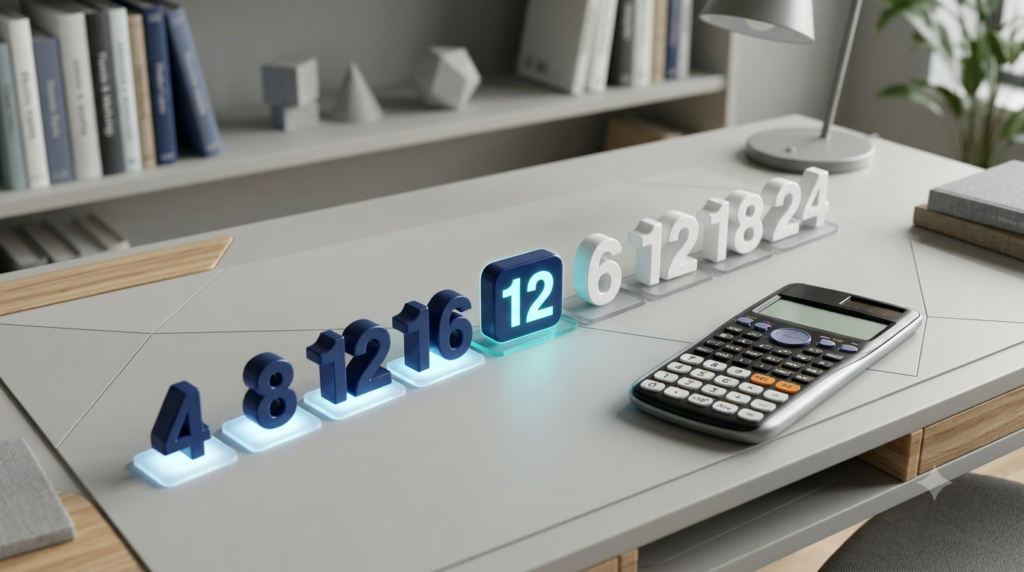
Multiplication Calculator
Multiply two numbers instantly using this free online multiplication calculator.
Free Online Multiplication Calculator
Multiplication is one of the most commonly used mathematical operations in everyday life. Whether you are calculating the total cost of products, working with measurements, solving mathematical problems, or handling business calculations, multiplication helps you find answers quickly and accurately. A Multiplication Calculator makes this process easier by allowing you to multiply two numbers instantly without performing the calculation manually.
An online multiplication calculator is a simple and convenient tool for students, teachers, professionals, business owners, and anyone who needs to multiply numbers. You only need to enter two numbers, click the Calculate button, and the tool displays the result immediately.
This Multiplication Calculator is designed to provide a straightforward calculation experience. It supports whole numbers, decimal numbers, positive numbers, and negative numbers. It also displays the multiplication equation so that you can understand how the result was obtained.
In this article, you will learn what a multiplication calculator is, how to use it, how multiplication works, and where this mathematical operation is useful in everyday life.
What Is a Multiplication Calculator?
A Multiplication Calculator is an online mathematical tool used to multiply two numbers and calculate their product. It performs multiplication automatically and provides the result within seconds.
Multiplication is the mathematical process of combining equal groups of quantities. Instead of repeatedly adding the same number, multiplication provides a faster way to calculate the total.
For example, if you want to calculate the total number of pencils in 5 boxes, with 10 pencils in each box, you can multiply 5 by 10.
5 × 10 = 50
The total number of pencils is 50.
An online multiplication calculator performs this type of calculation automatically. You enter the first number and the second number, and the calculator multiplies them to display the final answer.
It is especially helpful when working with large numbers, decimal values, or calculations that need to be completed quickly.
How to Use the Multiplication Calculator
Using this online multiplication calculator is simple. You do not need advanced mathematical knowledge or any special software. Follow these steps to calculate the product of two numbers.
Step 1: Enter the First Number
Start by entering the first number in the First Number input field.
You can enter a whole number, decimal number, or negative number depending on your calculation requirements.
For example:
First Number = 12
Step 2: Enter the Second Number
Next, enter the second number in the Second Number input field.
For example:
Second Number = 8
Make sure both input fields contain valid numbers before calculating.
Step 3: Click the Calculate Button
After entering both numbers, click the Calculate button.
The calculator automatically multiplies the two values and displays the result.
For example:
12 × 8 = 96
Step 4: View the Result
The multiplication result appears below the calculator.
You can also see the complete multiplication equation, which shows the two input numbers and their product.
Step 5: Reset the Calculator
If you want to perform another calculation, click the Reset button.
This clears both input fields and removes the previous result. You can then enter new numbers and calculate another product.
What Is Multiplication?
Multiplication is one of the four basic arithmetic operations in mathematics. The other three are addition, subtraction, and division.
It is used to determine the total value of equal groups of objects or quantities. Multiplication is also known as repeated addition because multiplying a number by another whole number can be understood as adding the same number repeatedly.
For example:
4 × 3 = 12
This means adding 4 three times:
4 + 4 + 4 = 12
Therefore, the product of 4 and 3 is 12.
Multiplication makes calculations faster and more convenient, especially when dealing with repeated quantities.
It is also an essential mathematical concept used in algebra, geometry, physics, chemistry, statistics, and many other subjects.
Multiplication Formula
The basic multiplication formula is:
Product = Multiplicand × Multiplier
In a multiplication expression, the numbers being multiplied are called factors, and the answer is called the product.
For example:
7 × 6 = 42
In this example:
7 is the first factor.
6 is the second factor.
42 is the product.
You can also write multiplication using different mathematical symbols, including:
×
For example:
8 × 5 = 40
8 * 5 = 40
Both expressions represent the same multiplication operation.
Examples of Multiplication Calculations
Understanding multiplication becomes easier when you look at practical examples.
Here are some examples of multiplying different types of numbers.
Example 1: Multiplication of Whole Numbers
Calculate:
15 × 6
Solution:
15 × 6 = 90
Therefore, the product is 90.
Example 2: Multiplication of Large Numbers
Calculate:
125 × 24
Solution:
125 × 24 = 3,000
Therefore, the product is 3,000.
Example 3: Multiplication of Decimal Numbers
Calculate:
2.5 × 4
Solution:
2.5 × 4 = 10
Therefore, the product is 10.
Example 4: Multiplication of Two Decimal Numbers
Calculate:
3.5 × 2.4
Solution:
3.5 × 2.4 = 8.4
Therefore, the product is 8.4.
Example 5: Multiplication of Negative Numbers
Calculate:
-5 × 4
Solution:
-5 × 4 = -20
When a negative number is multiplied by a positive number, the result is negative.
Therefore, the product is -20.
Example 6: Multiplication of Two Negative Numbers
Calculate:
-6 × -3
Solution:
-6 × -3 = 18
When two negative numbers are multiplied, the result is positive.
Therefore, the product is 18.
Types of Numbers Supported by the Multiplication Calculator
A multiplication calculator can be used for different types of numerical calculations. Understanding these number types helps you use the tool more effectively.
1. Whole Numbers
Whole numbers are numbers without fractional or decimal parts. They include zero and positive counting numbers.
Examples:
0, 1, 2, 3, 4, 5, 10, 25, 100
Multiplication of whole numbers is commonly used in counting objects, calculating quantities, and solving basic arithmetic problems.
For example:
20 × 5 = 100
2. Positive Numbers
Positive numbers are numbers greater than zero. They are commonly used in everyday calculations involving money, distance, quantity, and measurements.
For example:
12 × 5 = 60
3. Negative Numbers
Negative numbers are numbers less than zero. They are used in mathematics to represent values such as losses, temperatures below zero, and decreases.
For example:
-8 × 3 = -24
A negative number multiplied by a positive number produces a negative result.
4. Decimal Numbers
Decimal numbers contain a decimal point and represent fractional values.
Examples:
1.5, 2.75, 3.25, and 0.5
Multiplication of decimal numbers is useful when calculating prices, weights, lengths, and other measurements.
For example:
2.5 × 3 = 7.5
5. Zero
Zero is an important number in multiplication.
Any number multiplied by zero always produces zero.
For example:
100 × 0 = 0
This property is known as the zero property of multiplication.
Properties of Multiplication
Multiplication follows several important mathematical properties. These properties make calculations easier and help us understand how numbers behave during multiplication.
1. Commutative Property
The commutative property states that changing the order of two numbers does not change their product.
Formula:
a × b = b × a
Example:
5 × 8 = 40
8 × 5 = 40
Both calculations produce the same result.
2. Associative Property
The associative property states that changing the grouping of numbers does not change the final product when three or more numbers are multiplied.
Formula:
(a × b) × c = a × (b × c)
Example:
(2 × 3) × 4 = 24
2 × (3 × 4) = 24
Both expressions produce the same answer.
3. Distributive Property
The distributive property explains how multiplication works with addition or subtraction inside parentheses.
Formula:
a × (b + c) = (a × b) + (a × c)
Example:
5 × (3 + 4)
= (5 × 3) + (5 × 4)
= 15 + 20
= 35
This property is especially useful in algebra and mental mathematics.
4. Identity Property
The identity property states that multiplying any number by 1 gives the same number.
Formula:
a × 1 = a
Example:
25 × 1 = 25
The number 1 is called the multiplicative identity.
5. Zero Property
The zero property states that multiplying any number by zero always produces zero.
Formula:
a × 0 = 0
Example:
45 × 0 = 0
These properties are fundamental to understanding multiplication and solving more advanced mathematical problems.
Applications of Multiplication in Everyday Life
Multiplication is not limited to textbooks or classroom exercises. It is used in many everyday situations, from shopping to construction and financial calculations.
1. Shopping and Price Calculations
Multiplication helps calculate the total cost of multiple items with the same price.
For example, if one notebook costs ₹40 and you purchase 6 notebooks, the total cost is:
40 × 6 = ₹240
Therefore, you need to pay ₹240.
2. Calculating Distance
Multiplication can be used to calculate distance when speed and time are known.
The basic formula is:
Distance = Speed × Time
For example, if a vehicle travels at 60 kilometres per hour for 3 hours:
Distance = 60 × 3
Distance = 180 km
The vehicle travels 180 kilometres.
3. Calculating Area
Multiplication is commonly used in geometry to calculate the area of different shapes.
For a rectangle:
Area = Length × Width
For example, if a rectangular room has a length of 8 metres and a width of 5 metres:
Area = 8 × 5
Area = 40 m²
Therefore, the area of the room is 40 square metres.
4. Business and Financial Calculations
Business owners use multiplication to calculate total sales, product costs, inventory quantities, and revenue.
For example, if a shop sells 25 products at ₹200 each:
Total Sales = 25 × 200
Total Sales = ₹5,000
Multiplication makes it easier to calculate financial values involving repeated quantities.
5. Education and Mathematics
Students use multiplication while learning arithmetic, algebra, geometry, and other mathematical concepts.
It is also an important foundation for understanding fractions, percentages, equations, and scientific calculations.
6. Cooking and Measurements
Multiplication is useful when increasing or decreasing recipe quantities.
For example, if a recipe requires 200 grams of flour for one batch, preparing three identical batches requires:
200 × 3 = 600 grams
Therefore, 600 grams of flour is needed.
7. Construction and Engineering
Multiplication is used in construction and engineering to calculate areas, volumes, material quantities, and dimensions.
For example, multiplying the length, width, and height of a rectangular box helps determine its volume.
Volume = Length × Width × Height
Advantages of Using an Online Multiplication Calculator
An online multiplication calculator provides several benefits compared with performing every calculation manually.
Fast Calculations
The calculator provides multiplication results within seconds. You do not need to work through lengthy multiplication steps, especially when dealing with large numbers.
Easy to Use
The calculator has a simple interface with two input fields and straightforward buttons. Users can perform calculations without learning complicated instructions.
Supports Decimal Values
Decimal multiplication is useful in calculations involving prices, measurements, weights, and quantities. The calculator accepts decimal numbers directly.
Reduces Manual Calculation Errors
Manual calculations can sometimes result in mistakes, particularly when multiplying large numbers. An online calculator performs the operation automatically and reduces the possibility of arithmetic errors.
Useful for Different Users
Students, teachers, professionals, business owners, and general users can all benefit from a multiplication calculator.
Accessible on Mobile Devices
A mobile-friendly calculator allows users to perform calculations using smartphones and tablets. There is no need to install a separate application.
Free and Convenient
The calculator can be used directly through a web browser. Users do not need special mathematical software or additional equipment.
Multiplication Calculator vs Manual Multiplication
Both manual multiplication and online multiplication calculators are useful, but they serve slightly different purposes.
Manual multiplication helps develop mathematical understanding and improves calculation skills. It allows students to understand multiplication methods, number relationships, and mathematical procedures.
An online multiplication calculator focuses on speed and convenience. It is useful when you need to calculate results quickly or verify an answer.
For example, calculating 125 × 48 manually may require several steps. An online calculator can provide the answer immediately.
However, learning manual multiplication is still important, especially for students developing their basic arithmetic skills.
Using both methods together can improve mathematical understanding while making everyday calculations more efficient.
Common Mistakes to Avoid When Multiplying Numbers
Although multiplication is a basic mathematical operation, some mistakes can affect the accuracy of calculations.
Here are a few common mistakes to avoid.
Entering Incorrect Numbers
Always check the input values before calculating. Entering an incorrect digit can produce an entirely different result.
Ignoring Negative Signs
Negative numbers must be entered with the correct negative sign. Remember that a negative number multiplied by a positive number produces a negative result, while two negative numbers produce a positive result.
Misplacing Decimal Points
When multiplying decimal numbers manually, decimal placement is important. Always check the number of decimal places when verifying a manual calculation.
Forgetting the Zero Property
Any number multiplied by zero equals zero. Do not confuse multiplication by zero with multiplication by one.
Confusing Multiplication with Addition
Multiplication and addition are different mathematical operations. For example, 5 × 4 equals 20, whereas 5 + 4 equals 9.
Using the correct operation is essential for obtaining accurate results.
Conclusion
A Multiplication Calculator is a simple and useful online tool that makes multiplying two numbers quick and convenient. It eliminates the need for lengthy manual calculations and provides accurate results for whole numbers, positive numbers, negative numbers, and decimal values.
Multiplication is an essential mathematical operation used in education, shopping, business, construction, science, and everyday activities. Understanding its basic formula, properties, and practical applications can help improve mathematical skills and problem-solving abilities.
Whether you are a student checking a homework answer, a professional performing calculations, or someone working with everyday numbers, this online Multiplication Calculator provides an easy way to find the product of two numbers instantly.
FAQs
1. What is a Multiplication Calculator?
A Multiplication Calculator is an online mathematical tool used to multiply two numbers and find their product. It automatically performs the multiplication operation and displays the result within seconds. Users simply enter the first number and the second number, then click the Calculate button. The calculator supports different types of numbers, including whole numbers, positive numbers, negative numbers, and decimal values. It is useful for students, teachers, professionals, business owners, and anyone who needs to perform quick mathematical calculations.
2. How do I use the online Multiplication Calculator?
Using the online Multiplication Calculator is very simple. First, enter your desired value in the First Number field. Next, enter another value in the Second Number field. Click the Calculate button to multiply both numbers. The calculator will immediately display the product along with the complete multiplication equation. If you want to perform another calculation, click the Reset button to clear the previous values and enter new numbers.
3. What is the formula for multiplication?
The basic multiplication formula is Product = Multiplicand × Multiplier. It means that two numbers are multiplied together to calculate their product. For example, if you multiply 8 by 5, the calculation is 8 × 5 = 40. Here, 8 and 5 are the factors, while 40 is the product. This formula is used in basic arithmetic and more advanced mathematical calculations, including algebra, geometry, physics, and engineering.
4. Can I multiply decimal numbers using this calculator?
Yes, this Multiplication Calculator supports decimal numbers. You can enter values containing decimal points directly into the input fields. For example, if you want to multiply 2.5 by 4.2, enter both numbers and click Calculate. The calculator displays the result as 10.5. Decimal multiplication is useful when calculating prices, weights, lengths, distances, and measurements. It eliminates the need to perform decimal multiplication manually and helps you obtain results quickly.
5. Can I multiply negative numbers using this calculator?
Yes, you can use this calculator to multiply negative numbers. Enter the negative sign before the number in the input field. For example, multiplying -5 by 4 produces -20. When two negative numbers are multiplied, the result is positive. For example, -5 × -4 = 20. These rules are important in mathematics and are commonly used when solving algebraic equations, working with integers, and performing calculations involving positive and negative values.
6. What happens when you multiply a number by zero?
When any number is multiplied by zero, the result is always zero. This mathematical rule is known as the zero property of multiplication. For example, 25 × 0 = 0, and 100 × 0 = 0. The rule applies to positive numbers, negative numbers, whole numbers, and decimal numbers. You can also verify this property using the online Multiplication Calculator by entering any valid number in the first field and zero in the second field.
7. Is the Multiplication Calculator free to use?
Yes, this online Multiplication Calculator is free to use. You do not need to purchase a subscription, create an account, or install additional software to perform multiplication calculations. Simply open the calculator in your web browser, enter two numbers, and click the Calculate button. You can use it whenever you need to multiply numbers for educational, professional, business, or everyday purposes.
8. Can I use the Multiplication Calculator on my mobile phone?
Yes, the Multiplication Calculator is designed with a responsive layout that works on smartphones, tablets, laptops, and desktop computers. Its input fields and buttons adjust to different screen sizes, making it convenient to use on mobile devices. You do not need to download a separate mobile application. Simply open the webpage containing the calculator using your mobile browser and enter the numbers you want to multiply.
9. What is the difference between multiplication and addition?
Multiplication and addition are two different arithmetic operations. Addition combines quantities to find their total, whereas multiplication calculates the product of numbers and can represent repeated addition. For example, 4 + 4 + 4 = 12 is equivalent to 4 × 3 = 12. Multiplication is particularly useful when working with equal groups of objects or repeated quantities because it reduces the number of calculation steps.
10. Where is multiplication used in everyday life?
Multiplication is used in many everyday situations. It helps calculate the total cost of products, determine distances using speed and time, calculate the area of rectangular spaces, and find quantities in cooking and construction. Students also use multiplication when solving mathematical problems, while businesses use it to calculate sales and product costs. It is an essential arithmetic operation that makes repeated calculations faster and easier in daily activities.